


Can PMOS Cause Weight Gain? What’s Actually Going On

If you’ve been eating the same way you always have, moving your body, doing everything “right,” and the scale keeps creeping up anyway, I want you to know something. You’re not imagining it, and you’re not “doing it wrong.” Weight changes with polycystic ovary syndrome (PCOS), now called PMOS (polyendocrine metabolic ovarian syndrome), can feel confusing and frustrating, especially when nobody has ever explained the mechanism to you.
Here’s the thing I wish someone had told me sooner: weight gain from PMOS rarely comes from one single cause. It usually involves a mix of hormones, insulin resistance, metabolism, and everyday lifestyle factors. Plus, let’s not forget the most important factor… every body is different!
Below, I’m answering the question every woman with the PMOS has asked at least once before: “Can PMOS cause weight gain?” Instead of promising quick fixes, I’ll tell you what the research says and what you can do to support your PMOS management plan!
As a PMOS dietitian and woman with PMOS myself, I see you. I hear you. And below, I’m walking you through exactly what you need to know.
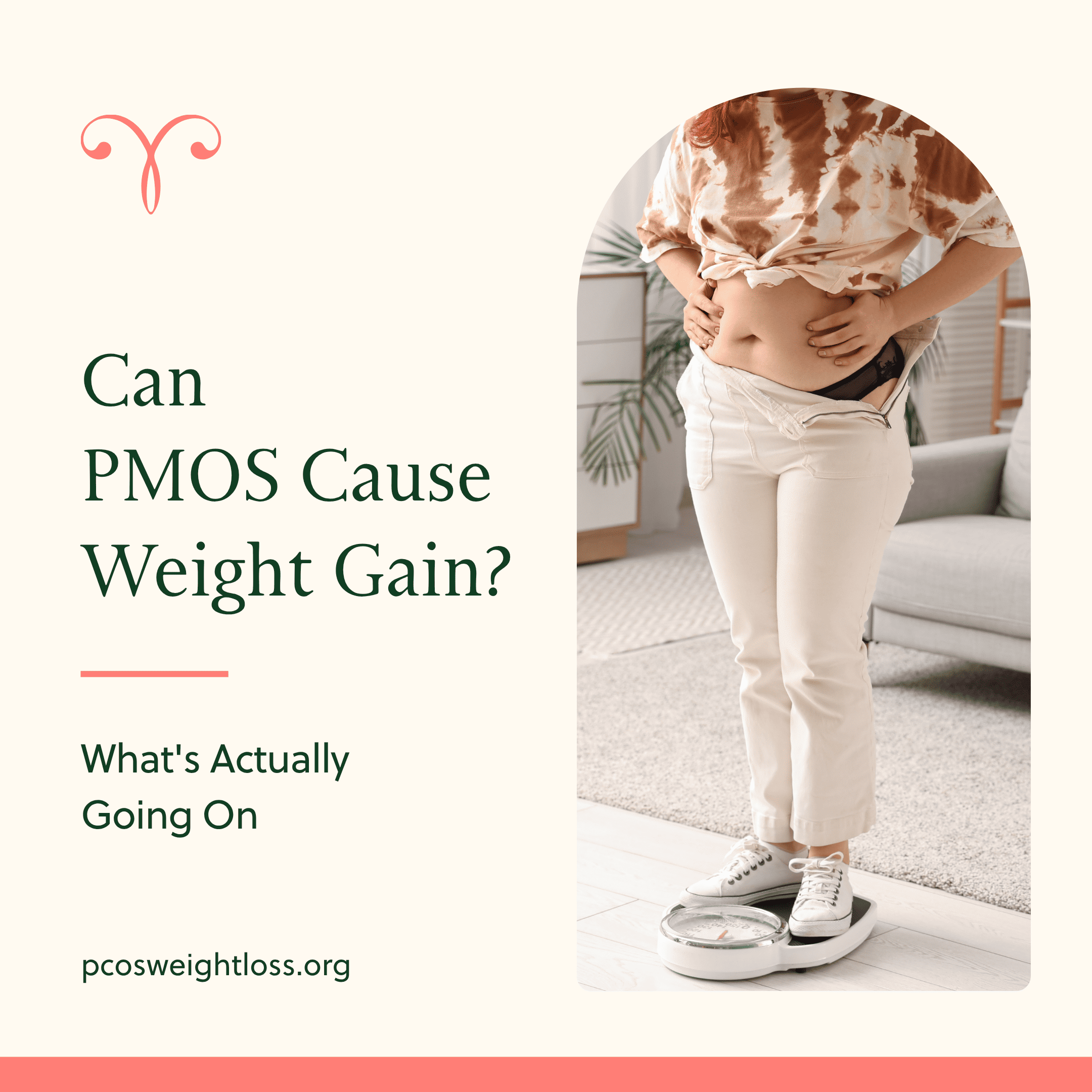
Can PMOS Cause Weight Gain? The Honest Answer
Yes, PMOS can contribute to weight gain, and it can also make losing weight feel harder than it does for those without the condition. That’s not an excuse, and it’s not a life sentence. It’s a starting point.
PMOS may influence weight through a few connected pathways: hormone changes, insulin resistance, blood sugar regulation, and shifts in how your metabolism handles energy. When these systems aren’t running smoothly, your body tends to store fat more readily, particularly around the midsection. (Read my post on PMOS belly, where I talk all about this!)
But here’s the nuance that matters. PMOS affects each person differently. Some women with PMOS struggle with stubborn weight, while others don’t gain much at all and deal more with irregular cycles, acne, or fatigue. Experiencing weight gain is common, but it’s not universal.
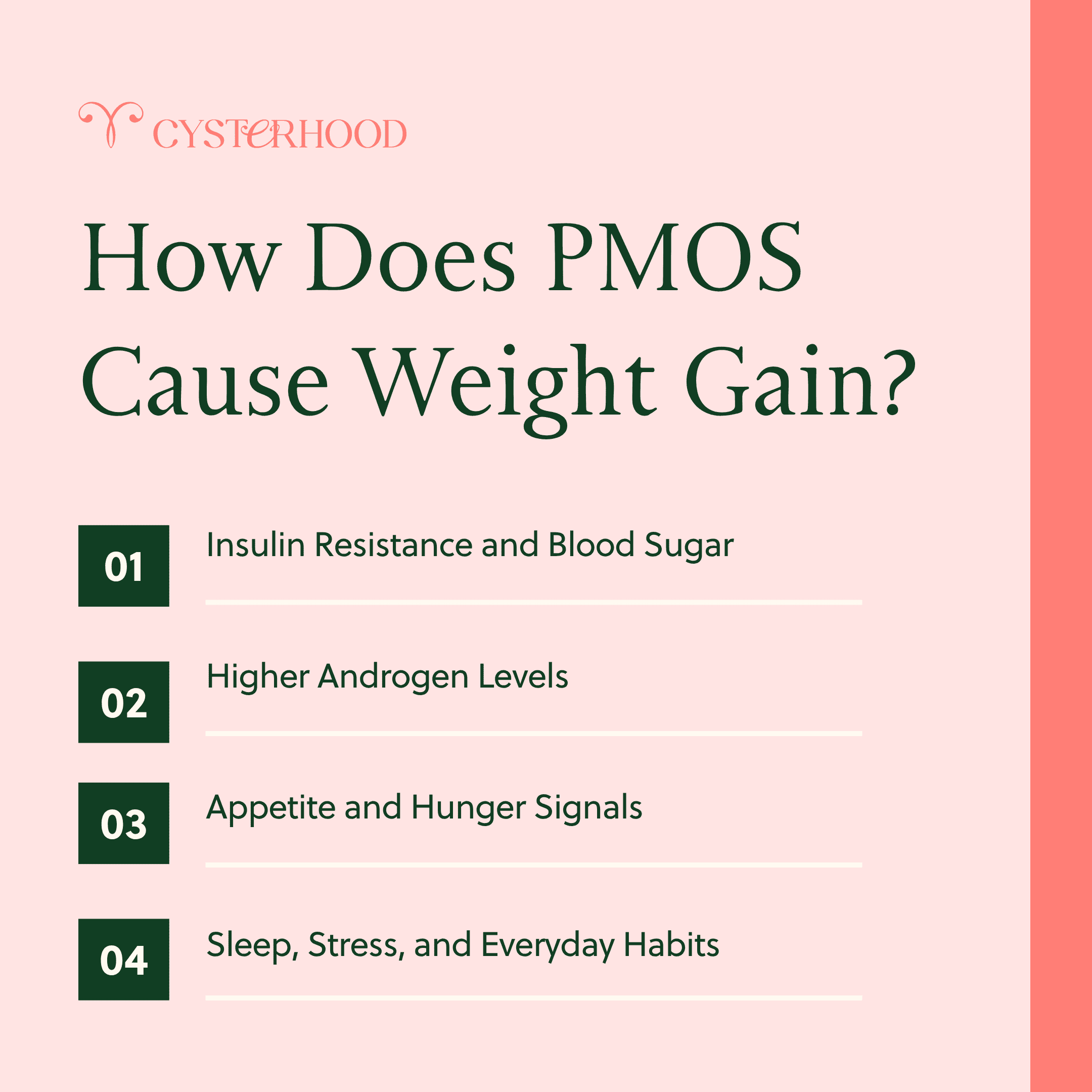
How Does PMOS Cause Weight Gain?
Let’s get into the actual biology, because you deserve the real explanation, not another “just lose weight.” (Which, I think I speak for all of us when I say, enough is enough!) Below are the main factors that may contribute to weight changes when you have PMOS:
Insulin Resistance and Blood Sugar
Insulin resistance is one of the biggest factors to understand when talking about PMOS and weight gain. Affecting roughly 70% of women with the condition, insulin resistance essentially means the body’s cells don’t respond to insulin as effectively as they should. In response, the pancreas produces more insulin to help move glucose from the bloodstream into your cells.
Over time, higher insulin levels can promote fat storage and make it more difficult for the body to access stored fat for energy. Insulin resistance can also contribute to blood sugar fluctuations, increased hunger, and cravings, all of which can make weight management more challenging.
Not sure whether you have insulin resistant PMOS? Take my free “What’s Your PMOS Type?” quiz. By doing so, you can learn more about the root causes driving your symptoms, which can help you formulate a more comprehensive plan to tackle PMOS from the inside out.
Higher Androgen Levels
Another hallmark of PMOS is elevated androgens (male hormones), including testosterone. While women naturally produce androgens, higher levers are associated with familiar PMOS symptoms like acne, unwanted facial or body hair (hirsutism), hair thinning on the scalp, and irregular periods.
Androgens may also influence body composition and where fat tends to accumulate. Women with PMOS are more likely to carry excess weight around the abdominal area, and insulin resistance and elevated androgens can continue influencing one another. This creates yet another metabolic side of PMOS… and creates that often-discussed frustrating cycle of symptoms.
If you’re interested in learning more about androgen levels, read my post: “Vitamins to Lower Testosterone in Women with PMOS.”
Appetite and Hunger Signals
Weight management isn’t only about how many calories you eat. Your body has an entire system of hormones and signals involved in hunger, fullness, blood sugar, and energy regulation. (This is what people mean when they refer to the endocrine system!)
When insulin resistance and blood sugar fluctuations are part of the picture, you may notice stronger cravings, increased hunger, or energy crashes that make it hard to truly feel satisfied. That’s why addressing the metabolic side of PMOS can be so important rather than simply “eating less,” counting calories, and trying out crash diets.
Sleep, Stress, and Everyday Habits
Hormones aren’t the whole story, and I never want to pretend they are. Stress, sleep, activity levels, and the foods we reach for all feed into the picture. More importantly, they can interact with the metabolic challenges already associated with PMOS.
For example, poor sleep can affect appetite and insulin sensitivity, while regular movement can support metabolic health. Rather than trying to change everything at once, focus on small, realistic habits. Get off your phone before bedtime, incorporate PMOS-friendly alternatives to your dinner plate, take supplements designed specifically for women with PMOS. These are just a few ways to help you create a stronger foundation for supporting your body over time.
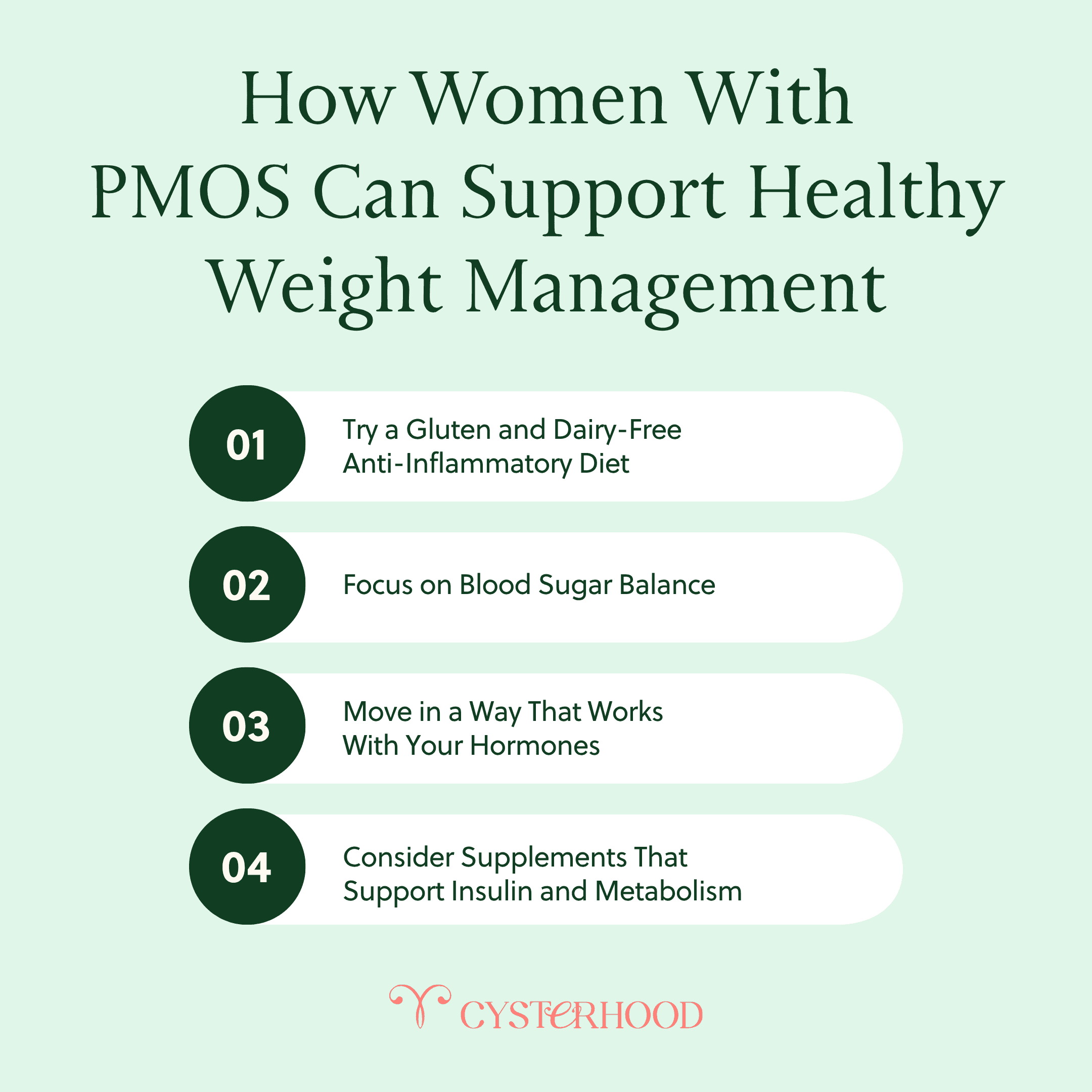
How Women With PMOS Can Support Healthy Weight Management
Now for the hopeful part, because there absolutely is one. PMOS can be reversed and you can live symptom free at the lifestyle level, meaning diet and daily habits can help calm symptoms and keep them at bay.
Here are realistic, sustainable approaches that may support healthy weight management with PMOS. Consistency over perfection, always.
Try a Gluten and Dairy-Free Anti-Inflammatory Diet
The approach I built my whole method around is going gluten and dairy-free, and here’s the “why.”
Gluten and dairy can be inflammatory for some women with PMOS, and inflammation is closely tied to insulin resistance. By lowering that inflammatory load, you may help your body use insulin more effectively, which supports blood sugar balance. I’m not going to promise it fixes everything, because every woman is different. However, you never know the positive effects it may have on your symptoms.
And you don’t have to figure it out alone! For a brief overview, check out my PMOS diet plan, where I walk you through this process step by step. For a more comprehensive approach, download the Cysterhood App. Here, you can find live coaching calls, over 500+ PMOS-friendly recipes, slow-weighted workout routines, and a supportive community with thousands of women with PMOS who truly get it.
Focus on Blood Sugar Balance
Instead of focusing on restrictions, focus on building meals that support steadier blood sugar and insulin levels. This is especially important with PMOS, as insulin resistance can make it harder for your cells to respond to insulin efficiently. This can cause your body to produce more of it to keep blood sugar regulated. (You know, the whole cycle we discussed earlier.)
One way to support this is by pairing carbohydrates with protein, fiber, and healthy fats. Together, these nutrients can slow digestion, help you feel satisfied for longer, and reduce the sharp blood sugar fluctuations that can contribute to cravings, low energy, and feeling hungry 20 minutes after eating.
Instead of cutting foods out, try pairing them intentionally. Remember: the goal isn’t to eat less. It’s to build meals that better support your metabolism and insulin sensitivity. If you need a gentle supportive boost during this process, make sure to check out Ovafit’s Crave Control Protein.
Made with DygloFit, a natural fruit extract clinically proven to boost GLP-1, the formula also contains additional functional ingredients, like pea, pumpkin seed, chia seed, and real vanilla. No artificial sweeteners, no questionable ingredients, and no whey, ever.
Move in a Way That Works With Your Hormones
Exercise can be incredibly helpful for PMOS, especially because regular movement can support insulin sensitivity, metabolic health, and weight management. But that doesn’t mean you need to push yourself through exhausting workouts every day to see benefits. (Honestly, you shouldn’t!)
Instead, focus on movement you can recover from and stay consistent with. That’s why my husband Sirak built our slow-weighted workout approach, which combines controlled strength training with lower-impact forms of movement, like walking and pilates. Building muscle can also support glucose uptake and insulin sensitivity, making strength-focused movement especially valuable when insulin resistance is part of your PMOS picture.
Learn more by reading my full guide on Weight Loss with PMOS.
Consider Supplements That Support Insulin and Metabolism
If you’ve ever been told that medications like birth control, metformin, or ozempic can “cure” your PMOS, join the club. While these medications are often prescribed to manage certain symptoms or metabolic concerns, they don’t address every factor involved in PMOS. Even more importantly: they often mask symptoms rather than addressing them at the root for real relief.
Certain supplements can complement your nutrition and lifestyle routine, particularly when insulin resistance is part of your picture. Inositol, for example, has been studied for its role in insulin signaling and may support more appropriate blood sugar regulation and egg quality. Similarly, berberine, often referred to as “nature’s metformin,” has been researched for its ability to manage metabolic and hormonal symptoms of PMOS.
That’s exactly why it was my mission to create Inositol Complete 40:1 and Berberine Advanced. Inositol Complete uses the clinically-studied 40:1 myo to d-chiro inositol ratio, is formulated by an RD with pMOS, and is rigorously tested in FDA-registered facilities. Similarly, our Berberine Advanced uses Berberine Phytosome, a patented form of berberine designed for absorption and bioavailability.
Explore Ovafit’s supplements designed for women with PMOS, created by a woman with PMOS, to learn more about your options.
Common Questions About PMOS and Weight Gain
Can You Lose Weight If You Have PMOS?
Yes, you can. It may take more patience and a more tailored approach than generic diet advice, but weight loss with PMOS is absolutely possible. The key is working with your hormones and insulin, not fighting them. I like to remind women it can take about 3 months to change the picture of your ovaries, so give your body time to adjust.
Does PMOS Always Cause Weight Gain?
No. Weight gain is common with PMOS, but it isn’t guaranteed. Some women with PCOS gain weight easily, while others stay at a stable weight and experience symptoms like irregular cycles or acne instead. PMOS shows up differently in every body.
What PMOS Symptoms Are Related to Weight Changes?
The symptoms most often connected to weight are insulin resistance, elevated androgens (male hormones), blood sugar swings, increased cravings, and fatigue. These pieces tend to reinforce each other, which is why addressing the root causes with diet and exercise, rather than just cutting calories, tends to help most.
Weight gain with PMOS is a common experience; but you don’t have to “just deal with it.”
When you have PMOS, navigating weight gain, weight loss, and a balance between symptoms can feel like a losing battle. You’re prescribed this, told to “just try” that, and it quickly becomes exhausting. However, PMOS management doesn’t always require “anti-androgen diets,” prescription medications, or going to extremes. Focus on a gluten- and dairy-free diet, incorporate low-impact movement, find the supplements that support your journey, and give your body time.
If you want a whole community, gluten and dairy-free meal plans, and slow-weighted workouts designed for PMOS in one place, you can download The Cysterhood App and start building your plan today. And if you’re not quite ready for that, take the PCOS quiz so you leave here with a next step, not just more questions.
You’ve got this,
Tallene, RD
—
Written by Tallene Hacatoryan, MS, RD, founder and formulator of OvaFit. Tallene is a Registered Dietitian who specializes in PCOS (now called PMOS) nutrition and has PCOS herself.
Medical disclaimer: This content is for informational purposes only and is not intended as medical advice. Always consult your healthcare provider before making changes to your diet, supplements, or treatment plan.
These statements have not been evaluated by the Food and Drug Administration. This product is not intended to diagnose, treat, cure, or prevent any disease.
Feeling lost with PCOS?
Find out your PCOS type and get your next steps in under 2 minutes.
Find My PCOS Type →