

PMOS Night Routine for Better Sleep and Hormones
When you have PMOS (formerly PCOS), there’s one little habit that you’re probably not giving enough TLC: your night routine! How you wind down at night matters more than most people realize.
What happens while you sleep affects your blood sugar, your cortisol, and your hormones. And that’s why I think your evenings deserve a little more attention! As a Registered Dietitian who has PMOS herself, I know what it’s like to hear the same advice over and over again. “Just lose weight.” “Try eating better.” Okay, but what does that actually mean for our hormones?
That’s something we talk about a lot here and in The Cysterhood. I want you to understand what’s going on in your body and why certain habits might help rather than just giving you another list of things to do and wishing you the best.
Don’t worry, I won’t tell you to be in bed by 8 PM and lock your phone in a drawer by 7 PM. We’re going to talk about what you can realistically do in the evenings, even when life gets busy.
Here’s what that can actually look like in your day to day routine.
A PMOS Night Routine That Actually Works
I know it might seem like what you do before bed wouldn’t have much to do with your PMOS symptoms, but hear me out! Getting enough sleep and giving yourself time to wind down can make a difference in how your body handles blood sugar, insulin resistance, and stress. And when you’re dealing with PMOS, we want to give our hormones all the support we can.
I built this routine specifically for flexibility. Add what works for you and leave out what doesn’t. Think of these as a menu instead of a checklist you have to complete to “pass.”
Why Your Night Routine Matters for PMOS
With PMOS, your cells may not respond to insulin as well as they should. This is called insulin resistance, and not getting enough sleep can make it worse. In fact, a study funded by the National Institutes of Health found that women who slept 6.2 hours or less per night for 6 weeks experienced a 14.8% increase in insulin resistance. And this wasn’t just in women with PMOS! The study included women without the condition, both before and after menopause.
Then there’s cortisol, your body’s main stress hormone. When you’re constantly stressed and running on barely any sleep, it can affect your cortisol levels and make blood sugar regulation even more difficult. For women with PMOS, that can just add to symptoms you’re already dealing with, like cravings, fatigue, and irregular periods.
The good news? In that same NIH-funded study, insulin and glucose levels returned to normal once the women went back to getting their usual 7-9 hours of sleep. It’s a good reminder that something as simple as getting enough sleep can seriously make a difference!
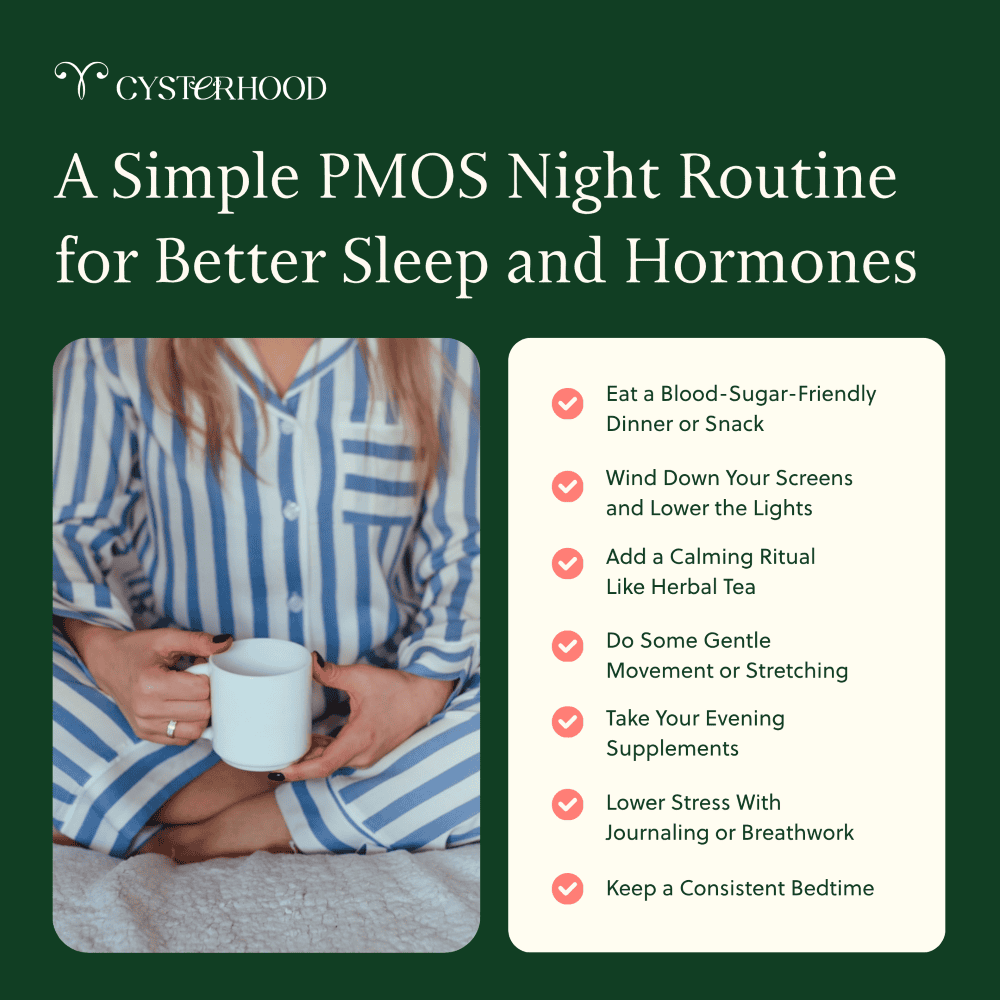
A Simple PMOS Night Routine
You don’t have to overhaul your entire evening routine to support hormone balance. Start with one or two things that sound doable, and don’t worry about fitting everything in right away.
Eat a Blood-Sugar-Friendly Dinner or Snack
For dinner, I like to focus on getting a good mix of protein, fiber, and healthy fats on my plate. It’s a simple way to help avoid those big blood sugar spikes and dips, especially if you’re dealing with insulin resistance. And if you’re hungry before bed? Eat something! There’s no rule (or reason) to go to sleep hungry.
You don’t have to cook anything fancy, either. A boiled egg with some berries or apple slices dipped in almond butter are perfectly acceptable late-night snacks. The idea is to have something satisfying that’ll hold you over until breakfast.
Wind Down Your Screens and Lower the Lights
We’ve all gotten into bed, opened TikTok or Instagram for “a few minutes,” and somehow realized it’s an hour later. By the time you finally put your phone down, you’re wide awake when you should have gone to sleep forever ago. If you didn’t already know, bright screens before bed make it harder for your body to recognize that it is time to sleep.
No, you don’t have to put the screens away hours before bed. Instead, just try dimming the lights and putting your phone on the nightstand one hour before you plan to try and sleep. You can still watch your favorite show or read in bed if that’s how you like to relax. Just keep the lights a little lower and give yourself a chance to wind down.
Add a Calming Ritual Like Herbal Tea
One thing I always recommend is finding something you genuinely enjoy doing before bed. It doesn’t have to be anything complicated! Personally, I love making myself a warm cup of herbal tea, especially after a long day. Chamomile is one of my favorites to suggest because it’s caffeine-free, and you can sip on it while reading, watching TV, or just relaxing.
Curious about different blends? I put together a guide to hormone balancing teas and what you should know about them. If you want options that fit a PMOS night routine, these are pretty great options to start with.
Do Some Gentle Movement or Stretching
You don’t need to squeeze in another workout before bed. But if you’ve been sitting for most of the day, getting up for a slow walk or doing a few gentle stretches may be all you need. Even a 10-minute walk after dinner can help your body manage blood sugar. And if you’d rather stretch in your pajamas while watching TV? That counts, too!
With PMOS, I’m a big believer in finding movement that feels good and doesn’t leave you completely exhausted. You don’t have to work up a sweat every time you move, especially not when you’re trying to wind down for the night.
Take Your Evening Supplements
If supplements are part of your evening routine, it helps to take them around the same time each day. Otherwise, it’s pretty easy to get to bedtime and realize you completely forgot! That said, not every supplement needs to be taken at night, so think about what you’re taking and why you’re taking it.
For example, if you’re taking berberine, I’ve broken down the timing considerations in my guide on whether you should take berberine at night. And, of course, always check with your doctor before adding or changing supplements, especially if you’re taking other medications.
Lower Stress With Journaling or Breathwork
If your brain suddenly wants to think about everything you’ve ever worried about the second your head hits the pillow, you’re definitely not alone. I like the idea of keeping a journal by your bed for exactly this reason. You can write down whatever’s on your mind, make a quick to-do list for tomorrow, or just get all of those annoying thoughts onto paper and out of your head.
If you’re not really a journal person, try taking a few slow, deep breaths instead. You don’t need to turn it into a whole meditation session. Even a couple of minutes can help you feel a little more relaxed.
Keep a Consistent Bedtime
I know, going to bed at the same time every night isn’t always realistic. Between work, family, and everything else you have going on, it’s just not always possible to stick to a strict routine. But if you can, try to stick to a bedtime that’s at least the same most nights.
Your body follows an internal clock that helps regulate when you feel sleepy and when you wake up. Going to bed around the same time helps keep that clock on track. And don’t forget about what time you wake up! Try to keep that as consistent as you can too, even on the weekends.
Foods and Drinks for a PMOS-Friendly Evening
When it comes to dinner, I want you to think about keeping your blood sugar as steady as possible. A heavy, sugary dessert can cause a blood sugar spike, and for some people, those fluctuations may totally disrupt sleep. But you don’t need a separate PMOS meal plan just for dinner. The same things I recommend throughout the day still apply at night: plenty of protein, fiber, and healthy fats to support healthy blood sugar levels.
That doesn’t mean you can never have dessert, either. If you want something sweet after dinner, enjoy it. Pairing it with protein or fat, or having it after a balanced meal, can help slow how quickly sugar enters your bloodstream.
And if you do get hungry closer to bedtime, here are a few easy snacks I like:
- Greek-style coconut yogurt with chia seeds
- A handful of nuts with some berries
- Turkey slices with cucumber
These are also easy to work into a gluten- and dairy-free diet, which is something I often recommend trying for PMOS. Some women find that limiting gluten or dairy helps with their symptoms, although that doesn’t mean everyone with PMOS needs to avoid them.
As for drinks, I would stick with water or caffeine-free herbal tea in the evening. Chamomile and peppermint are great options if you want something warm and relaxing. And if you’re someone who needs a late-afternoon coffee to get through the day, try moving it a little earlier. Caffeine can stay in your system for hours, even when you don’t necessarily feel its effects anymore.
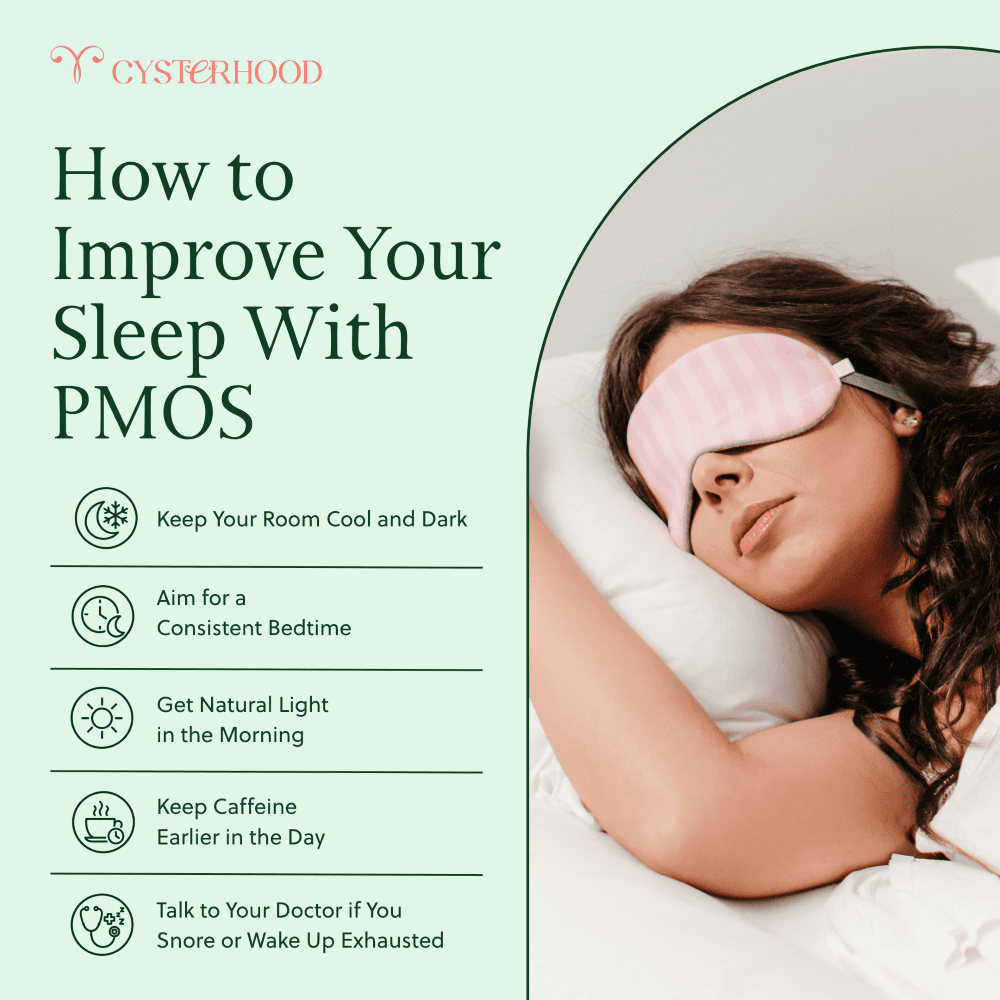
How to Improve Your Sleep With PMOS
If you have PMOS and feel like you can never get a good night’s sleep, I hear you. There are a few reasons sleep can be tricky with this condition, including insulin resistance and other hormonal changes. Women with PMOS also have a higher risk of obstructive sleep apnea, which can interrupt your sleep without you even realizing it.
If you snore loudly, wake up gasping, or feel exhausted regardless of how you slept, bring it up with your doctor. Sometimes there’s more going on than simply needing an earlier bedtime. Otherwise, I recommend starting with the basics.
Keep your room cool and dark, try to get outside for some natural light in the morning, and avoid caffeine too close to bedtime. I have a whole guide on how to sleep better with PMOS if you want more ideas and a closer look at why sleep can be so tricky with this condition.
Tips to Make Your PMOS Night Routine Stick
Before you start planning out your entire evening at once, I want you to remember something: you don’t have to do every single thing on this list. Seriously! If you try to change ten habits overnight, there’s a good chance you’ll feel overwhelmed and give up on all of them.
Instead, pick one or two that sound easy enough to fit in your life right now. Maybe that’s making a cup of herbal tea after dinner or going for a quick walk with your partner. Once those start feeling like second nature, you can add something else.
And do not stress if you miss a night. You’re allowed to have evenings when you stay up late and watch your favorite show or fall asleep after eating a slice of pie. What matters is what you’re doing most of the time, not whether every night goes as planned.
If you’re looking for more support with your PMOS journey, I’d love for you to join us inside The Cysterhood App. You’ll find PMOS-friendly meal ideas, workouts, and a community of women who understand what you’re going through. Or, if you’re still figuring out where to start, take our PMOS quiz. It’s a great first step toward learning more about your symptoms and what might help.
You’ve got this,
Tallene, RD
This content is for educational purposes only and is not a substitute for professional medical advice. Always talk to your doctor before making changes to your diet, supplements, or medications, especially if you’re managing a health condition or taking prescriptions.
These statements have not been evaluated by the Food and Drug Administration. Any products mentioned are not intended to diagnose, treat, cure, or prevent any disease.
Feeling lost with PCOS?
Find out your PCOS type and get your next steps in under 2 minutes.
Find My PCOS Type →