
PMOS Self-Care: A Dietitian’s Guide to Caring for Your Body

If you’ve been diagnosed with PMOS, there’s a lot you probably already do to care for yourself and your body. And no, I don’t mean a bubble bath and a fun face mask! (Though those are always nice.) For those of us with PMOS, self-care isn’t about “fixing your body”, and it’s not about forcing yourself into a one-size-fits-all wellness routine. It’s about finding supportive habits that help reduce symptoms and genuinely make you feel better.
I’m Tallene, a Registered Dietitian who specializes in PMOS, and I have the condition myself. I mention that to say: I get it. I’ve been there! So I want to share a practical guide to PMOS self-care you can actually start with this week. Let’s talk sustainable self-care:
Polycystic ovary syndrome (PCOS) got a name upgrade! It’s now called polyendocrine metabolic ovarian syndrome (PMOS). If you want the full background, you can read my guide on what is polyendocrine metabolic ovarian syndrome.
What Is PMOS Self-Care?
PMOS self-care is the everyday habits that help you support your hormones, blood sugar levels, and energy. It’s what helps symptoms finally feel more manageable. Think of it less as medical treatment. (Your doctor manages diagnosis, medications, and monitoring.) Instead, self-care is more about what you do in your day to day life.
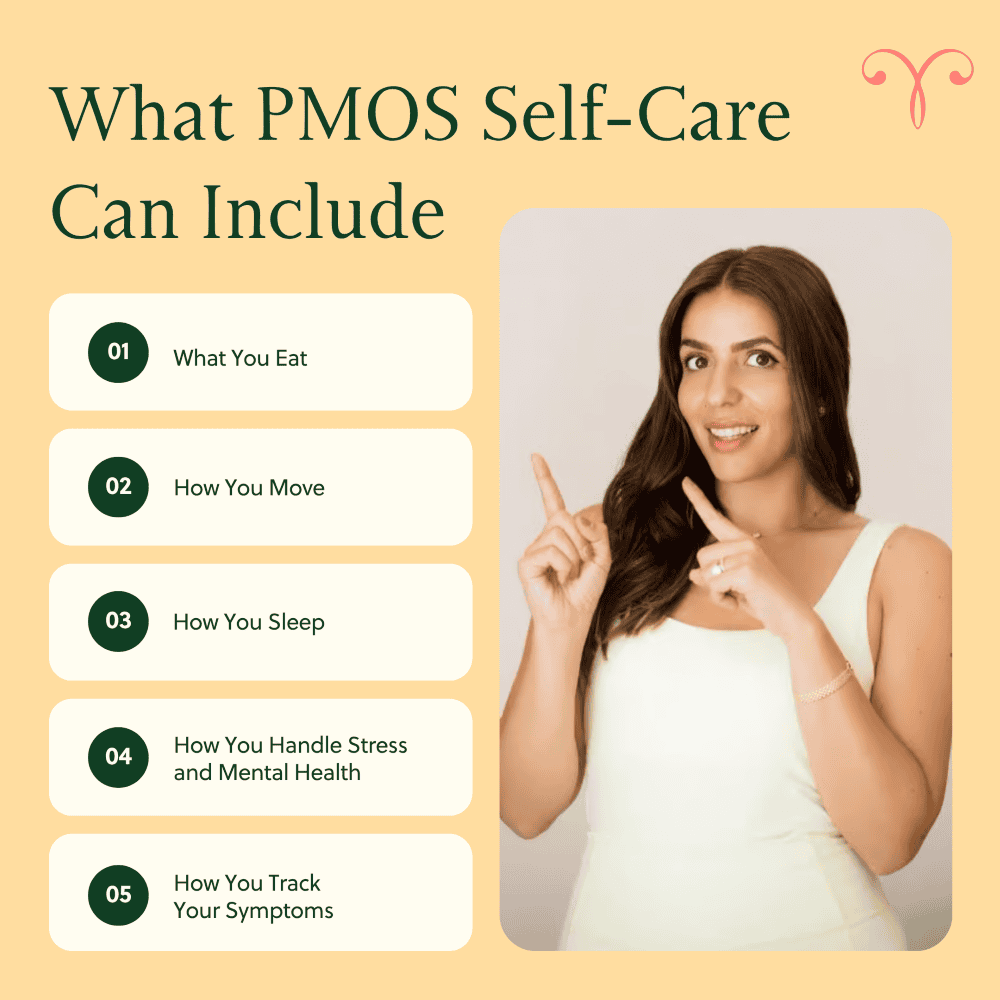
For most women with PMOS, self-care covers a handful of areas. Think: what you eat, how you move, how you sleep, how you handle stress and mental health, and how you track the symptoms. They work alongside what you do with your doctor to help give you all around support.
A quick note: Don’t try to diagnose or treat yourself alone. Talk to your doctor or OB-GYN about your symptoms, any medications, and anything related to fertility, so your plan fits your body and your labs.
How Can Nutrition Help With PMOS?
Insulin resistance affects a lot of women with PMOS. (About 70% to be exact!) With insulin resistance, your cells may not respond to insulin as well as they should, so your body tries to compensate by producing more of it. This can increase androgen levels, which can lead to tons of PMOS symptoms you probably know all too well. (Acne, hirsutism, weight gain… You get where I’m going with this.) That connection is why nutrition matters.
There is no one “PMOS diet” that works for everyone. But as a Registered Dietitian who has PMOS myself, I’ve spent a LOT of time researching and trying things myself so you don’t have to. Use the tips below as a starting point:
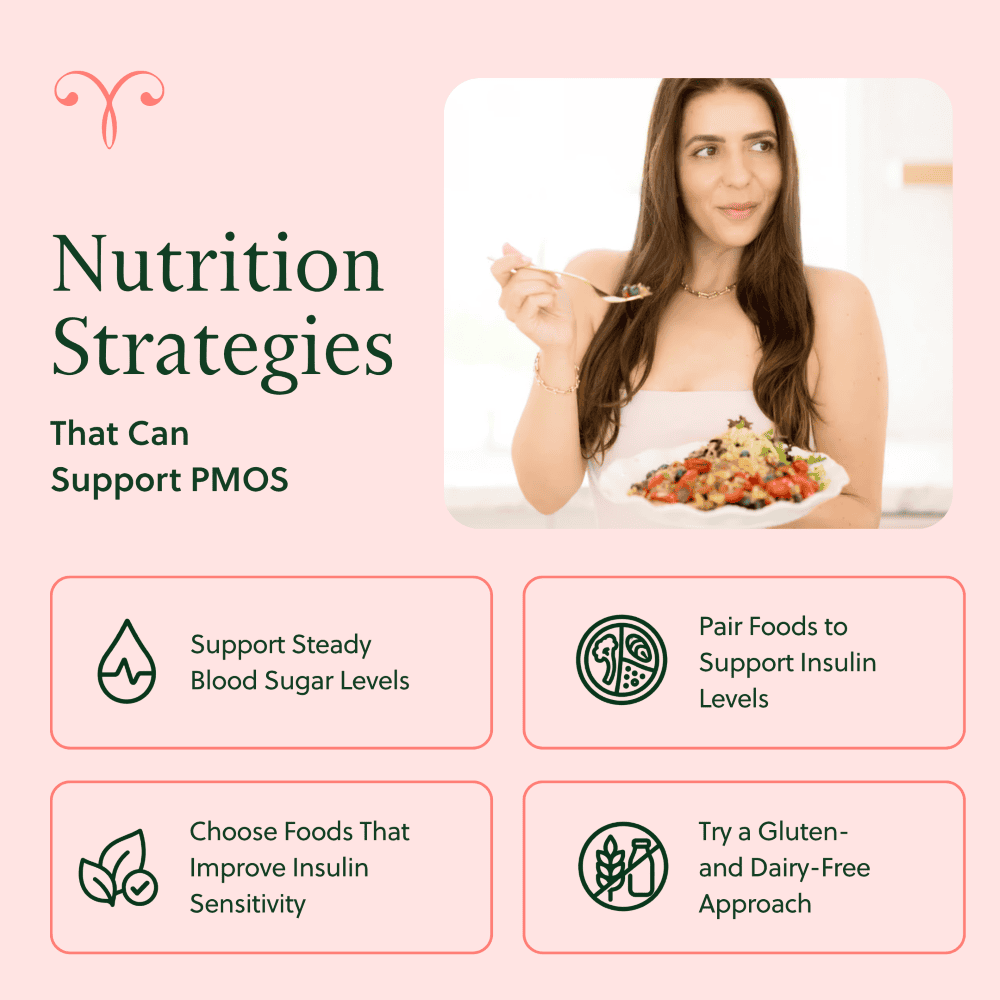
Supporting Steady Blood Sugar Levels
You know that feeling when you’ve just eaten breakfast but you’re starving just an hour later? Sometimes, blood sugar spikes and crashes can be part of the reason.
One way to help keep things more balanced is to make sure your meals have a good mix of protein, fiber, and healthy fats. Even something as simple as adding eggs and avocado to your breakfast instead of having a bowl of plain oatmeal can help you feel fuller longer. I’ve talked about this a good bit before, so if you want to get into the specifics of building balanced meals, start with my full guide on macros for PMOS.
Pairing Foods to Support Insulin Levels
What you eat together can make a difference in how your body responds to insulin. For example, eating a piece of fruit by itself may cause your blood sugar to rise faster than if you had fruit with a handful of nuts or nut butter. That’s because adding protein or healthy fats to your carbs can slow down digestion, helping your blood sugar rise more gradually.
Choosing Foods That Improve Insulin Sensitivity
When it comes to supporting insulin sensitivity, I always come back to fiber-rich vegetables, beans, and fruits that are naturally lower in sugar. They’re simple things you can work into meals without having to completely change how or what you eat. Studies have linked higher fiber intake and whole-foods with better insulin function in women with PMOS. Of course, you won’t notice a difference overnight. It’s something you work toward over time, and like I’ve said before, consistency matters more than perfection.
Trying a Gluten- and Dairy-Free Approach
One thing I always recommend is trying a gluten and dairy-free diet. For many women with PMOS, these foods may contribute to inflammation or make certain symptoms worse. And as we talked about earlier, inflammation and insulin resistance can go hand in hand.
Now… Does that mean cutting out gluten and dairy will make your PMOS symptoms disappear? Of course not! But some women find that they feel less bloated, have more energy, and notice significant improvements in other symptoms after making the switch. Give yourself a few weeks to see how your body responds.
How Can You Manage Common PMOS Symptoms?
Managing symptoms starts with noticing what they are. When you track what you’re experiencing, it’s easier to notice patterns and help your doctor figure out what matters. Here are the symptoms women with PMOS most often talk about and how you can keep an eye on them.
Irregular Periods and Your Menstrual Cycle
If you have PMOS, you probably already know how unpredictable your period can be. You might get it right on time one month, only for it to disappear the next. A lot of this has to do with how PMOS affects your hormones and ovulation, with insulin resistance sometimes playing a role, too. That’s why I recommend keeping track of your cycle, even if it’s just writing down the dates in your calendar. Over time, you’ll start to get a better idea of how far apart your periods are and whether there’s any sort of pattern.
Weight Gain or Difficulty Losing Weight
If you’ve been told to “just lose weight” with PMOS, you know how frustrating that advice can be. Especially when no one takes the time to explain why losing weight feels so much harder in the first place! Insulin resistance can affect how your body stores fat, which is one reason why eating less and exercising more isn’t the simple fix people make it out to be.
Instead of cutting calories or pushing yourself through exhausting workouts, try focusing on balanced meals that support blood sugar levels and finding ways to move your body that you actually enjoy and can stick with.
Unwanted Hair Growth and Hair Thinning or Loss
Higher androgen levels can drive unwanted hair growth on the face or body. They can also contribute to hair thinning or loss on the scalp. I know, it’s a frustrating and (really) confusing cycle. These changes tend to happen slowly, so taking pictures every few months can tell you more than the mirror does day to day.
Skin Changes and Acne
Those same hormones that can cause hair loss, hair growth, and weight gain? They tend to show up on your skin as hormonal acne along the jaw and chin. Supporting your blood sugar and reducing inflammation through food can help with symptoms across the board. And don’t underestimate a gentle routine! I pulled together my go-to PMOS skincare tips if your skin is one of your biggest frustrations.
Not sure which symptoms point to PMOS for you? Take the PMOS quiz and get a clearer idea in a few minutes.
How Do Sleep, Movement, and Mental Health Fit Into Self-Care?
We talk a lot about food when we talk about PMOS, but that’s not all that matters. Sleep, movement, and mental health are just as important when it comes to your hormones and insulin. Here’s what this can look like in a PMOS self-care plan:
Sleep and Sleep Apnea
Poor sleep can raise cortisol and makes insulin resistance worse. On top of that, women with PMOS also have a higher risk of sleep apnea. That means if you snore or feel exhausted despite a full night, mention it to your doctor and ask about a sleep evaluation. Protecting your sleep is one of the most underrated things you can do for your hormones.
You also don’t have to head straight to the doctor to get a little relief. Before you go to sleep, do things like limiting screen time, dimming the lights, using calming essential oils, reading a book, or having a warm cup of PMOS-supportive tea. These small habits can help lower cortisol and support a gentle wind-down experience before bed.
Movement That Works With PMOS
I recommend low-impact, slow-weighted strength workouts over intense exercises every single time. Not only does it still build muscle, but it also helps improve insulin uptake without the cortisol spike that intense cardio can cause. Muscle is one of the best places for your body to use up blood sugar, which supports steadier insulin levels. TL;DR: you don’t need to punish yourself in a workout to benefit from it. Consistency over intensity is what pays off here.
Mental Health and Stress
Living with a condition that people constantly minimize takes a real toll on your mental health. Because chronic stress keeps cortisol high, this cycle basically feeds right back into insulin resistance. Managing stress is part of managing symptoms, whether that’s therapy, time outside, journaling, or just prioritizing a quality night time routine.
Building Your Own PMOS Self-Care Routine
When it comes to self-care and PMOS, you don’t have to overhaul everything at once. Pick one area, nutrition, sleep, movement, or stress, and start there. When it feels do-able, that’s when you add different habits to your routine. This is also how self-care with PMOS becomes something you actually keep doing.
If you want the meals, the slow-weighted workouts, and a community of women doing this alongside you, download The Cysterhood App for everything in one place. And if you’re still figuring out where to begin, take the PMOS quiz to get a plan matched to your symptoms.
You’ve got this,
Tallene, RD
Medical disclaimer: This content is for educational purposes only and is not a substitute for professional medical advice, diagnosis, or treatment. Always talk to your doctor or a qualified health provider about your symptoms, medications, and any decisions related to your health or fertility.
Feeling lost with PCOS?
Find out your PCOS type and get your next steps in under 2 minutes.
Find My PCOS Type →