
Can Birth Control Cause Mood Swings and Irritability?

Women take hormonal birth control pills for a lot of reasons. Of course, the most obvious one is to prevent pregnancy, but many women report using it for non-contraceptive reasons. In fact, doctors often prescribe the pill for things like acne, irregular menstrual cycles, period pain, and managing symptoms of polyendocrine metabolic ovarian syndrome (formerly called polycystic ovary syndrome, or PCOS).
Though oral contraceptives have some pretty appealing benefits, they’re not without side effects. Women on the pill sometimes experience nausea, headaches, weight gain, fatigue, sleep issues, and even mood swings. That last one can be especially challenging. Fluctuations in your emotions can have you acting and feeling like a completely different person.
In this post, I’m going to talk about why birth control can cause mood swings. Then, I’ll get into some ways you can manage these symptoms and other common side effects of the pill. I’ll also share some alternatives to oral contraceptives that may help reverse symptoms without the tradeoff of unpredictable moods, anxiety, and irritability.
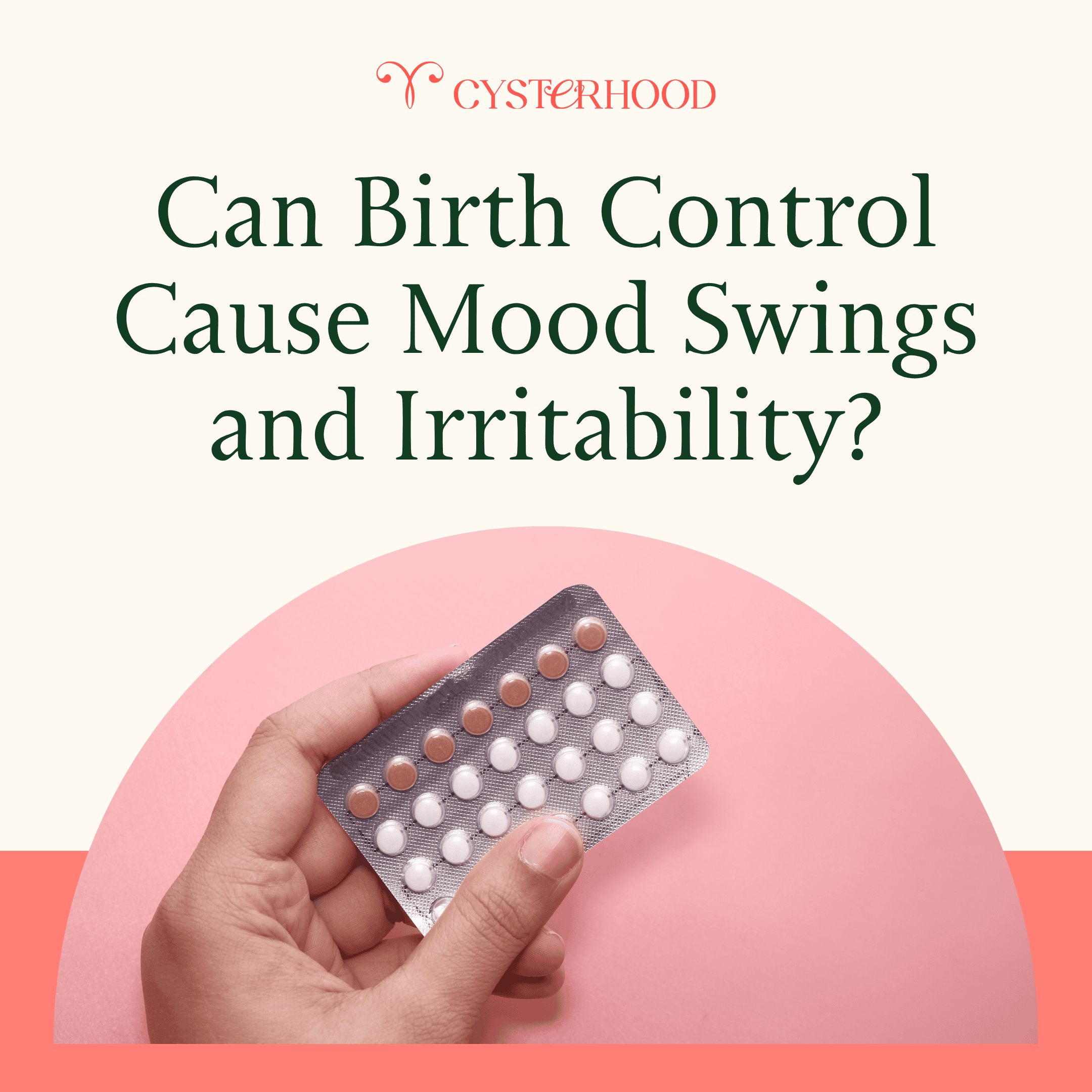
Can Birth Control Cause Mood Swings and Irritability?
A Harvard study showed that around 16% of women on hormonal contraceptives report mood-related side effects. Other research shows an increased risk of depression, anxiety, and other mood disorders when taking birth control. Either way, it’s clear that experiencing mood swings or emotional changes while on the pill isn’t unusual.
And honestly, it’s not all that surprising. Hormonal birth control can influence serotonin and other neurotransmitters that play a key role in regulating mood and motivation. But no matter how common these side effects may be, that doesn’t mean you should ignore or accept them.
If you’re struggling with mood changes, keep in contact with your doctor and take steps to support your mental health. Together, you can find a solution that helps you feel more balanced while still managing your PMOS symptoms.
What Is in Birth Control Pills?
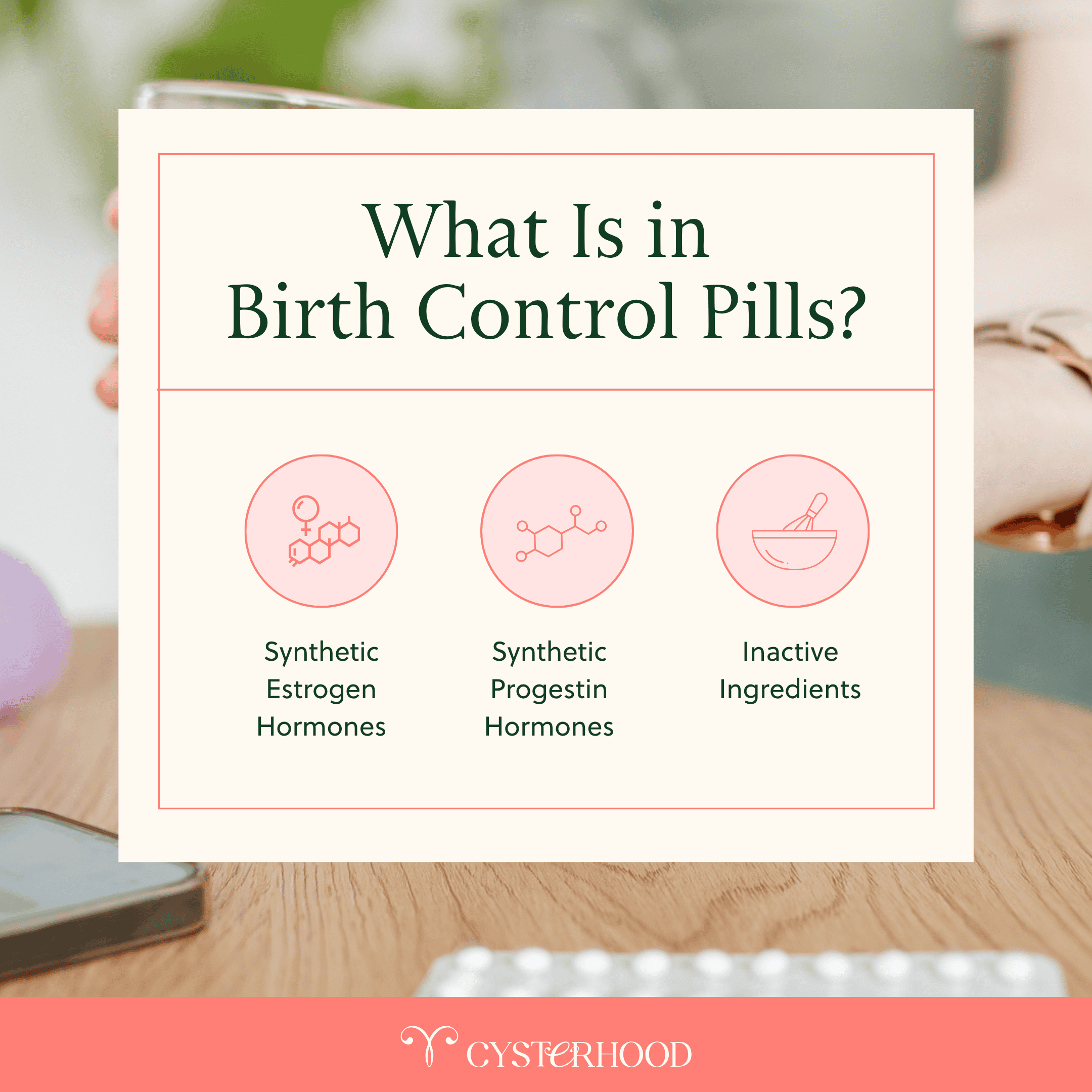
To really understand how birth control pills can affect your mood, it helps to know what’s actually in them. The synthetic hormones in these medications can directly influence the chemical messengers tied to how you feel. And while most conversations focus on the active ingredients, they’re not the only factor that matters. The fillers, dyes, and preservatives may also contribute to side effects like nausea, headaches, and inflammation.
Here’s what may be impacting your mood:
Synthetic Estrogen Hormones
The synthetic estrogen in birth control helps prevent ovulation and stabilize the uterine lining, making periods more predictable. And though natural estrogen helps with emotional regulation, the synthetic forms of hormones don’t always behave the same way as the real thing. Estrogen in birth control can negatively impact serotonin and dopamine activity, which are the neurotransmitters needed for motivation, pleasure, and mood stability.
Here are some synthetic estrogen hormones you’ll likely find on the ingredients list:
- Ethinyl estradiol
- Estradiol valerate
- Estetrol
Synthetic Progestin Hormones
Progestin (a synthetic form of progesterone) is the primary pregnancy-preventing hormone in birth control. It thickens cervical mucus, helps suppress ovulation, and thins the uterine lining, making fertilization much less likely. However, it can also influence your mood.
Some research suggests progestin may reduce serotonin availability and activity, which we know plays a major role in mood and emotional stability. Progestin may also affect GABA, the neurotransmitter that helps you regulate feelings of calmness and relaxation.
And because there are many different types of progestins (which I’ll list below), each one can interact differently with brain receptors and androgen activity. This can make mood-related side effects highly individual and sometimes difficult to pinpoint.
- Levonorgestrel
- Drospirenone
- Norethindrone
- Norgestimate
- Desogestrel
- Dienogest
- Norelgestromin
- Levonorgestrel acetate
- Ethynodiol diacetate
- Medroxyprogesterone acetate
- Cyproterone acetate
- Nomegestrol acetate
Inactive Ingredients
Inactive ingredients may not directly prevent pregnancy, but they can still affect how your body feels and functions. Birth control pills often contain fillers, dyes, binders, coatings, lactose, and starches that help with stability, absorption, texture, and shelf life.
For some people, these ingredients may contribute to headaches, nausea, bloating, inflammation, digestive discomfort, or sensitivities. In other words, these symptoms can indirectly affect mood and overall well-being in a big way. And because every brand uses a slightly different formula, some people find they tolerate certain contraceptive pills much better than others. Yes, this stands true even when the active hormones are the same!
Here’s what you need to look out for:
- Fillers
- Dyes
- Binders
- Coatings
- Lactose
- Starches
Can the Birth Control Pill Cause Mood Swings and Irritability?
Yes. Around 16% of women on the pill report mood swings and irritability. At the same time, about 12% actually report improvements in their mood. So while hormonal birth control can negatively affect emotional regulation for some women, others may feel more emotionally stable while taking it.
What we do know is that both estrogen and progestin can influence serotonin and other neurotransmitters involved in mood regulation. That helps explain why the pill can have such noticeable emotional effects, whether positive or negative.
The important thing is to listen to your body, support its needs, and make changes when necessary so you can feel like yourself again. If you need additional guidance in this journey, visit my posts, “Can Birth Control Cause PMOS?” and “How Birth Control Affects Your Hormones and Body.” In both resources, I break down the connection between birth control and individual experience, what changes to watch for, and how to better understand what you’re experiencing.
How Long Do Birth Control Mood Swings Last?
Mood swings from birth control often improve within the first 2 to 3 months. As your body adjusts to the synthetic hormones, temporary changes in brain chemistry and hormone signaling can affect your emotions. For many women, these symptoms gradually improve with time.
Ready to get control of your emotions and feel your best? Here’s how you can control your mood swings while on birth control:
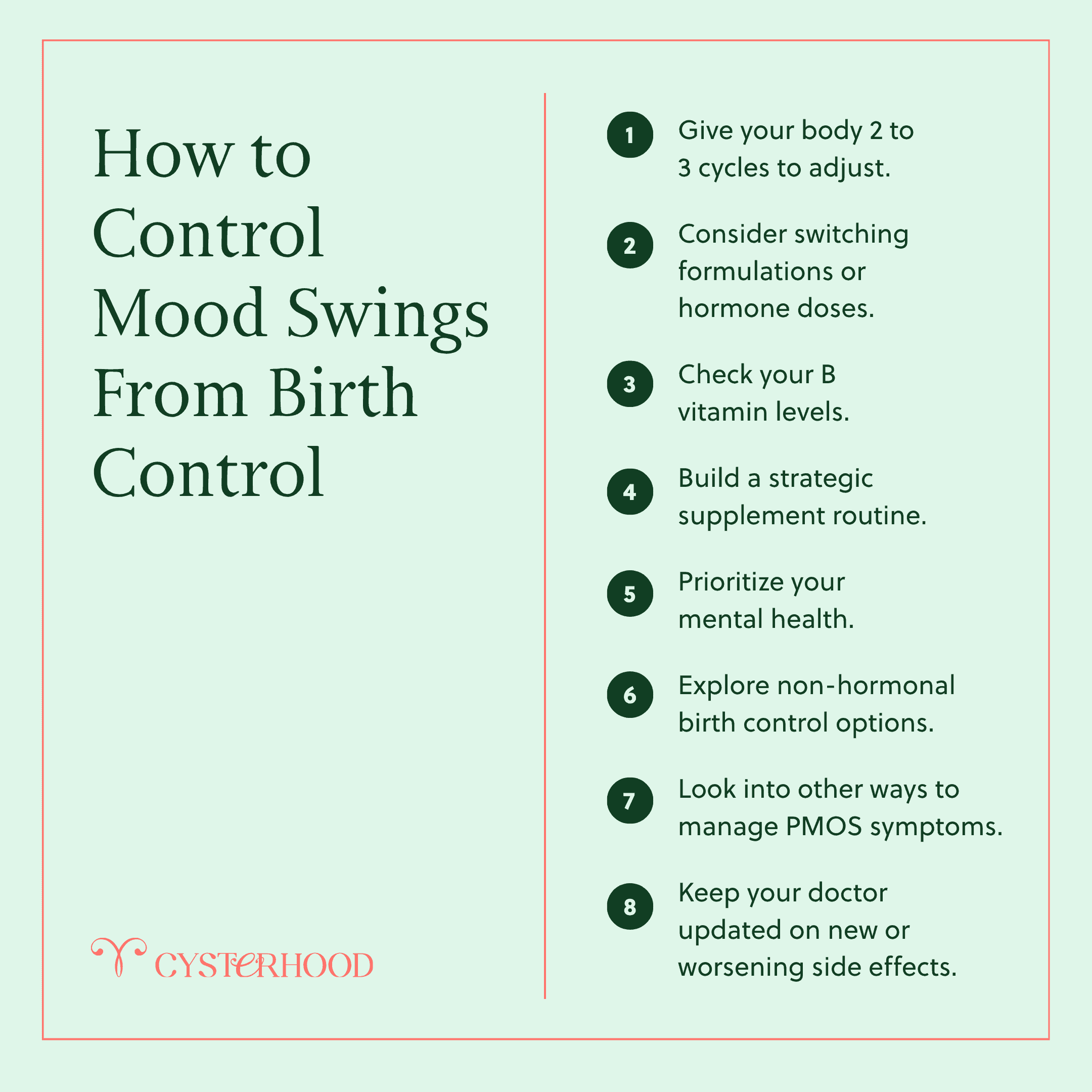
How to Control Mood Swings From Birth Control
Give your body 2 to 3 cycles to adjust.
As I mentioned, it can take a few months for your body to adjust to the new birth control. Before changing dosages or taking any drastic steps, give yourself a little time to adapt. Many women find that once their hormones stabilize, the mood swings and irritability become much more manageable.
Consider switching formulations or hormone doses.
If nothing improves after about 90 days, it’s probably time to talk to your doctor about making an adjustment. They may recommend changing the hormone dosage or switching you to a different formulation. Just keep in mind that some insurance providers only cover certain generic options. That means specific brands or newer formulas may come with higher out-of-pocket costs.
Check your B vitamin levels.
Some research shows that hormonal contraceptives can lower or raise your body’s demand for certain nutrients. Especially those essential to brain and neurotransmitter function! More specifically, vitamin B6, folate (B9), and vitamin B12 can all be impacted by hormonal birth control. And they all have to do with mood, too! So, get labs done to check your B vitamin levels. Low levels could explain why you’re feeling moody and irritable.
Build a strategic supplement routine.
Supporting your body nutritionally may help make the transition to hormonal birth control a little smoother. Nutrients like magnesium, omega-3 fatty acids, vitamin D, and B vitamins all play important roles in nervous system health, neurotransmitter production, and emotional regulation.
Talk to your doctor about starting Ovafit’s Meta Omega-3 and Meta Multivitamin. I designed them both specifically with a PMOS body in mind, ensuring they didn’t trigger sensitivities while delivering maximum benefits.
Prioritize your mental health.
It’s true that you can’t completely control how synthetic estrogen and progestin affect your body. However, you can do a surprising amount to support your mood and stress response through intentional self-care. By keeping cortisol levels in check and supporting healthy neurotransmitter production, you can make a big difference in how you feel day to day.
Here are some things you can start doing right now:
- Practice better sleep hygiene
- Manage stress levels
- Move your body every day
- Adopt a gluten- and dairy-free anti-inflammatory diet
- Try regular acupuncture sessions
- Consider therapy or life coaching
Explore non-hormonal birth control options.
There are other forms of contraception that don’t impact your hormones at all. If you’re strictly looking to prevent pregnancy, consider switching from hormonal birth control to a non-hormonal option. You could opt for the copper IUD, condoms, or natural family planning, just to name a few!
For more information, read our post “What You Need to Know About the IUD and PCOS.”
Look into other ways to manage PMOS symptoms.
If you’re not using oral contraceptives to prevent pregnancy, but to manage PMOS symptoms instead, I’m here to tell you there’s a better way. Things like metformin and birth control only mask the symptoms of PMOS and bring their own side effects with them. Ultimately, they don’t get to the root cause of your chronic issues.
But you can reverse symptoms and heal your PMOS totally naturally using nutrition, exercise, and lifestyle changes. It’s a holistic option that addresses inflammation, insulin resistance, and hormonal imbalance, so your symptom relief can be permanent and side effect-free.
For a full breakdown, read my post “Holistic Treatment for PCOS: Heal Your Mind, Body, and Soul.”
Keep your doctor updated on new or worsening side effects.
Just because mood swings, anxiety, irritability, and emotional numbness are considered “common” side effects of birth control doesn’t mean you should just brush them off. If you notice significant changes in your mental health, energy levels, sleep, or overall quality of life, keep your doctor informed. The more clearly you communicate what you’re experiencing, the easier it is to find a solution that actually supports your body instead of working against it.
Mood swings from birth control are real, but there are ways to support your body and feel better.
If you can’t recognize yourself or control your emotions on birth control, don’t brush it off as something you just have to live with. Your mood, mental health, and overall well-being matter. Listen to your body, support your hormones the best you can, and remember that you always have options.
Feeling lost with PCOS?
Find out your PCOS type and get your next steps in under 2 minutes.
Find My PCOS Type →