
Polycystic ovary syndrome (PCOS) is one of the most common conditions women face worldwide. In fact, it’s estimated that around 6 million women in the United States have PCOS. But, despite its prevalence, researchers don’t know what causes it or exactly how to fix it. Because of this, doctors often simply tell women with PCOS to lose weight or commit to prescriptions like metformin until menopause.
Essentially, Cysters are told there are no options and that the symptoms of PCOS are inevitable, chronic, and permanent. But is that really true?
If you’ve been diagnosed with PCOS here’s what you need to know about treatment options and long-term relief:
Can PCOS Be Cured? Understanding PCOS Treatment Options
Getting a PCOS diagnosis isn’t always easy. Some research even estimates that up to 70% of women with PCOS may go undiagnosed. There are lots of reasons for that, but it means the first big hurdle of managing PCOS is identifying it in the first place. It often involves making sense of symptoms, bloodwork, ultrasounds, and more.
I’ve discussed how healthcare professionals diagnose PCOS before. But my point is this: the condition is difficult from the start. Because once you finally get that confirmation that you do have polycystic ovary syndrome (PCOS), many doctors don’t have the training or tools to actually help you address the root cause.
But let this post be your hope. There is a way to heal your symptoms and reverse PCOS that doesn’t involve invasive procedures, lifelong medication, or just masking symptoms with quick fixes. Before we get into that, though, let’s first break down what PCOS is, what causes it, and what the risks are if it goes unmanaged.
What Is PCOS?
Polycystic ovary syndrome or polycystic ovarian syndrome (PCOS) is a hormonal condition that affects women of reproductive age. It’s driven by insulin resistance, chronic inflammation, and, of course, hormone imbalances. Women with PCOS often experience imbalances in cortisol, thyroid hormones, estrogen, progesterone, luteinizing hormone (LH), follicle-stimulating hormone (FSH), and androgens.
All of this can have a big impact on the metabolism and reproductive system, leading to symptoms like weight gain, irregular periods, infertility, mood swings, and sleep issues. Those high androgens can even lead to cosmetic symptoms like excess hair growth and acne! As you can see, PCOS is a full-body condition. Despite what the name suggests, it’s not just an issue with the ovaries.
Since PCOS affects so many systems in the body, the list of chronic symptoms can feel totally overwhelming. This can lower a Cyster’s quality of life significantly and lead to mental health struggles along the way. If you’re like I was, finding treatment wasn’t optional—it was essential to my well-being.
Curious about what I went through—and how I got to the other side? Here’s more about my (Tallene’s) journey with PCOS. And, for a deeper dive, read my post titled “What is PCOS?”
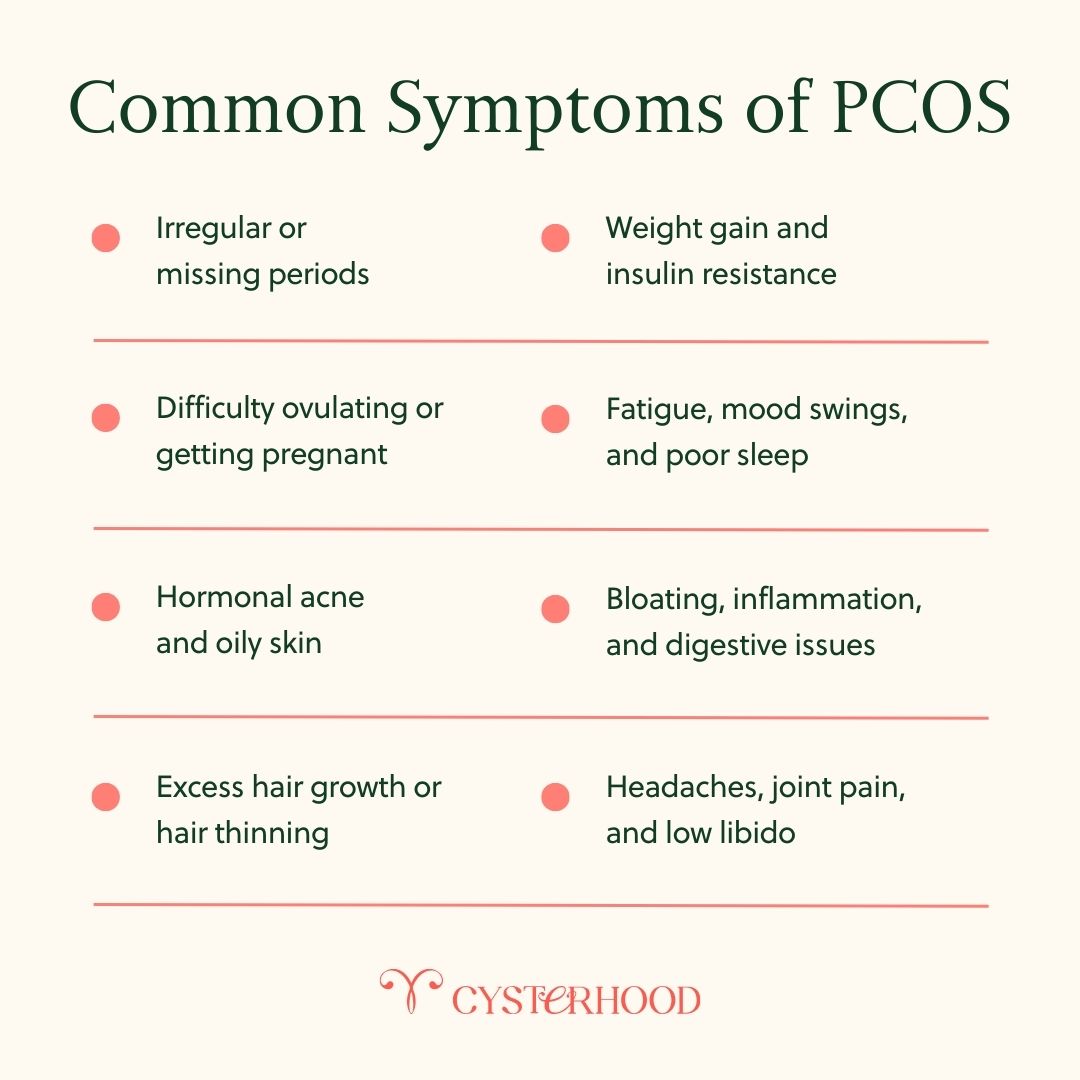
Symptoms of PCOS
- Irregular periods
- Missing periods (amenorrhea)
- Very heavy periods
- Painful periods
- Difficulty ovulating
- Infertility or trouble getting pregnant
- Ovarian cysts
- Pelvic pain or lower abdominal pain
- Hormonal acne
- Oily skin
- Excessive hair growth on the face, chest, stomach, or back
- Thinning hair or hair loss on the scalp
- Male-pattern hair loss
- Weight gain
- Difficulty losing weight
- Belly or abdominal weight gain
- Insulin resistance
- Blood sugar crashes
- Sugar or carbohydrate cravings
- Fatigue or low energy
- Brain fog
- Mood swings
- Anxiety
- Depression
- Irritability
- Poor sleep
- Sleep apnea
- Bloating
- Digestive issues
- Chronic inflammation
- Darkened skin patches (acanthosis nigricans)
- Skin tags
- Headaches or migraines
- Joint pain
- Water retention or swelling
- Low libido
What Causes PCOS?
No one knows exactly what causes PCOS. As far as researchers can tell, it’s not one single issue—it’s a combination of underlying imbalances working together.
One of the most prominent drivers is insulin resistance, which is when your body doesn’t process glucose efficiently. Instead of using it for energy, your body stores more of it as fat and leaves excess sugar circulating in the bloodstream.
As a result, your body produces more insulin to keep up. Those elevated insulin levels can trigger your ovaries to produce more androgens, which can then fuel inflammation. The result? Other hormones become imbalanced too, which worsens insulin resistance and creates a frustrating cycle that’s hard to break.
Now layer on lifestyle and environmental factors like poor sleep, chronic stress, lack of movement, and a highly processed diet, and PCOS becomes a perfect storm of hormonal dysfunction. On top of that, research suggests genetics plays a role as well.
But here’s where it gets tricky: what comes first—the PCOS or the dysfunction? It’s a bit of a chicken-and-egg situation. And because medical professionals don’t fully understand the initial trigger, there’s no official “cure.”
Is There a Cure for PCOS?
Not officially. There’s no single treatment or procedure that can completely undo PCOS or put it into permanent remission. Often, doctors recommend hormonal birth control pills or a diabetes medication called metformin. These prescriptions can help regulate hormones and improve insulin sensitivity, which may ease certain symptoms. However, they don’t address the root cause. And for many women, once they stop medication, symptoms return.
I actually discuss this further in my posts, “Pros and Cons of Metformin for PCOS” as well as “What Does Metformin Do for PCOS?” And if you really want to deep dive, listen to “PCOS & Birth Control” from my podcast, A Cyster & Her Mister!
That said, there is a way to reliably improve—and even reverse—your PCOS symptoms. You can naturally break that cycle of insulin resistance → hormonal imbalance → inflammation. How? By making a few strategic lifestyle changes that actually get to the root of the problem. Once you break one link in the chain, everything falls into balance. And, as long as you maintain those habit changes, you can find permanent symptom relief and PCOS healing.
For a full breakdown, read my essential guide to managing PCOS naturally.
What Happens If PCOS Is Untreated?
If PCOS goes untreated, it can significantly decrease your quality of life and lead to long-term complications. The health conditions stemming from PCOS can not only add to day-to-day struggles, but some of them can actually put your life at risk. I don’t say this to intimidate or scare you! However, knowledge is power—and the first step to relief is understanding why it matters.
Can PCOS Be Left Untreated?
You shouldn’t leave polycystic ovary syndrome (PCOS) untreated. When you don’t address the underlying imbalances, the issues can increase your risk of developing other health conditions, including:
Mental Health Challenges
Hormonal imbalances, blood sugar instability, and chronic inflammation can all impact brain chemistry. This can increase your risk of anxiety, depression, mood swings, and low motivation. On top of that, dealing with symptoms like weight gain, acne, or infertility can take a big emotional toll.
Here’s more on PCOS and mental health.
Sleep Disorders
Researchers have linked PCOS to insulin resistance and weight gain, both of which can increase the risk of sleep issues like insomnia or sleep apnea. Hormonal imbalances (like elevated cortisol) can also disrupt your natural sleep-wake cycle, making it harder to get quality rest.
Irregular or Absent Periods
Since PCOS results in elevated androgen levels (male sex hormones), it can completely throw off the menstrual cycle. Those androgens prevent or delay ovulation, meaning periods can be unpredictable or absent altogether.
Endometrial Hyperplasia and Cancer
Without regular ovulation, progesterone levels stay low while estrogen remains relatively high. This can cause the uterine lining to build up over time, increasing the risk of endometrial hyperplasia and, in more severe cases, endometrial cancer.
Infertility and Frequent Miscarriages
If you’re not ovulating or you’re ovulating at unpredictable times, conceiving can be really difficult. And even once you do conceive, sustaining pregnancy can be challenging with unresolved hormonal imbalances, inflammation, and insulin resistance. This can result in the inability to get pregnant or frequent miscarriages.
If you’re struggling with this, I see you. Listen to the episode of A Cyster and Her Mister called “Overcoming Miscarriage and Infertility for PCOS with Laura Fletcher.”
Type 2 Diabetes
Insulin resistance is the core driver of PCOS, and it’s also a key driver behind type 2 diabetes. If left unmanaged, elevated blood sugar and insulin levels can progress into type 2 diabetes over time. In fact, women with PCOS are up to four times more likely to develop type 2 diabetes than those without it.
Metabolic Syndrome
PCOS increases the likelihood of a cluster of metabolic issues, including high blood sugar, high blood pressure, abnormal cholesterol levels, and excess abdominal fat—all of which raise the risk of chronic disease. Here’s more on PCOS and metabolic syndrome.
Obesity
Hormonal imbalances and insulin resistance make it easier for your body to store fat and much harder to burn it. On top of that, these root issues can trigger intense sugar cravings, increased hunger, and low energy levels, which make weight loss extremely difficult. Over time, this can lead to excessive weight gain.
Cardiovascular Disease
Over time, the combination of insulin resistance, inflammation, high cholesterol, and high blood pressure can increase the risk of heart disease and other cardiovascular issues. Research shows that women with PCOS are 30-80% more likely to develop cardiovascular disease compared to women without PCOS.
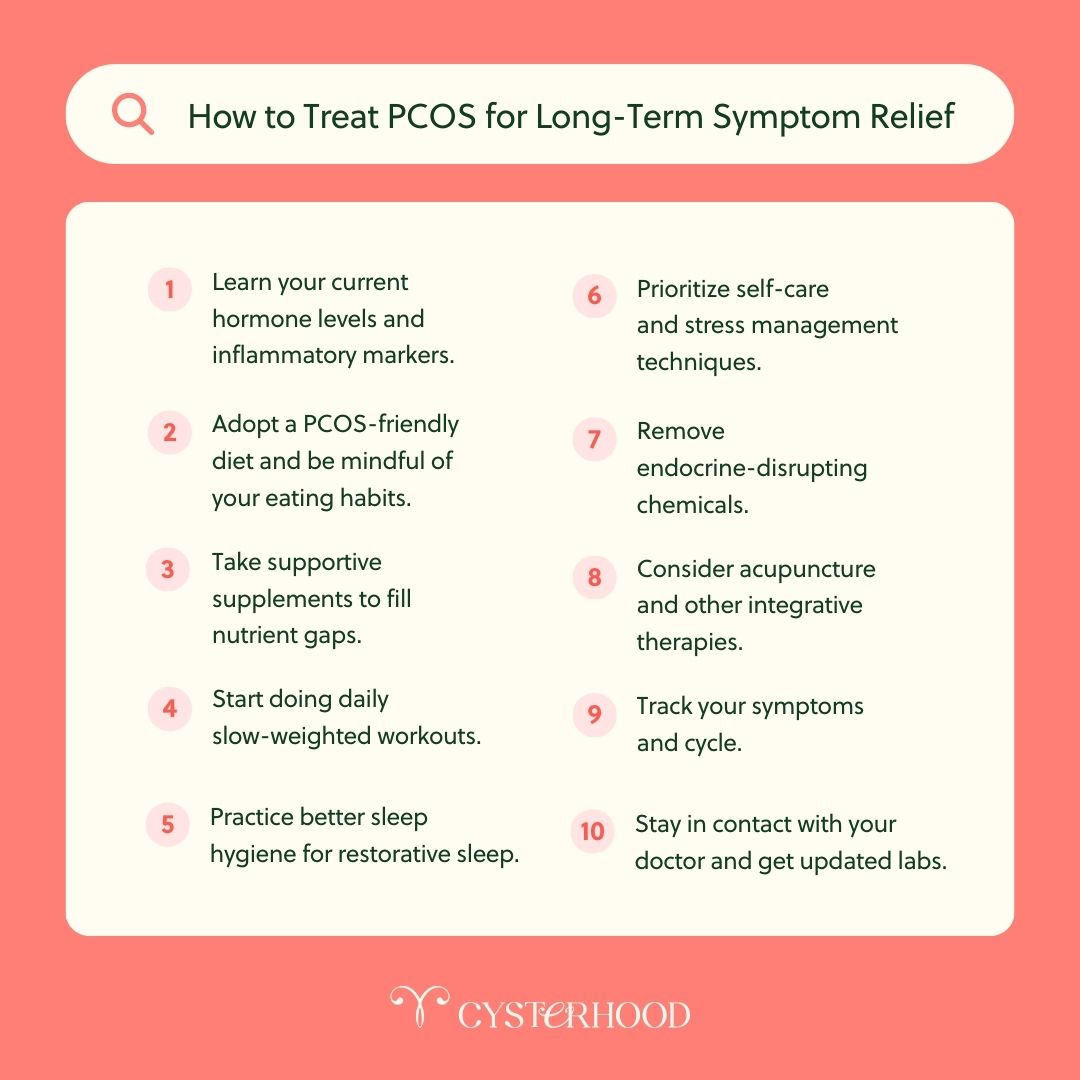
How to Treat PCOS for Long-Term Symptom Relief
Step One: Learn your current hormone levels and inflammatory markers.
Before starting your healing journey, you need to get your official PCOS diagnosis. This usually involves a review of your medical history, a physical exam (sometimes a pelvic exam), and an ultrasound. See a doctor who specializes in women’s health, like an OB-GYN, reproductive endocrinologist, or a functional or integrative medical doctor with a background in PCOS.
The blood tests will be key. Not only will they help you definitely know if you have PCOS, but they’ll also help you understand what issues need your attention first. For most women, balancing androgens and insulin is a great place to start!
If you’d rather do blood work privately, here’s a discount on these hormone tests from Equilife!
Step Two: Adopt a PCOS-friendly diet and be mindful of your eating habits.
Your eating habits are among the most important steps toward PCOS healing. Changing what and how you eat can have a huge impact on metabolic, hormonal, and inflammatory issues—all drivers of PCOS! Making improvements to your diet can not only help you lose weight but also support whole-body symptom relief.
Start with one habit change at a time, but here are the changes I recommend:
- Adopt a gluten- and dairy-free anti-inflammatory diet.
- Avoid big gaps between meals—aim to eat 3-4 times a day.
- Cut down on sugary drinks, processed foods, and refined carbs.
- Eat balanced meals with plenty of protein, healthy fats, and fiber.
- Use Ovafit’s Crave Control Protein Powder to hit your protein macros and fight cravings.
- Support gut health with fermented foods like kimchi, tempeh, and kombucha.
- Prioritize hydration by drinking plenty of water and electrolytes.
Step Three: Take supportive supplements to fill nutrient gaps.
Even if you are super intentional about your PCOS diet, you’ll still have nutrient gaps. It’s true for all of us! However, our bodies still need all the support they can get to fix dysfunction and get things running optimally again. Because of this, I recommend a strategic PCOS supplement routine.
Remember to talk to your doctor before starting anything new. Here are the research-backed vitamins and minerals that can have the biggest impact on your PCOS healing:
- Inositol Complete 40:1: Supports insulin sensitivity and helps regulate ovulation and menstrual cycles
- Berberine Advanced: Helps lower blood sugar levels and improve insulin resistance
- Meta Multivitamin (or Purely PreNatal): Supports overall hormone balance and metabolic health
- Meta Omega: Provides omega-3s to reduce inflammation and support hormone function
- CoQ10: Supports energy production and may improve egg quality and fertility
- Curcumin: Helps reduce inflammation, which can improve hormone balance and metabolic function
Step Four: Start doing daily slow-weighted workouts.
Daily movement is also essential to natural PCOS healing. And, it’s not all about the weight you can lose! There are lots of PCOS benefits to working out. Studies show exercise improves insulin sensitivity, eases inflammation, and balances hormones.
But don’t just go for any workout. High-intensity exercises can actually raise cortisol levels and worsen hormone balance. (This is why I GAINED weight despite kickboxing every day.) For best results, I recommend slow-weighted workouts.
These types of workouts help build lean muscle, which improves insulin sensitivity and supports a healthier metabolism. They also place less stress on the body, helping keep cortisol levels more stable while still delivering results.
You can find plenty of PCOS-friendly exercise routines and hundreds of supportive recipes on The Cysterhood app.
Step Five: Practice better sleep hygiene for restorative rest.
To balance hormones and improve insulin sensitivity, you need to get good sleep. While you rest, your body undergoes natural processes that regulate cortisol, balance blood sugar, repair cells, support metabolism, and optimize overall hormone production. If bad sleep interrupts this vital mechanism, healing the root issues of your PCOS will feel like an uphill battle.
To get more restorative rest, make these sleep hygiene improvements:
- Stick to a consistent sleep schedule
- Limit blue light before bed
- Create a wind-down routine
- Keep your room cool and dark
- Avoid late-night eating
- Reduce caffeine intake
- Get morning sunlight
- Manage stress before bed
- Limit alcohol before bed
- Use your bed for sleep only
Step Six: Prioritize self-care and stress management techniques.
Though many people don’t realize it, stress is one of the primary drivers of hormone imbalance and insulin resistance. When you’re constantly stressed, your body shifts into “emergency mode,” which changes how it functions. It starts storing more fat, stops prioritizing reproduction, and increases cortisol levels, all of which can worsen PCOS symptoms.
Because of this, you have to actively prioritize getting stress under control. Start incorporating simple stress management techniques like deep breathing, walking, journaling, prayer or meditation, and limiting overstimulation from screens and social media.
And don’t forget about self-care. Whether it’s taking time to rest, spending time outside, enjoying a hobby, or simply slowing down your routine, these small habits help signal safety to your body and support hormone balance.
Step Seven: Remove endocrine-disrupting chemicals.
Once you’ve mastered those first few lifestyle changes, it’s a good idea to start removing endocrine-disrupting chemicals from your home. These are substances found in everyday items that researchers have proven disrupt your body’s hormone levels.
You’ve probably heard of a few of these: BPA, parabens, PFAS, flame retardants, heavy metals, etc. But, it may surprise you to hear how many things they’re inside! Plastic food containers, canned foods, Teflon cookware, synthetic fragrances, and even unfiltered tap water can all include endocrine disruptors.
Not sure where to start? Here’s how to remove endocrine disruptors.
Step Eight: Consider acupuncture and other integrative therapies.
You can take your healing a step further by adding integrative therapies. Treatments like acupuncture can help regulate your menstrual cycle, improve blood flow to the ovaries, and reduce stress. And, fortunately, all of these support PCOS recovery.
You can also explore options like herbal medicine (through products like Testosterone Relief Tea), yoga, cognitive-behavioral therapy (CBT), or working with a functional practitioner who specializes in hormone health. These practices won’t replace your foundational habits, but they can enhance your results and help your body heal more efficiently!
Step Nine: Track your symptoms and cycle.
As you make changes, track your symptoms to map your progress. When you constantly monitor your cycle, mood, energy levels, cravings, sleep, and physical symptoms, you start to notice patterns.
This allows you to see what works, what doesn’t, and how your body responds to different foods and habits. Over time, this insight helps you make more informed decisions and stay ahead of your symptoms.
Step Ten: Stay in contact with your doctor and get updated labs.
Stay in contact with your doctor and keep your lab work up to date. As your body changes, so may your needs! And regular testing will show you, through data, how far you’ve come on your healing journey. Use this as your feedback loop to keep your plan personalized, effective, and sustainable.
PCOS doesn’t have an official cure, but that doesn’t mean you can’t find healing.
If you have PCOS, you don’t have to settle for feeling stuck, taking long-term medications, or being told this is just “how your body is.” When you understand what’s actually driving your symptoms, you can start making changes that move the needle. And those small, consistent changes add up. Over time, they can balance your hormones, improve your metabolism, and help your body function the way it’s supposed to.