


What Are Periods Like With PCOS?
One of the most common symptoms of PCOS is irregular periods. Now, for someone without polycystic ovary syndrome (PCOS), an infrequent menstrual cycle might not sound half bad. But, we Cysters know that disruptions in our period means a whole lot more than a “month off” from bleeding and pain.
The irregularity of a menstrual cycle is a major sign of our body’s hormonal turmoil. These issues with our endocrine system cause irregular menstrual cycles, fertility issues, and severe PMS symptoms when those periods DO finally come.
Today, we’re exploring all things PCOS and periods. We’ll discuss what periods are like with PCOS, why they’re that way, and how you can get your cycle back on track. Cyster’s, let’s invite Aunt Flow back into our lives:
What Are Periods Like With PCOS?
So, when we say women with PCOS have “irregular menstrual cycles,” what does that mean? First of all, it means the frequency of the periods is unpredictable. Most women have a 28 day cycle, whereas a Cyster could be anywhere between 21-40 days or be missed altogether.
When that period finally does arrive, they’re often extremely heavy. Most women bleed about 2-3 TB of blood during a cycle, but women with PCOS can have twice that and experience clotting. In addition to having a heavy flow, Cysters may also encounter severe period pains.
This disrupts a Cyster’s life in so many ways! The harsh symptoms can significantly reduce a woman’s quality of life both during, after, and leading up to a period. And, the unpredictability can cause anxiety as well.
If all that wasn’t enough, no periods, means no ovulation. Irregular periods means irregular ovulation. So, the issues with the menstrual cycle can make it really difficult to get pregnant. If your cycle doesn’t happen like it’s supposed to, conceiving can be extremely difficult.
But, why does this happen? What about PCOS triggers such a serious reaction from the body? Let’s discuss that next:
How Does PCOS Affect Periods?
Polycystic ovary syndrome (PCOS) isn’t kind on a woman’s body. First of all, many women with PCOS have high levels of androgens, which are male hormones. Excess androgens obviously don’t support healthy menstruation.
Additionally, too much insulin will disrupt that cycle. And, 70-80% of women with PCOS have insulin resistance, causing high levels of insulin in the body, leading to high testosterone in the ovaries. This is not only a possible cause of weight gain and high blood pressure, but it may also cause irregular and heavy periods.
Reclaiming a regular period should be a priority, because menstruation is an integral part of our feminine health. Plus, these imbalances and concerns are most likely causing other symptoms of PCOS as well! So, you want to get it sorted out. Unfortunately, there’s no pill you can take to fix your insulin levels and hormones. (Nope, not even birth control.)
The goal is to reverse symptoms of PCOS naturally, in a way that is sustainable, healthy, and actually effective. Here’s how you can start regulating your period:
Can PCOS Cause Painful Periods?
Yes! PCOS can cause painful periods. High androgen levels disrupt ovulation by growing lots of immature follicles or small cysts instead of one healthy egg. (This is what gives your ovaries that polycystic appearance.) Because there’s no fully matured egg, your reproductive system doesn’t receive the signal to ovulate when it’s supposed to. That delays ovulation or prevents it from happening at all.
Here’s where it can cause pain: Leading up to ovulation, estrogen builds up the uterine line preparing for implantation. In a normal cycle, ovulation produces progesterone, which stops the growth of the uterine lining. Without ovulation, progesterone hormone levels stay low. The estrogen remains unopposed, so it keeps building up that uterine lining.
When the body finally gets the go to ovulate, the body has a lot of excess tissue to shed and break down. This can lead to pelvic pain, cramping, heavy bleeding, and clotting. On top of all that, chronic inflammation can make the tissue around the ovaries and uterus tender and reactive, increasing the risk of pain during your period.
Does PCOS Make Cramps Worse?
Yes! The combination of inflammation and hormone imbalance with PCOS can definitely make cramps feel more intense. When hormones like estrogen, progesterone, and androgens are out of balance, the uterine lining often becomes thicker than it should be. So when your period starts, your body has to work harder to shed that excess tissue. That means stronger, more frequent uterine contractions.
And, as I mentioned, inflammation can play a big part in your pain levels too. Higher levels of inflammatory compounds (like prostaglandins) can make those contractions more aggressive and painful. This can lead to sharper cramps, lower back pain, and that deep, aching pelvic pressure that feels harder to relieve.
PCOS and Spotting Between Periods
PCOS can also cause spotting between periods. When ovulation is irregular (or not happening at all), hormone levels fluctuate unpredictably. Estrogen may rise without the balancing effect of progesterone, which can make the uterine lining unstable. Instead of building up and shedding in one complete cycle, the lining may partially break down at random times.
When this happens, you may see some light spotting or brown discharge between periods. While it’s usually not dangerous, frequent or persistent spotting is a sign that your hormones aren’t properly regulated and your cycle isn’t fully syncing the way it should.
Related: Why Is My Menstrual Cycle Getting Longer with PCOS?
How to Get Regular Periods with PCOS Naturally
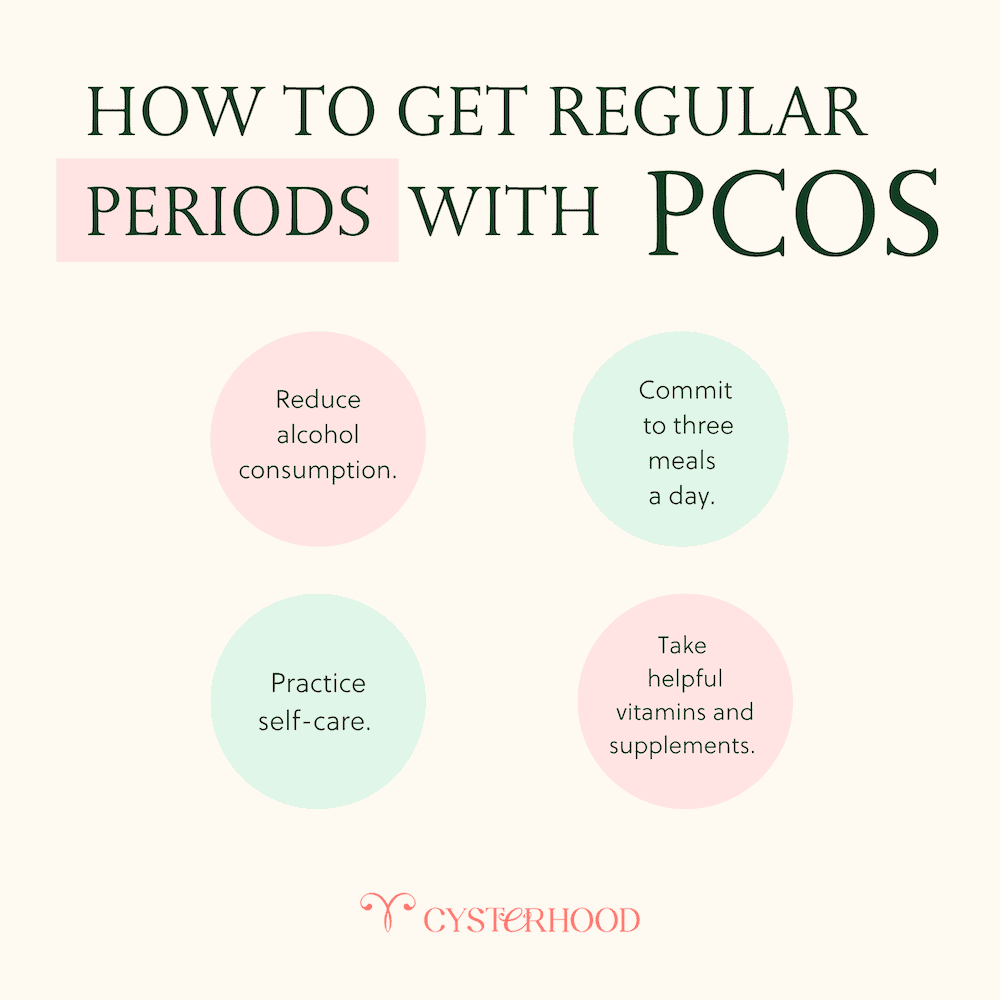
Cut dairy and gluten.
Dairy and gluten can trigger the immune system to attack your tissue, causing inflammation. Then, inflammation causes insulin resistance. When you’re insulin resistant, your body produces androgens that disrupt your cycle.
Whew. I know, that was a lot, but you can see how gluten and dairy can have profound effects on your body. You can learn more about the health benefits of cutting dairy here and the gluten here.
Drink spearmint tea.
Spearmint tea has been shown to reduce testosterone in the body. Testosterone is a male hormone (androgen) that delays and suppresses the period, so a regular cup of spearmint tea can help support your cycle.
Do the right exercises.
Regular exercise helps get your periods back on track in a number of ways. It increases insulin sensitivity, lowers cortisol levels (stress hormones), boosts metabolism, and reduces inflammation. Each of these contributes to period regulation.
Of course, exercising can help you lose weight too! Just make sure you’re not pushing your heart rate too hard. Pumping up that heart rate can get your cortisol levels rising again. Slow weighted workouts, yoga, pilates, and light cardio are all great choices. You can read more about that here.
Eat your fiber.
Fiber has been shown to help with painful periods by reducing estrogen levels. Estrogen is what causes cramps, and many Cysters struggle with estrogen dominance. You can add fiber to your diet through a variety of fruits and vegetables!
Drink water.
Bloating is another unfortunate period symptom. It’s uncomfortable and sometimes painful, but drinking lots of water can help reduce bloating. Additionally, drinking warm or hot water has been shown to soothe tense muscles by increasing blood flow to all parts of your body!
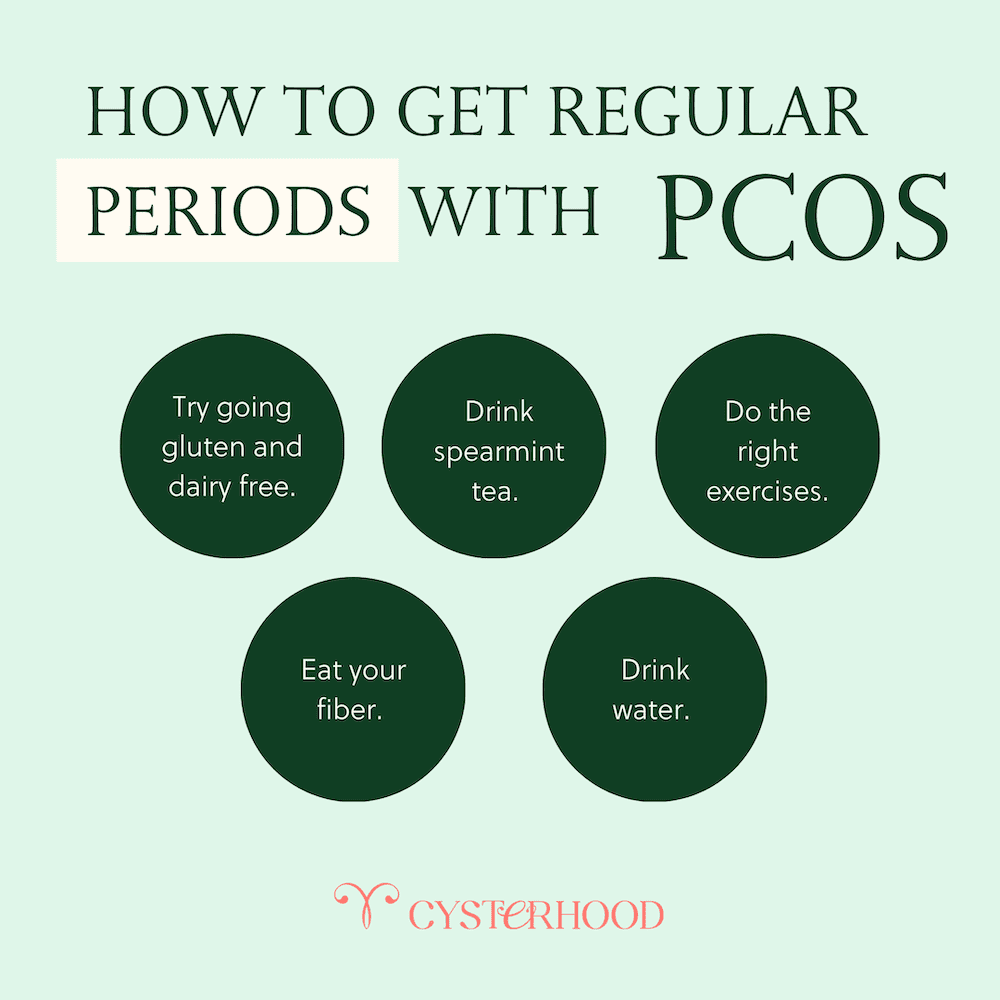
Reduce alcohol consumption.
Alcohol works against you in several ways. It increases insulin resistance and it inhibits liver detox. It also makes your body release cortisol after a day of drinking. These contribute to exacerbating PCOS symptoms! The liver is essential for breaking down excess hormones. So, when it’s not working properly, it can’t contribute to regulating the endocrine system.
Commit to three meals a day.
Eating three meals a day is a fantastic diet practice! When you eat hearty meals using PCOS-friendly ingredients for breakfast, lunch, and dinner, you’ll snack less frequently. And when you eat right and keep snacking to a minimum, you’ll naturally increase insulin sensitivity!
It’s not just about maintaining a healthy weight or managing periods, but eating right and increasing insulin sensitivity can even reduce your risk of type 2 diabetes and heart disease.
As you can tell from this article, insulin resistance causes a lot of issues in many Cyster’s bodies, but it really depends on what type of PCOS you have. If you’re dealing with challenging periods it’s likely you have insulin resistant PCOS, but take the quiz anyway to find out for sure!
Take helpful vitamins and supplements.
Cysters, we tend to have several nutrient gaps. It’s not your fault! Even when you start eating PCOS friendly meals and snacking less, you’ll most likely still be lacking because inflammation alone makes it hard to absorb nutrients. These missing vitamins and minerals can help you regulate your period and keep them more mild.
You can check out what vitamins and supplements you need by checking the links. But, Inositol, B12, zinc, magnesium, vitamin E, and biotin can all assist with PCOS symptoms, including (but definitely not limited to) cycle regulation and management!
Practice self-care.
Remember when I said cortisol (stress hormones) worsen your periods? It’s true! So, a good way of easing periods and increasing their regularity is by staying relaxed. I know, it’s easier said than done. But, doing things you love, journalling, crafting, reading, and exercising are all great self-care practices to reduce stress!
Where Can I Get More PCOS Period Help?
If you are looking for more resources, I’ve got them! Check out these episodes of our podcast A Cyster and Her Mister where we talk with the experts about period regulation:
- Reversing PCOS Irregular Periods with Dr. Nirvana
- Fix Your Period with Author Nicole Jardim!
- 10 Tips to Regulate Your Period with PCOS | Real Advice from a Fellow Cyster
- Period Repair Manual with Author Dr. Lara Briden
Use these tips to help get your cycle back on track!
I hope these tips help you to work with your body to better regulate your periods. Not just on a regular schedule, but when it comes to the more severe and uncomfortable side-effects as well. And remember, you don’t have to do this all on your own. We’re here for you and would love it if you kept us updated on your progress via social media or by sending in your story.
Join The Cysterhood to get all the resources and access to our supportive community. And, follow our blog for all the PCOS management tips and tricks! Let’s do this together!
Feeling lost with PCOS?
Find out your PCOS type and get your next steps in under 2 minutes.
Find My PCOS Type →


Need More help
The hyperlinks throughout the blog can offer more insight for you if you feel that you need more guidance, I would recommend reaching out to your doctor to discuss your concerns