

Can PMOS Cause Cancer? What Every Woman With PMOS Should Know

Getting diagnosed with polycystic ovary syndrome (PCOS), now called PMOS (polyendocrine metabolic ovarian syndrome), tends to bring up a lot of long-term health questions. One of the most common questions I get as a dietitian is “can PMOS cause cancer?”
I’m Tallene, a Registered Dietitian who has PMOS. I help women make sense of what’s happening in their bodies, minus the tired old “just lose weight” approach.
Today I’m going to answer that question in full. This is such an important question, as understanding the risk factors can help you make changes to reduce the risk.
Can PMOS Cause Cancer? The Honest Answer
The short answer is no, PMOS doesn’t directly cause cancer. However, there are increased risks of some cancers with PMOS, in particular hormone-sensitive cancers like uterine cancer (most often endometrial cancer). This is thought to be due to higher estrogen levels (unopposed by progesterone) and obesity (which are common with PMOS).
Having PMOS is associated with an almost threefold increased risk of developing endometrial cancer. One analysis showed that having PMOS moved the predicted risk of endometrial cancer from 17 per 100,000 women to 46 per 100,000 women.
Although this may sound concerning, endometrial cancer is still relatively uncommon, even in women with PMOS.
What’s Happening in My Body?
Estrogen and progesterone are the key female sex hormones and play an important role in controlling the menstrual cycle. During the first half of the menstrual cycle (before ovulation), estrogen levels are higher, and after ovulation, progesterone levels are higher.
In PMOS, ovulation doesn’t always happen, and this can mean that in some cycles there isn’t the normal change from estrogen dominance in the first half of the cycle to progesterone dominance in the second half. This can mean that the uterine lining (endometrium) is regularly stimulated by estrogen and grows and grows without the balancing effect of progesterone. Over time, this hormone imbalance may lead to endometrial hyperplasia (where the lining gets really thick), which may progress to endometrial cancer.
Knowing that PMOS is associated with a higher risk of endometrial cancer gives us the opportunity to take some steps to reduce our risk.
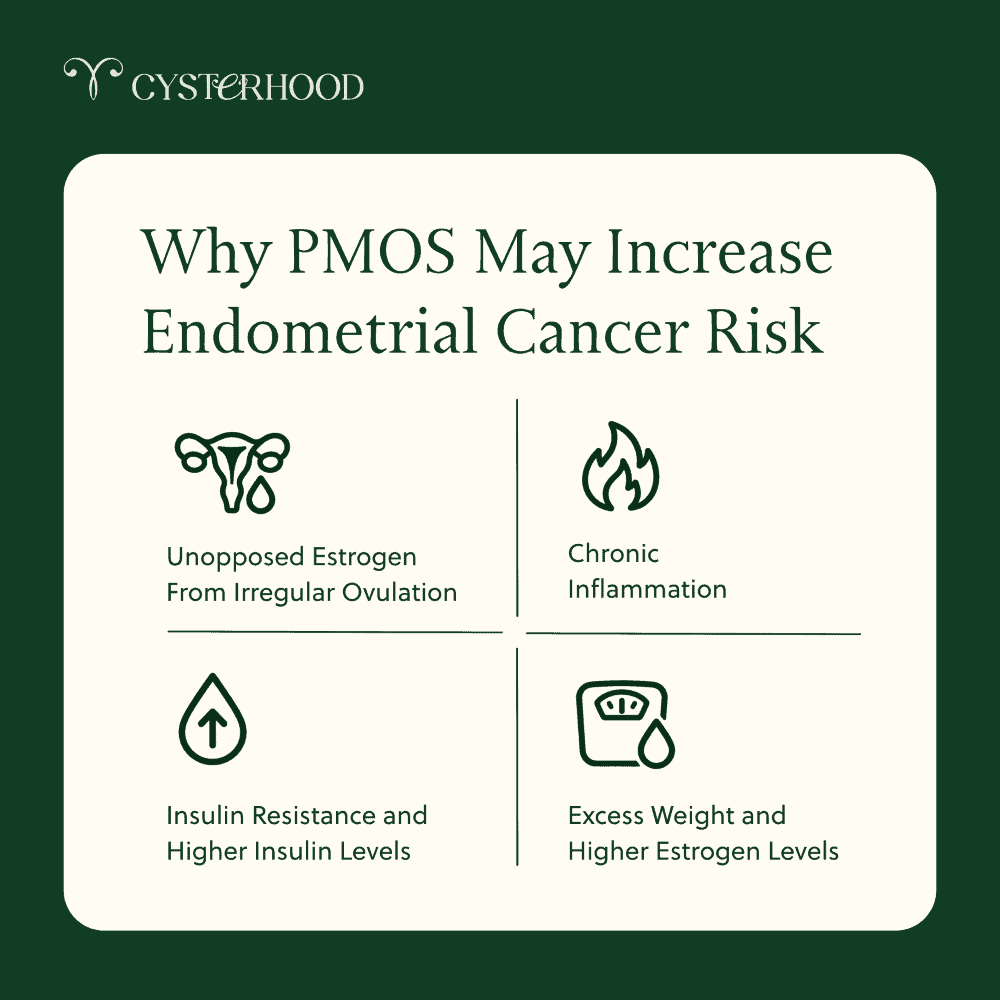
Why Does PMOS Increase Risk of Cancer?
Unopposed Estrogen Due to Not Ovulating Regularly
This is probably the biggest factor contributing to increased risk of endometrial cancer in women with PMOS. The longer the time with infrequent or missed periods, the greater the effects of unopposed estrogen on the endometrium.
Insulin Resistance and Higher Insulin Levels
Higher insulin levels may cause the cells in the endometrium to grow and divide more. Insulin resistance and higher insulin levels may also increase cancer risk by increasing estrogen levels. Insulin stimulates the ovaries to make more androgens, and higher levels of androgens (another hormonal feature of PMOS) and higher insulin levels reduce a protein called sex hormone-binding globulin, which increases free, bioavailable estrogen.
Inflammation
PMOS is an inflammatory condition, meaning there’s chronic low-grade inflammation in the body. High androgen levels, high insulin, unopposed estrogen, chronic inflammation, and abnormal blood fats (dyslipidemia) have all been linked to cancer risk in women with PMOS.
Excess Weight
Risk factors like obesity, inflammation, and insulin resistance are all common in people with PMOS. Excess adipose (fat) tissue produces estrogen, contributing to higher estrogen levels.
This doesn’t mean that women with PMOS who are carrying a little extra weight should be worried about increased cancer risk.
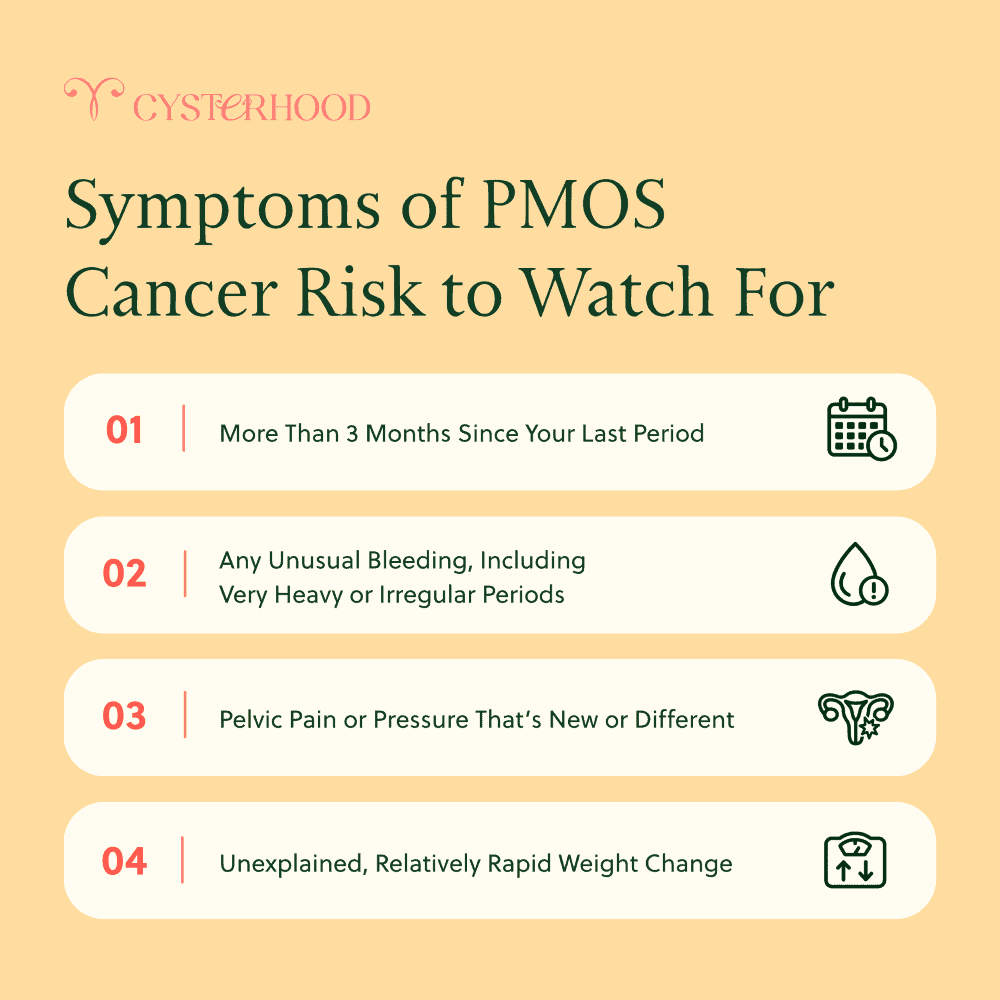
Symptoms of PMOS Cancer Risk to Watch For
These signs don’t mean you have cancer, but it’s a good idea to keep an eye out for any of the following changes so you can raise them with your OB-GYN at your next appointment (or book an appointment specifically to discuss them):
- More than 3 months since your last period
- Any unusual bleeding, including very heavy or irregular periods
- Pelvic pain or pressure that’s new or different
- Unexplained, relatively rapid weight change
Your OB-GYN may want to investigate further with a transvaginal ultrasound, an endometrial biopsy, or both if there are concerns about the thickness of your endometrium or any other risk factors or symptoms.
You know your body best, so if you notice any changes, speak to your OB-GYN.
How to Reduce Risk of Cancer With PMOS
Although we can’t change all of our risk factors for endometrial cancer, there are some steps we can take to help reduce the risk.
Medical Options: Birth Control, Progesterone, and Metformin
Medical treatment for PCOS often starts with regulating the cycle to protect the uterine lining.
Have Regular Periods
If you’re not having regular periods (at least one every 3 months), it’s worth chatting to your doctor about options to help get your periods back. The pill, progestin-only pills, a hormonal IUD (like Mirena), or regular courses of progesterone are options your doctor may suggest.
Progesterone
Progesterone directly opposes the effects of estrogen on the endometrium, so any form of progesterone or progestin (pills, a hormonal IUD, etc.) could potentially be discussed with your doctor.
The Pill (Birth Control)
Oral contraceptive use is associated with at least a 30% reduction in endometrial cancer risk, with a greater reduction the longer the pill is used. This may be because birth control pills limit the uterine lining’s exposure to unopposed estrogen.
Metformin
Metformin is commonly used to support insulin sensitivity in women with PMOS, so it could potentially help lower cancer risk this way.
Please don’t start or stop any medications based on reading this article. Chat through any questions or concerns you have with your doctor. Particularly if you’re trying to conceive or have a strong family history of any cancers, it’s worth specifically raising this at your next appointment or booking an appointment to chat through your options.
Lifestyle: Nutrition, Movement, and Weight
A note on weight loss: I hate when someone says “well, you should just lose weight” and doesn’t provide any further information or support on how to achieve this. I know for many of you, trying to shift any body fat can be challenging due to insulin resistance and other factors associated with PMOS. But even small changes to your weight can make a real difference to your estrogen levels, as well as the strain on your body and metabolism.
Eat an Anti-Inflammatory Diet
A diet pattern that emphasizes whole foods and minimizes highly processed foods may help reduce cancer risk by supporting insulin sensitivity, lowering inflammation, and helping with weight.
I’m a firm believer in going gluten- and dairy-free if you have PMOS. It isn’t a guarantee, and not everyone with PMOS needs to avoid gluten and dairy, but some women find that limiting them helps their symptoms.
I’d encourage you to focus on including a source of protein and fiber at every meal and snack and choosing lower-GI (glycemic index) carbohydrates where possible to avoid big spikes in your blood sugar. These strategies can help promote more stable blood sugar, reduce inflammation, and support your hormones. Basically, you want to avoid foods and drinks that spike your insulin throughout the day. Try to eat more meals like eggs and avocado, for example, rather than a bowl of cereal.
Move Your Body in a Way You Enjoy
Physical activity may help reduce cancer risk by supporting insulin sensitivity, lowering insulin and estrogen levels, and helping with weight.
The recommendation for adults is 150-300 minutes of moderate activity per week. This has been shown to help people live longer and reduce the risk of chronic disease and several cancers, including endometrial cancer.
I’d encourage you to participate in exercise that you enjoy. Try to keep things low-impact and opt for slow-weighted strength exercises where possible, since they generally don’t spike cortisol (a stress hormone) the way intense exercise can. Even something as simple as going for a walk most days of the week plus a couple of strength sessions can have real benefits.
Not sure where to start? Take the PMOS quiz to get an idea of where you sit, plus some tips on where to start.
Putting Your PMOS Plan Together
I know if you’re reading this, there’s a good chance you’ve been Googling everything under the sun about PMOS. PMOS is incredibly common, and I go through the stats in how many women have PMOS. It’s eye-opening how many women with PMOS still haven’t been diagnosed.
The increased endometrial cancer risk is real, but it’s also very much linked to factors you can influence: keeping your cycles regular, supporting your insulin sensitivity, reducing inflammation, and keeping an eye on your weight.
Studies have shown that women with PCOS are at an increased risk of endometrial cancer but have not shown a clear increase in the risk of breast or ovarian cancer. Results of studies linking PMOS and ovarian cancer have been mixed. Some have shown an increased risk (particularly in younger women), but others have shown no increased risk at all.
The key lifestyle changes you can implement to reduce your risk are the same ones that help with weight, cravings, cycles, and energy. We’ve created The Cysterhood App to make implementing these strategies easier and more enjoyable. It’s packed full of PMOS-friendly meals and slow-weighted exercise programs, as well as a community of like-minded women doing this with you.
Ready to take the guesswork out of living with PMOS? Download The Cysterhood App today, or if you’re not ready to jump in straight away, take the PMOS quiz to figure out where to begin.
The Bottom Line
There are so many things you can do to support your PMOS no matter your age, and you have so much more control than you’ve been led to believe.
Medical disclaimer: The information provided in this post is for general informational purposes only, does not constitute health or other professional advice, and should not be relied upon in any way as medical advice. Only your physician can provide a diagnosis or prescribe treatment options. Please seek the advice of a physician or other qualified health provider with any questions before starting any new diet or exercise program or making any other changes to your medications, diet, fitness, or other health-related routines, particularly if you have any pre-existing medical condition, are taking any medication, are trying to conceive, or are at risk of PMOS or other medical conditions.
You’ve got this,Tallene, RD
Feeling lost with PCOS?
Find out your PCOS type and get your next steps in under 2 minutes.
Find My PCOS Type →