If you have PCOS, you know one of the most challenging parts of this condition for many women is weight gain and fatigue. Up to 80% of women with PCOS have insulin resistance, and is one of the root causes of these two difficult symptoms! Insulin resistance can also contribute to high androgen levels, which can cause acne, hirsutism, irregular periods, hair loss, and more. Needless to say, this one root issue can snowball into a lot of chronic symptoms.
But, what is insulin resistance? Insulin resistance is when your cells aren’t very responsive to glucose. When you eat carbs/sugar, it’s supposed to convert to energy with the help of insulin. However, when you have insulin resistance, the sugar can’t use insulin properly. Now, your sugar molecules are stored as fat and absorbed into your bloodstream. Of course, this increases body weight and raises your blood glucose levels. This not only leaves you with those unpleasant symptoms we talked about, but it also puts you at an increased risk of type 2 diabetes and heart disease.
Luckily, women with PCOS have a lot of ways to reverse insulin resistance with the right food, exercise, and lifestyle changes. But, some Cysters find it difficult to manage their insulin resistance without totally understanding what’s going on in their bodies. Knowing your body’s insulin patterns can really help with the healing process!
You can track your insulin levels using continuous glucose monitoring. It’s primarily used for diabetes care, but does it make sense for women with PCOS? Let’s dive into this today!
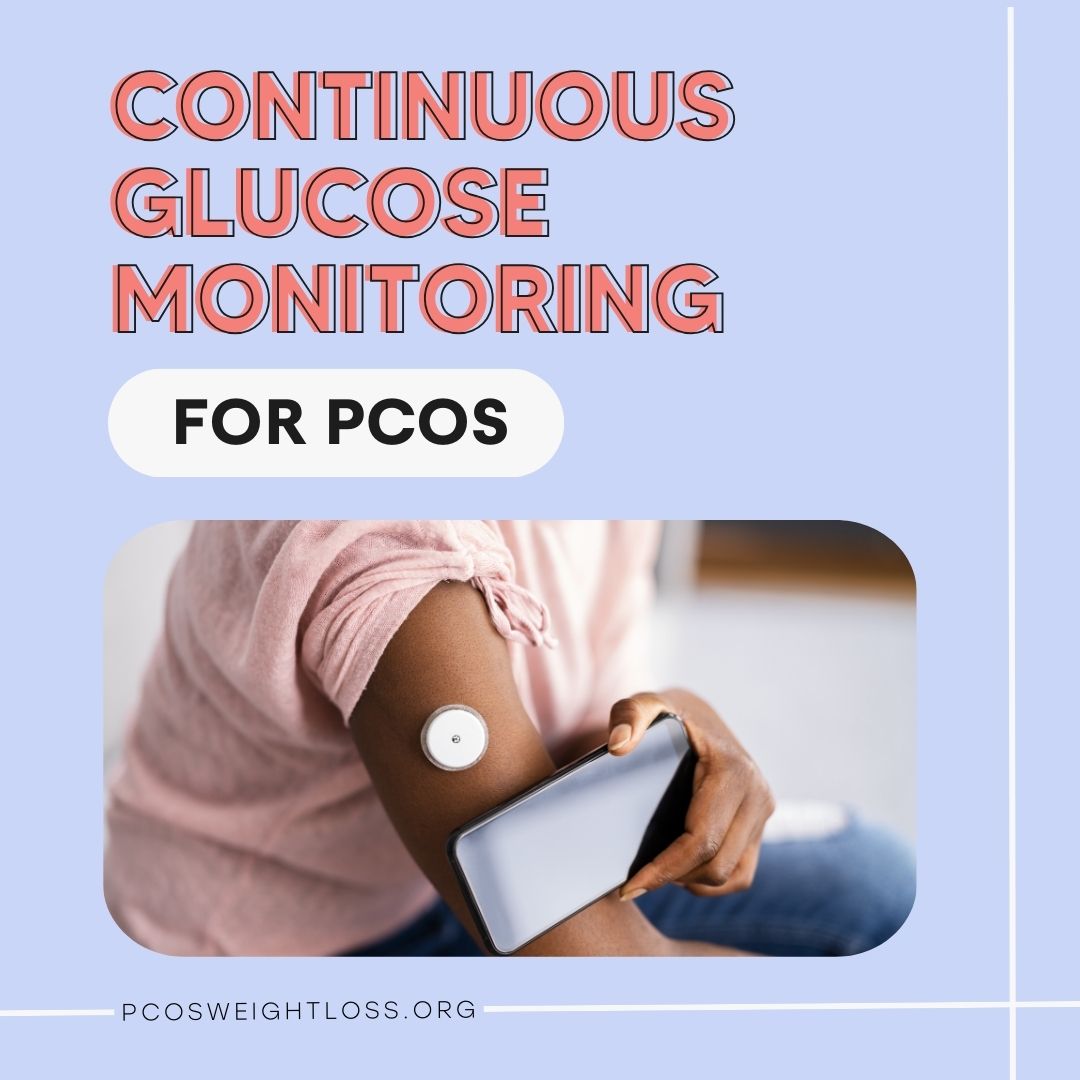
Is it a Good Idea to do Continuous Glucose Monitoring for PCOS?
One of the best ways to monitor your insulin levels all the time and in real-time is via continuous glucose monitoring! It can help you not only know what your blood sugar levels are at any moment but also understand the long-term patterns of your insulin levels. This makes sense for women with diabetes, but should you use a continuous glucose monitor for PCOS?
For most women, it’s probably unnecessary to use a monitor to track your glucose levels 24/7 unless you’ve been classified as prediabetic. If you’re already on your path to increasing your insulin sensitivity, your symptoms should be a good enough indication of how high your blood sugar levels may be. Some of these symptoms include feeling lightheaded or tired. However, monitoring doesn’t hurt, either! It can help a Cyster who’s really serious about keeping her glucose levels manageable make the most of her efforts.
What is Continuous Glucose Monitoring?
Continuous glucose monitoring or CGM is a technology that allows you to get real-time glucose readings. Through CGM devices, you can monitor your glucose levels at any time day and night. The data will be super useful for managing your PCOS insulin resistance.
How Does a Continuous Glucose Monitor Work?
A continuous glucose monitor (CGM) works by first getting a sensor inserted under the skin using an applicator with a small needle. The sensor measures your glucose levels in the interstitial fluid every few minutes. The display on the device shows the results in real time and alerts you if it gets too high or too low.
With a CGM, you don’t need to do finger pricks every day, but you will need to re-insert your applicator every 7-14 days depending on the device you choose.

Pros and Cons of Continuous Glucose Monitoring for PCOS
Pros
- Real-time insight to better understand your blood sugar issues and patterns
- Better management of your glucose levels day-to-day
- Detect issues early to get medical help if necessary
Cons
- Expensive monitors are not always covered by insurance
- Uncomfortable to wear
- Pain with devices that require regular finger-pricking
- Calibration and maintenance can be time-consuming
- Tracking can be inconvenient and unnecessary

Best CGM For PCOS
Dexcom G6
The Dexcom G6 is a popular choice for glucose monitors because it doesn’t require fingerstick calibration, it has a 10-day sensory life, the insertion process is easy, and it’s water-resistant. The downside is that it can be expensive and not compatible with all smartphones. Some also report that the CGM sensor fails before its supposed 10-day lifespan.
FreeStyle Libre 2
You may also like the FreeStyle Libre 2! It has no finger stick calibration, a 14-day sensory life, and plenty of custom alerts. It’s also one of the more discreet and affordable CGM systems. Some users don’t love that the sensor can only be placed on the back of the upper arm and some have issues with accuracy and data gaps.
Medtronic Guardian Connect
The Medtronic Guardian Connect is another popular choice that offers real-time monitoring, custom alerts, and easy insertion. Users also like that the monitor integrates with Sugar.IQ app. The cons are that it requires a finger prick calibration every 12 hours, only has a 7-day sensor life, and it’s only compatible with Apple devices. Some also say it can cause skin issues.
Eversense
This last CGM has a long sensory life of 90 days! Way longer than most, which makes it more convenient. It also has vibrating alerts on the transmitter, has lots of data-sharing options, and is known for being accurate. However, it does require a minor surgical procedure to implant the sensory and you need 2-daily finger pokes for calibration.
Continuous glucose monitoring can help you manage blood glucose levels in extreme instances of insulin resistance.
It’s always a good idea to consider all the options you have for managing insulin resistance. Is continuous glucose monitoring necessary to reverse your symptoms and increase your insulin sensitivity? No. However, it can be a helpful tool in extreme circumstances or if you’re very concerned about your insulin resistance. Talk to your doctor to decide if a CGM is a smart choice for you!
For all the best info on how to naturally get a handle on your glucose levels and all that comes with PCOS, browse the PCOS Weight Loss blog, listen to the A Cyster and Her Mister podcast, and download The Cysterhood app! I’ve got meal plans, workout routines, and more to help you finally find symptom relief!