
Does Insulin Resistance Cause Hair Loss? The Root Cause
Watching more hair collect in your brush or circle the shower drain can feel alarming, confusing, and honestly, a little scary. Most of us are told it’s just stress, or genetics, or something we’ll grow out of. Sometimes that’s true. But there’s another cause that gets overlooked again and again, and it’s one I want to spend this whole post on: insulin resistance.
If you have PCOS (now called PMOS), this connection matters more than almost anyone has bothered to explain to you. And I’ve been there! I’m Tallene, a Registered Dietitian specializing in PMOS with the condition myself. I spent years (… and years) researching, studying, and formulating, so women can feel more confident in their PMOS management journey.
So let’s talk honestly about whether insulin resistance causes hair loss, and what you can actually do about it.
Does Insulin Resistance Cause Hair Loss?
Here’s the thing about both of these issues: they’re incredibly common, and they travel together far more than most women realize.
Insulin resistance affects a huge portion of women with PMOS, and hair thinning is one of the symptoms that brings women to my inbox most often. When you understand the connection between insulin resistance and hair loss, you can finally move past surface-level fixes, like a new shampoo or a biotin gummy that never quite delivered.
Getting to the root cause is what actually changes the picture. When you address what’s driving the shedding, you give your body a real chance to slow that shedding down and support hair regrowth over time. It’s not overnight, and I’ll be going over the timeline later. But the mechanism is real, it’s understood, and it’s something you can work with.
What Is Insulin Resistance?
Insulin is the hormone that helps move sugar out of your blood and into your cells for energy. Insulin resistance means your cells have stopped responding properly to that signal, so your body keeps pumping out more and more insulin to get the job done.
The result is high insulin levels in the blood alongside blood sugar imbalance, because the whole system is working overtime just to keep up. Over months and years, poor blood sugar control quietly affects everything from your energy to your hormones.
The most common warning signs include:
- Stubborn weight gain, especially around the middle
- Intense sugar and carb cravings
- Fatigue after meals, or that mid-afternoon crash
- Dark, velvety patches of skin (often on the neck or underarms)
- Irregular cycles
- Increased shedding or hair thinning
If several of these sound familiar, you’re not imagining the pattern. This is exactly the metabolic setup that lays the groundwork for hair changes, and it’s why insulin resistance is so central to the PMOS conversation.
What Causes Insulin Resistance?
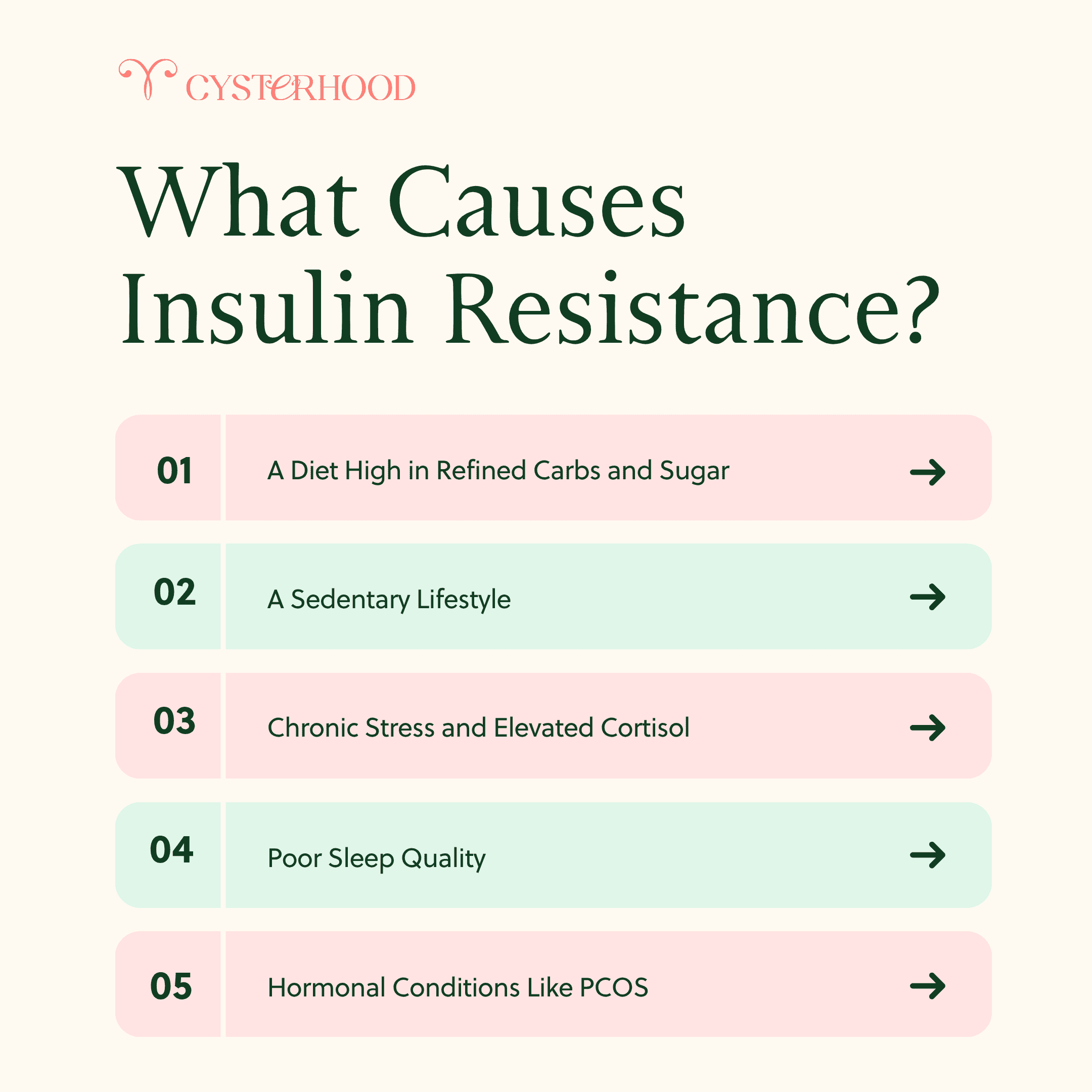
Insulin resistance rarely comes from one single thing. It builds from a mix of daily habits and hormones working against you, and for women with PMOS, the deck is already stacked. Here are the biggest drivers:
- A diet high in refined carbs and sugar. Every big sugar spike asks your body for another surge of insulin, and repeated over time, your cells start tuning the signal out.
- A sedentary lifestyle. Muscles are one of your best tools for using up blood sugar. Move them less, and glucose lingers in the bloodstream longer.
- Chronic stress and elevated cortisol. Stress hormones raise blood sugar on purpose (your body thinks you need quick fuel), which keeps insulin high.
- Poor sleep quality. Even a few short nights can lower insulin sensitivity, which is why sleep is never optional here.
- Hormonal conditions like PCOS. PMOS and insulin resistance feed each other, which is a huge part of why symptoms like hair thinning show up in the first place.
The good news is that most of these are things we can work on together.
Can Insulin Resistance Cause Hair Loss?
Yes, it can, and the mechanism is worth understanding. When insulin levels stay high, that excess insulin signals your ovaries and adrenal glands to overproduce androgens, the hormones like testosterone.
Blood sugar imbalances and insulin resistance can play a significant role in hair loss. When insulin levels are consistently high, it can stimulate the production of androgens, which may contribute to hair thinning, particularly around the scalp’s crown and hairline.
Those androgens are the problem for your follicles. In the follicle, testosterone gets converted into a stronger androgen called DHT, and DHT gradually shrinks the follicle in a process called miniaturization. This is why you’ll often notice thinning at the vertex. As the follicle shrinks, each new hair grows in finer and shorter, until eventually it may stop growing altogether. That’s the thinning so many women notice at the crown and hairline.
Insulin resistance can also impair circulation, reducing the delivery of oxygen and nutrients to hair follicles. Over time, this can lead to weaker, thinner hair that sheds more easily. High insulin also drives inflammation, which further disrupts the hair growth cycle. So it’s really a two-part story: hormones shrinking the follicles, and reduced blood flow starving them. Both trace back to insulin.
This same pattern is why hair loss from diabetes and prediabetes shows up too. When poor blood sugar control goes on long enough, whether it’s PMOS-related insulin resistance or type 2 diabetes, hair follicles are often one of the first places the body shows the strain.
If you want to go deeper on the PMOS side specifically, I wrote a full breakdown of hair loss in women with PMOS that pairs perfectly with this one.
Can You Reverse Insulin Resistance Hair Loss?
I want to be honest with you here, because I’ve been on the receiving end of both false promises and flat dismissal. Insulin resistance itself responds beautifully to diet and lifestyle changes, and improving it is very much within reach.
Insulin resistance hair loss can be reversible in most early or moderate cases if the underlying metabolic issue is corrected promptly. When you improve your insulin sensitivity through lifestyle and dietary changes, you lower systemic inflammation, encouraging Sex Hormone-Binding Globulin (SHBG) levels to rise. In turn, this helps reduce excess free testosterone, reducing the production of DHT and allowing follicles to exit the dormant phase and enter the growth phase again.
Now for the realistic part. Hair grows slowly, and the growth cycle takes months to turn over, so this is a long term project, not a quick fix. Follicles that have fully scarred over may not come back, which is exactly why addressing the root cause sooner matters so much. I like to frame it as 3 months to change the picture, then keep going. Consistency over perfection is what moves the needle here, and small steps repeated daily beat a perfect week you can’t sustain.
A quick gut check before you go further: if you’re not sure whether insulin resistance is part of your hair story, my free PCOS quiz can help you spot which symptoms are pointing to your root cause.
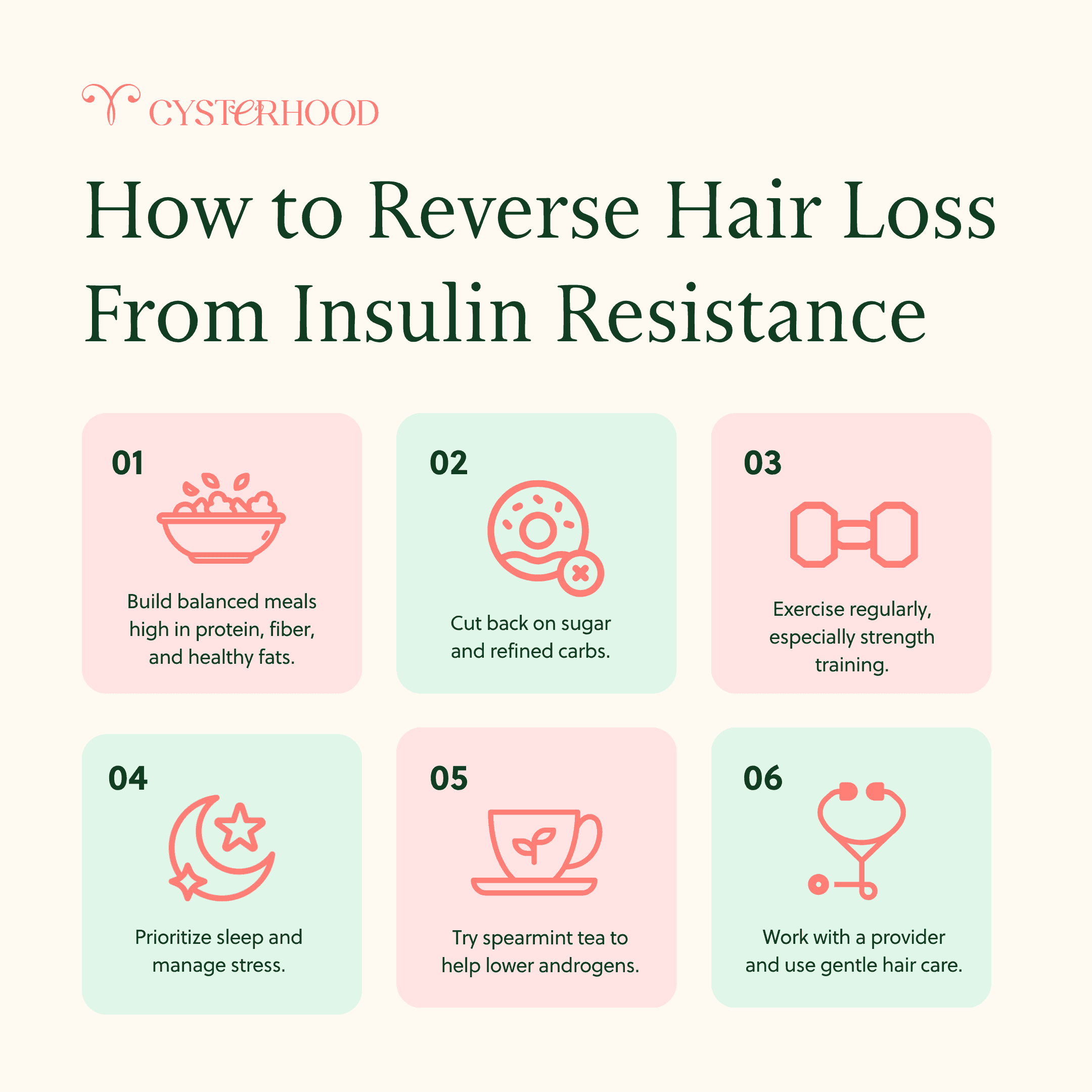
How to Reverse Hair Loss From Insulin Resistance
Here’s where we turn the mechanism into a plan. Everything below works by addressing insulin sensitivity, calming inflammation, and lowering androgens, the exact three levers that affect hair health. You don’t need all of it perfectly. You need most of it, consistently.
Build balanced meals high in protein, fiber, and healthy fats.
When you pair protein, fiber, and healthy fats at every meal, you slow how fast sugar hits your blood, which keeps insulin from spiking. Steadier insulin means fewer androgen surges reaching your follicles.
This is also where my gluten- and dairy-free method comes in, because for many women with PMOS, removing gluten and dairy may help reduce inflammation that disrupts the hair growth cycle. Try swapping your morning oatmeal for eggs and avocado, or adding a scoop of protein and some ground flax to your breakfast.
Cut back on sugar and refined carbs.
You don’t need to fear carbs or eliminate them (please don’t over-restrict, that backfires on hormones). The goal is simply fewer of the refined ones that send insulin levels soaring. Instead, choose whole-food carbs like sweet potatoes, quinoa, and berries, and always eat them with protein or fat. Fewer spikes means less of the hormonal cascade that leads to hair loss.
Exercise regularly, especially strength training.
Movement makes your muscles pull sugar out of your blood, which can help improve insulin sensitivity. Strength training is especially powerful because more muscle means more places to store glucose, so blood sugar stays steadier between meals.
Take it from me, you don’t need to exhaust yourself in the gym just to get results. In fact, intense workouts can actually increase cortisol levels, the exact thing we’re trying to avoid! This is the whole idea behind the slow-weighted workouts in my method, and even two or three sessions a week can help. Better insulin sensitivity supports healthy hair from the inside.
Prioritize sleep and manage stress.
Short, broken sleep and chronic stress both raise cortisol, which raises blood sugar and insulin, which loops right back to your follicles. Protecting seven to nine hours of sleep and building in real stress relief (walks, breathwork, saying no more often) helps balance the hormones that can promote hair growth. This step is quietly one of the most effective, and it costs nothing.
Try spearmint tea to help lower androgens.
This one deserves its own spot, because the research is genuinely encouraging for the androgen side of hair loss.
Spearmint tea may reduce testosterone and self-reported hair growth in women with PCOS. In fact, in a randomized controlled trial of 42 women who consumed spearmint tea twice daily for 30 days, results showed a significant reduction in free testosterone levels.
Since androgens are what shrink your follicles, gently lowering them may support healthier hair over time. Both trials used 2 cups of spearmint tea per day, prepared by steeping dried spearmint leaves in hot water for 5 to 10 minutes.
If brewing loose leaves twice a day feels like a lot, my Ovafit Testosterone Relief Tea makes it simple, and it’s the spearmint option I reach for myself.
Work with a provider and use gentle hair care.
Please loop in your doctor or dermatologist, especially before starting or stopping any medication. And if you’re on something like metformin or birth control, keep that conversation going with them.
A provider can rule out other causes (thyroid, iron, nutrient gaps) and talk through proven treatments if you need them. In the meantime, be gentle: loose styles, low heat, a soft brush, and patience while new hair regrowth catches up.
Your Next Step Toward Healthier Hair and Balanced Insulin
If there’s one thing I hope you take from this, it’s that your body isn’t working against you on purpose, it’s responding to signals we can change. Addressing insulin resistance is the move that supports your hormones, calms inflammation, and gives your follicles the steady environment they need. PMOS can be reversed and you can live symptom free when you work with your body at the root level. (Psstttt… Hair is often one of the last symptoms to turn around, so keep going!)
The simplest way to put all of this into practice is inside The Cysterhood App, where you’ll find PMOS-friendly meals, slow-weighted workouts, and a community walking the same path. And if you’re just getting started, take my free PCOS quiz to see which root cause is driving your symptoms first.
You’ve got this,
Tallene, RD
This post is for educational purposes only and is not medical advice. Always talk with your doctor or a qualified healthcare provider before making changes to your diet, supplements, or medications, especially if you are pregnant, trying to conceive, or managing a diagnosed condition.
These statements have not been evaluated by the Food and Drug Administration. OvaFit products are not intended to diagnose, treat, cure, or prevent any disease.
Feeling lost with PCOS?
Find out your PCOS type and get your next steps in under 2 minutes.
Find My PCOS Type →