

15 Metformin Withdrawal Symptoms PCOS

Metformin is one of the most commonly prescribed medications for women with PCOS (now PMOS) and those with type 2 diabetes. It helps the body manage blood sugar levels and insulin more effectively. This can help mask many of the metabolic and hormonal symptoms of PCOS, like irregular periods, infertility, weight gain, fatigue, excess body/facial hair, and acne.
Metformin does this by activating an enzyme called AMP-activated protein kinase (AMPK). This is essentially your metabolism’s on-and-off switch, helping your body regulate fat storage and energy output. It also reduces insulin production in your liver and improves how the gut and muscles absorb sugar.
As metformin optimizes metabolic function, insulin sensitivity increases. Since insulin is a hormone, as it balances, other hormones follow—androgens and cortisol included. And as both systems balance out, the body no longer sees itself in “emergency mode.” With that, inflammation finally eases. As these root issues improve with metformin, symptom relief naturally follows.
As a Registered Dietitian who specializes in PMOS, and as someone who was once prescribed metformin myself, I want to help you understand what may actually be happening when you stop taking it and what to discuss with your healthcare provider along the way.
15 Metformin Withdrawal Symptoms PCOS
Metformin can be a helpful tool for managing PMOS, particularly when insulin resistance and blood sugar are concerns. But I also believe medication should be paired with diet and lifestyle changes that support your hormones and metabolic health long-term. That’s why you’ll always hear me say that every medication should have an exit plan (when appropriate, of course!). Most importantly, that plan should be made with your healthcare provider based on your individual needs.
Though metformin can be really helpful for some, it’s important to understand that the medication isn’t for everyone. It can come with its own list of unpleasant symptoms. (If you’re wondering, here’s a full list of metformin pros and cons.)
Metformin is also prescribed for reasons beyond managing day-to-day PMOS symptoms. It may be used as part of a fertility treatment or to help prevent the progression of type 2 diabetes in people at higher risk. If you’re considering stopping metformin, talk with your doctor about why it was first prescribed, whether stopping is appropriate, and how your health should be monitored afterward.
If you are your doctor decide it’s time to come off metformin, that’s where I want you to feel supported. There are natural approaches you can use to support insulin sensitivity, blood sugar balance, and other PMOS symptoms as you make that transition. These habits can also be valuable while you’re taking metformin! You don’t have to wait until you stop medication to start supporting your body in other ways.
Here’s what you should know:
Does Metformin Have Withdrawal Symptoms with PCOS?
Most people (including those with PMOS) don’t have withdrawal syndrome when they discontinue metformin. Unlike some medications, it doesn’t cause a physical dependency that leads to classic withdrawal symptoms. So, don’t expect side effects like headaches, sweating, anxiety, sleep disturbances, dizziness, or cravings for the medication itself when you stop taking metformin.
What Is Metformin Withdrawal?
Metformin withdrawal isn’t a true “withdrawal reaction.” Instead, it’s a sudden return of underlying PMOS issues that weren’t being managed outside of the medication. So if inflammation, insulin resistance, and hormonal imbalance were problems before taking metformin, they may return once you stop taking the medication.
This is especially likely if you didn’t make other lifestyle changes to address the root causes while on the prescription. In fact, for some women with PMOS, symptoms can feel even more intense after metformin. This can happen if relying on the drug inadvertently contributes to unhealthy habits, like poor nutrition, lack of exercise, and bad sleep.
Here’s my essential guide to managing PMOS naturally.
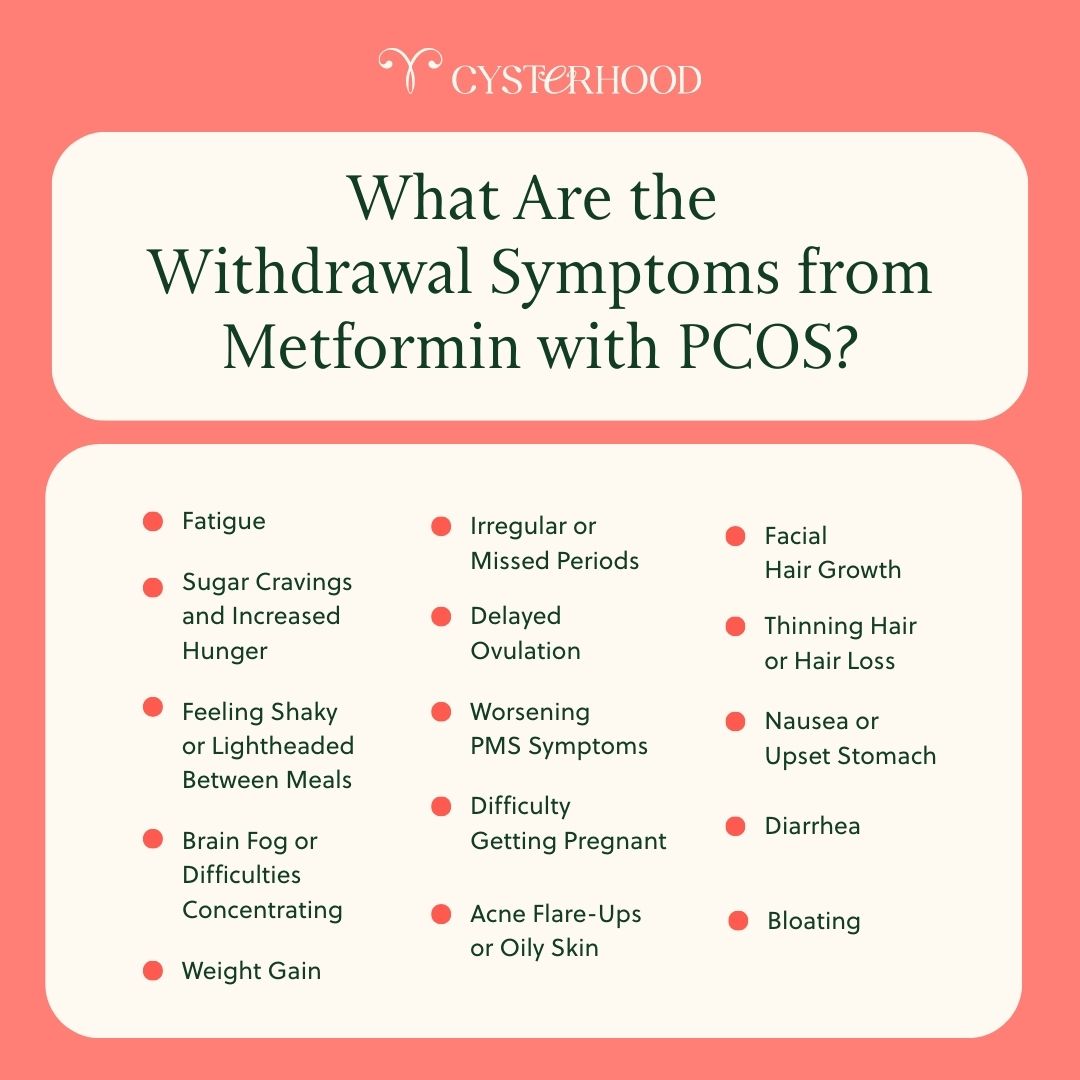
What Are the Withdrawal Symptoms from Metformin with PCOS?
Fatigue
Without the support of metformin, unchecked insulin resistance can lead to big peaks and valleys in blood sugar. More specifically, unstable glucose levels can leave you feeling consistently tired and drained, even after rest.
Sugar Cravings and Increased Hunger
That lack of insulin regulation can also trigger stronger hunger signals and cravings. As a result, many women coming off metformin report increased hunger along with stronger cravings for sugar and carbohydrates.
Feeling Shaky or Lightheaded Between Meals
Blood sugar fluctuations can lead to shakiness, dizziness, and muscle weakness. This is especially prevalent between meals or when you haven’t eaten in a while.
Brain Fog or Difficulties Concentrating
Metabolic issues, like insulin resistance, can lead to chronic inflammation. Both can affect cognitive function and mental clarity, leading to brain fog and difficulties focusing.
Weight Gain
Moderate weight gain is pretty common after stopping metformin. High glucose levels and insulin resistance signal your body to store more fat while making it harder to burn energy efficiently.
Irregular or Missed Periods
Elevated insulin levels can affect other hormone levels as well. Specifically, excess insulin can signal your ovaries to produce more male sex hormones (androgens), which can influence period regularity.
Delayed Ovulation
Disruption of the menstrual cycle doesn’t just mean late or missed periods, it means delayed ovulation, too. Imbalances of key sex hormones can actually affect every stage of the menstrual cycle.
Worsening PMS Symptoms
These hormonal fluctuations can make premenstrual syndrome (PMS) more intense for those getting off metformin. Many report increased mood swings, bloating, cramps, or irritability right before their period.
Difficulty Getting Pregnant
Unpredictable ovulation, missed periods, and imbalances of sex hormones can make it harder for women with PMOS to get pregnant after metformin. If this is you, here are some fertility tips from Dr. Felice Gersh and my personal pregnancy story.
Acne Flare-Ups or Oily Skin
High androgens stemming from insulin resistance can stimulate your sebaceous glands to produce more oil. The result? Greasy skin and lots of breakouts.
Facial Hair Growth
Hirsutism is common with high androgen levels. This is when unwanted hair grows on the chin, upper lip, jawline, and more.
Thinning Hair or Hair Loss
High androgen levels associated with insulin resistance can disrupt the normal hair growth cycle. Over time, this may lead to thinning hair along the scalp or increased hair shedding.
Nausea or Upset Stomach
Some women notice mild stomach discomfort after stopping metformin. As your body adjusts to changes in blood sugar and hormones, you might experience nausea or a general upset stomach.
Diarrhea
Changes in digestion can also happen while your body readjusts. This may show up as loose stools or more frequent trips to the bathroom for a short period of time.
Bloating
Hormonal shifts and digestive changes after metformin can sometimes lead to bloating and stomach pain. For help with this, here’s what to do about PCOS pain in the lower abdomen.

How to Stop Taking Metformin Safely
Before stopping metformin, talk with the healthcare provider who prescribed it. Metformin doesn’t cause physical dependence, so this isn’t a medication that everyone needs to slowly taper simply to prevent a classic withdrawal symptoms. However, that doesn’t mean you should stop it abruptly on your own.
Whether you taper, stop, or continue metformin should depend on why you take it, your current dose, your blood sugar control, and your overall health. Your prescriber may want to make a plan for monitoring you as the medication is reduced or discontinued, particularly if metformin has been helping manage insulin resistance or high blood sugar.
Before making the change, ask what markers should be checked and when they should be repeated. Depending on your situation, your provider may monitor fasting glucose and A1C, and may also recommend other metabolic testing based on your PMOS history and reason for taking metformin.
Most importantly, have a follow-up plan. If your blood sugar rises or your PMOS symptoms begin returning after you stop metformin, that’s useful information to bring back to your healthcare provider. You may need to adjust your lifestyle plan, reconsider medication, or explore another treatment option together.
How to Deal with the Symptoms of Metformin Withdrawal
Focus on improving blood sugar balance.
The blood sugar-balancing effects of metformin are what provide the most symptom relief and weight-loss benefits. So, when you’re feeling side effects from discontinuing metformin, a lot of that comes from destabilized glucose levels.
To make the transition easier and support long-term healing, focus on regulating your blood sugar levels naturally. If possible, do this even before you stop taking metformin! That way, the transition isn’t so hard on your metabolism.
Here are some ways to support insulin sensitivity and more stable blood sugar:
- Adopt a gluten- and dairy-free anti-inflammatory diet.
- Eat balanced meals with protein, healthy fats, and lots of fiber.
- Use Crave Control Protein powder to hit your macros and fight cravings.
- Avoid sugary drinks, processed foods, and refined carbs.
- Eat meals at consistent times each day.
- Support gut health with fiber and fermented foods.
- Prioritize hydration by drinking water and electrolytes.
Taking insulin-sensitizing supplements like Berberine Advanced and Inositol Complete 40:1 may also help, but always talk about any possible supplement additions with your healthcare provider!
Prioritize regular slow-weighted and meditative workouts.
Daily movement can have a huge impact on your metabolism and endocrine system. As your muscles use glucose for energy, exercise naturally improves insulin sensitivity. This effect on insulin has a domino effect, helping to balance other hormones like estrogen, progesterone, and testosterone.
If that wasn’t enough, exercise can also reduce inflammation and stress levels. All these benefits can be super helpful for managing potential metformin withdrawal and holistic PMOS healing.
Just make sure you’re doing the right type of exercise. High-intensity workouts can actually have the opposite effect, raising stress levels and throwing hormones all out of whack. Instead, opt for slow-weighted workouts and meditative exercises.
For workout routines (and lots of PCOS-friendly recipes), download The Cysterhood app.
Make a stress management plan to keep cortisol levels low.
Cortisol is your body’s stress hormone, which may sound unrelated to the effects of metformin. However, stress is actually completely intertwined with your blood sugar and hormone balance. High cortisol levels will increase insulin resistance and androgens, amplifying withdrawal side effects and PCOS symptoms.
As you transition off metformin and into a natural healing strategy, have a plan to better manage stress. Reduce your mental load, spend time outdoors, and make room for activities that help you relax. Gentle movement like walking or yoga, deep breathing exercises, meditation, and setting boundaries around work and responsibilities can all help keep cortisol levels in check.
Practice better sleep hygiene for better quality rest.
Sleep plays a huge role in blood sugar regulation and hormone balance. When you’re sleep deprived, your body becomes more insulin resistant, and cortisol levels rise. Over time, poor sleep can worsen cravings, fatigue, and other PMOS symptoms.
Aim for 7–9 hours of quality sleep each night and keep a consistent sleep schedule whenever possible. Create a relaxing bedtime routine, limit screen time before bed, and keep your bedroom cool and dark. Small habits like getting morning sunlight, avoiding caffeine late in the day, and winding down with reading can help improve sleep quality and support long-term hormone balance.
Here’s more on how to get better sleep with PMOS.
Monitor your symptoms and keep your doctor updated.
As we mentioned earlier, metformin doesn’t typically cause true withdrawal symptoms. However, it’s still important to keep your healthcare professional informed about any side effects you experience after stopping the medication. They can help make sure your symptoms aren’t something more serious and guide you through a safe, effective plan for managing PMOS after metformin.
How Long Do Metformin Withdrawal Symptoms Last?
There isn’t a set timeline for metformin withdrawal symptoms because metformin doesn’t cause withdrawal in the traditional sense. What you may notice instead is the return of symptoms or metabolic changes that the medication was helping manage.
Some changes may become more noticeable within days or weeks of stopping metformin, while others can take longer to show up. Your individual timeline depends on factors like your blood sugar and insulin sensitivity, why you were taking metformin, and the diet and lifestyle habits you have in place.
This is also why it’s helpful to pay attention to more than how you feel! Changes in blood sugar or other metabolic markers may not cause obvious symptoms right away, so follow-up testing can give you a clearer picture of how your body is adjusting.
Will I Feel Better After Stopping Metformin?
You might feel better after stopping metformin if the medication was causing side effects like nausea, diarrhea, stomach pain, or bloating. Once you’re no longer taking it, those digestive side effects may improve.
On the other hand, symptoms related to insulin resistance or blood sugar may return if metformin was helping keep them under control. For someone with PMOS, that could also mean noticing changes in things like cravings, energy levels, menstrual cycles, or other symptoms over time.
So, feeling better after stopping metformin really depends on what was making you feel unwell in the first place. This is where having supportive diet and lifestyle habits in place can be especially helpful as you navigate what works best for your body.
When You Should Not Stop Taking Metformin
There are times when stopping metformin on your own can be risky. If you have type 2 diabetes and take metformin to help manage your blood sugar, stopping it could cause your blood sugar levels to rise. The same goes if metformin is currently part of a fertility treatment plan or was prescribed as part of your care during pregnancy. These situations require individualized guidance, so any changes should be made with the healthcare provider managing your treatment.
Even with PMOS, the reason you were prescribed metformin matters. If you’re interested in eventually managing your symptoms with fewer medications, bring that goal to your doctor so you can decide whether stopping is appropriate and what needs to be in place first.
What Was Your Experience Coming Off Metformin Like?
Coming off metformin can feel intimidating at first, especially if symptoms start to return. But what feels like withdrawal is often just your body asking for deeper support. The good news is that real healing is possible when you address the root causes of PMOS.
By focusing on stabilizing blood sugar, lowering inflammation, and supporting hormone balance through simple habit changes, you can address the root causes of PMOS totally naturally. Thousands of women with PMOS have seen real improvements through holistic lifestyle changes, and you can too. Natural healing takes patience and consistency, but it’s absolutely possible, and it leads to stronger, more lasting results than relying on medication alone.
Feeling lost with PCOS?
Find out your PCOS type and get your next steps in under 2 minutes.
Find My PCOS Type →