
PMDD and PCOS (PMOS): What’s the Connection?
Living with a hormonal condition like polycystic ovarian syndrome (PCOS), now called PMOS (polyendocrine metabolic ovarian syndrome), can feel like your body is running a program you never agreed to. But when you’re dealing with two conditions at once, and their symptoms overlap or even intensify each other, it can become much harder to figure out what your body’s actually trying to tell you.
That can be the reality for women navigating both PMDD and PMOS. Changes in mood, energy, cravings, sleep, and your menstrual cycle start to blur together, making it difficult to know which condition is behind what… Or how to manage everything without feeling like you’re constantly playing catch-up.
Below, I’m sharing everything you need to know about PMDD and PCOS (PMOS). I’ll talk about what each condition is, whether they overlap, and what you can do to finally find some relief. As a Registered Dietitian and woman with PMOS myself, I understand how isolating this experience can feel. Let’s figure it out together.
PMDD and PCOS (PMOS): Is There a Connection?
PMDD and PCOS are both hormone-related conditions, but they affect the body in different ways. One lives mostly in your brain’s response to your monthly hormone shifts. The other is rooted in insulin resistance, inflammation, and hormonal imbalances that often cause a domino effect throughout your whole body.
Put them together and you get a complex pattern of symptoms that is so often misunderstood or misdiagnosed. You might get told you have anxiety. Or depression. Or that your weight is the problem. (Been there! You’re not alone in that.) Meanwhile, the actual overlap between these two conditions goes unspoken.
That is exactly why understanding the relationship between PMDD and PCOS matters. When you look at both conditions together, instead of chasing one symptom at a time, you can build a more integrated approach to symptom management. In other words: you stop playing whack-a-mole and start working with your body. That shift changes everything, and it’s the whole reason I do what I do… and discuss the topics I’m passionate about.
New to PMOS? Learn more by taking my free “What’s Your PMOS Type?” quiz. By taking a short questionnaire, you can begin learning about the root cause behind your symptoms.
What Is PMDD in Women?
PMDD stands for premenstrual dysphoric disorder, and it’s often described as a severe form of premenstrual syndrome (PMS). However, I’m not just talking about a little irritability or discomfort before your period.
Premenstrual dysphoric disorder (PMDD) can cause significant emotional, behavioral, and physical symptoms that interfere with everyday life. To elaborate, it’s recognized as a psychiatric disorder in the Diagnostic and Statistical Manual of Mental Disorders, Fifth Edition (DSM-5). This is important to recognize, because its symptoms can have a very real impact on mental health and quality of life.
One of the defining characteristics of PMDD is when symptoms occur. They typically develop during the luteal phase, or the one to two weeks leading up to your period. They also often improve within a few days after menstruation begins.
Common PMDD symptoms include:
- Intense mood swings
- Irritability or anger
- Anxiety
- Feelings of sadness or hopelessness
- Difficulty concentrating
- Fatigue
- Changes in appetite
- Bloating
- Breast tenderness
While PMS can cause some of these same symptoms, PMDD is more severe and can significantly interfere with your day to day life.
What Causes PMDD?
Researchers are still learning exactly why some women develop PMDD, but it doesn’t seem to be as simple as having “too much” or “too little” of one hormone. At this point, they do have a general belief that PMDD can be caused by abnormal brain sensitivity to hormonal changes.
That said, women with PMDD may have normal reproductive hormonal levels. The difference appears to be in how the brain responds to the natural hormonal fluctuations. A few factors researchers have explored include:
- Sensitivity to progesterone fluctuations. In 2017, researchers at the National Institutes of Health (NIH) found that those with PMDD are more sensitive to changes in the sex hormones estrogen and progesterone. Your hormone levels may be totally normal. Your brain just reacts more strongly to the normal rise and fall.
- Serotonin dysregulation. Serotonin is your mood-stabilizing neurotransmitter, and changes in serotonin levels have been associated with PMDD symptoms such as irritability, anxiety, and low mood.
- Hormonal shifts during the luteal phase. After ovulation, progesterone increases and is metabolized into allopregnanolone. Researchers believe an altered response to this process and its effects on GABA receptors may contribute to PMDD.
So, PMDD isn’t necessarily caused by abnormal hormonal levels themselves. Instead, the body and brian may respond differently to the normal hormonal changes that happen after ovulation.
Is PMDD Related to PCOS (PMOS)?
PMDD and PCOS (PMOS) are separate conditions, but it’s possible to experience both at the same time. This is a question I get often, so it’s important we break it down.
The relationship between both conditions can get a little complicated, because PMDD symptoms are closely tied to ovulation and the hormonal changes that follow it. PMOS, on the other hand, commonly causes irregular or absent ovulation. So what does this mean?
PMDD symptoms are essentially triggered by that post-ovulation progesterone release. This means that if you don’t ovulate during a cycle, you may not experience the classic PMDD pattern that month. However, irregular ovulation can also make symptoms harder to predict. If you don’t know when, or whether, you’ve ovulated, it becomes more difficult to anticipate when premenstrual symptoms might appear.
This is one reason tracking your individual cycle and symptoms can be especially helpful when you have both PMDD and PMOS. If you need a little guidance on this, read my article, “How to Track Ovulation with Irregular Periods.”
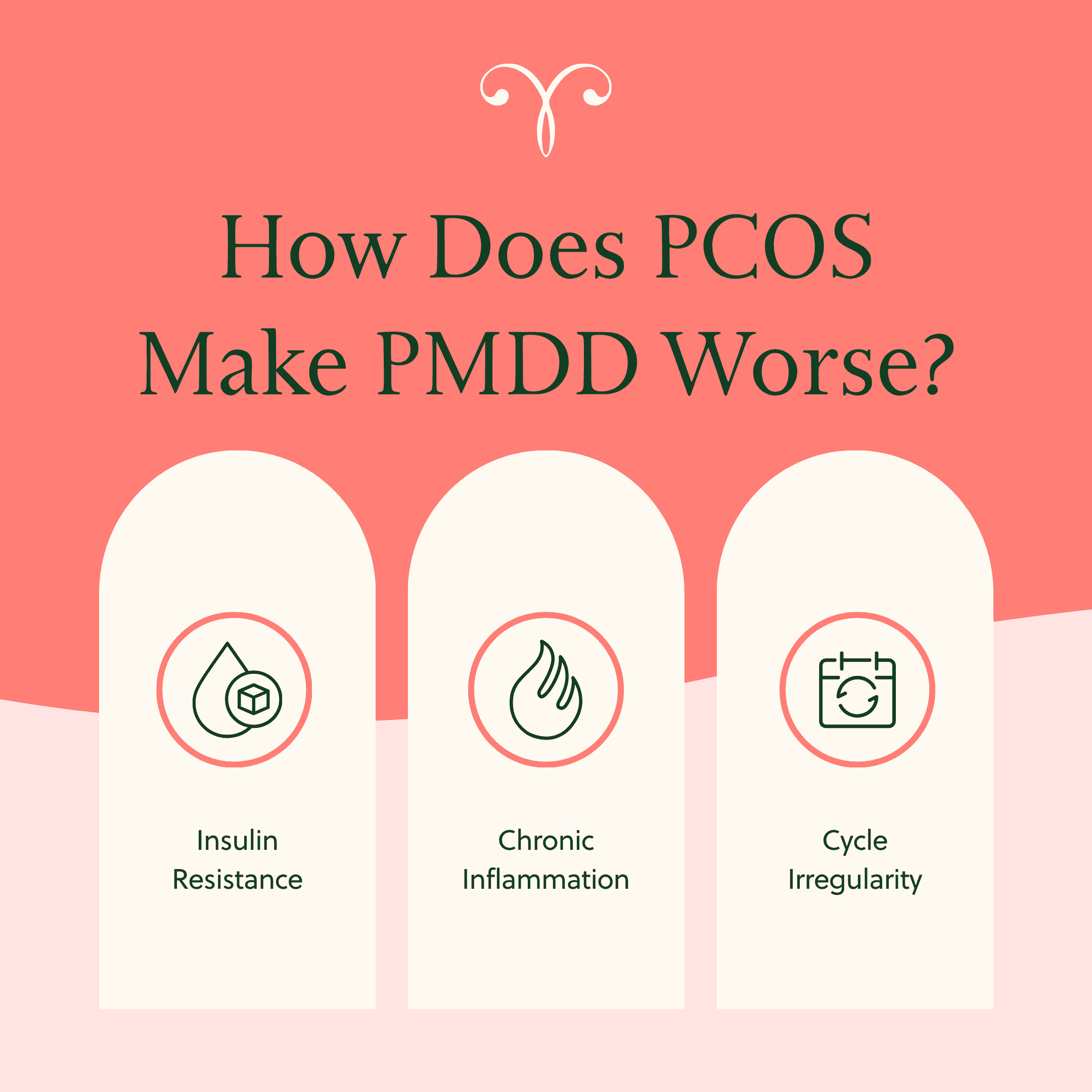
How Does PCOS Make PMDD Worse?
PMOS is characterized by hormonal imbalances, and a big one is elevated androgens (higher levels of hormones like testosterone). Androgens influence many PMOS/PCOS symptoms, like acne, unawanted hair growth, scalp hair thinning, and irregular periods. At the same time, irregular ovulation can also affect the usual pattern of estrogen and progesterone throughout the menstrual cycle.
Because PMDD involves sensitivity to normal reproductive hormone fluctuations, having an irregular cycle can make it more challenging to identify when those hormone-related mood symptoms may occur.
Looking to understand more about unique mood symptoms you may be experiencing? Read: “Mood Swings During Ovulation for Women with PMOS.”
Insulin Resistance
Insulin resistance affects around 70% of women with PMOS, playing an important role in many of the metabolic changes you may experience. When your cells become less responsive to insulin, your body may produce more of it to help keep your blood sugar regulated. Changes in blood sugar levels can ultimately affect how you feel throughout the day, contributing to symptoms like fatigue, cravings, difficulty concentrating, and irritability.
These symptoms can often overlap with PMDD, which is one reason supporting healthy insulin sensitivity and balanced blood sugar can be an important factor in managing PCOS/PMOS overall.
Chronic Inflammation
Research has also linked PMOS with chronic low-grade inflammation. At the same time, researchers continue to look into the relationship between inflammation, stress responses, and premenstrual mood symptoms.
That doesn’t mean inflammation is the sole cause of either condition. It does mean that supporting overall metabolic health through nutrition, movement, and other sustainable lifestyle habits may help address several factors associated with both PMOS and PMDD.
You can begin to understand a little more about this relationship by listening to my podcast episode, “The Link Between PMOS Weight Gain & Inflammation with Dr. Shivani Gupta.”
Cycle Irregularity
We touched on this, but it deserves its own spotlight because it can be so frustrating. For some women who also experience PMDD, cycle irregularity can make symptoms particularly difficult to track. Like I mentioned above, PMDD symptoms typically occur after ovulation. But if ovulation doesn’t occur or happens at different times each month? It’s easy to feel a little like you’re on the edge of your seat.
Tracking your symptoms alongside signs of ovulation can help you start identifying your own patterns rather than relying exclusively on calendar dates. I talk a little more about this in my post, “How to Predict Ovulation with PMOS.”
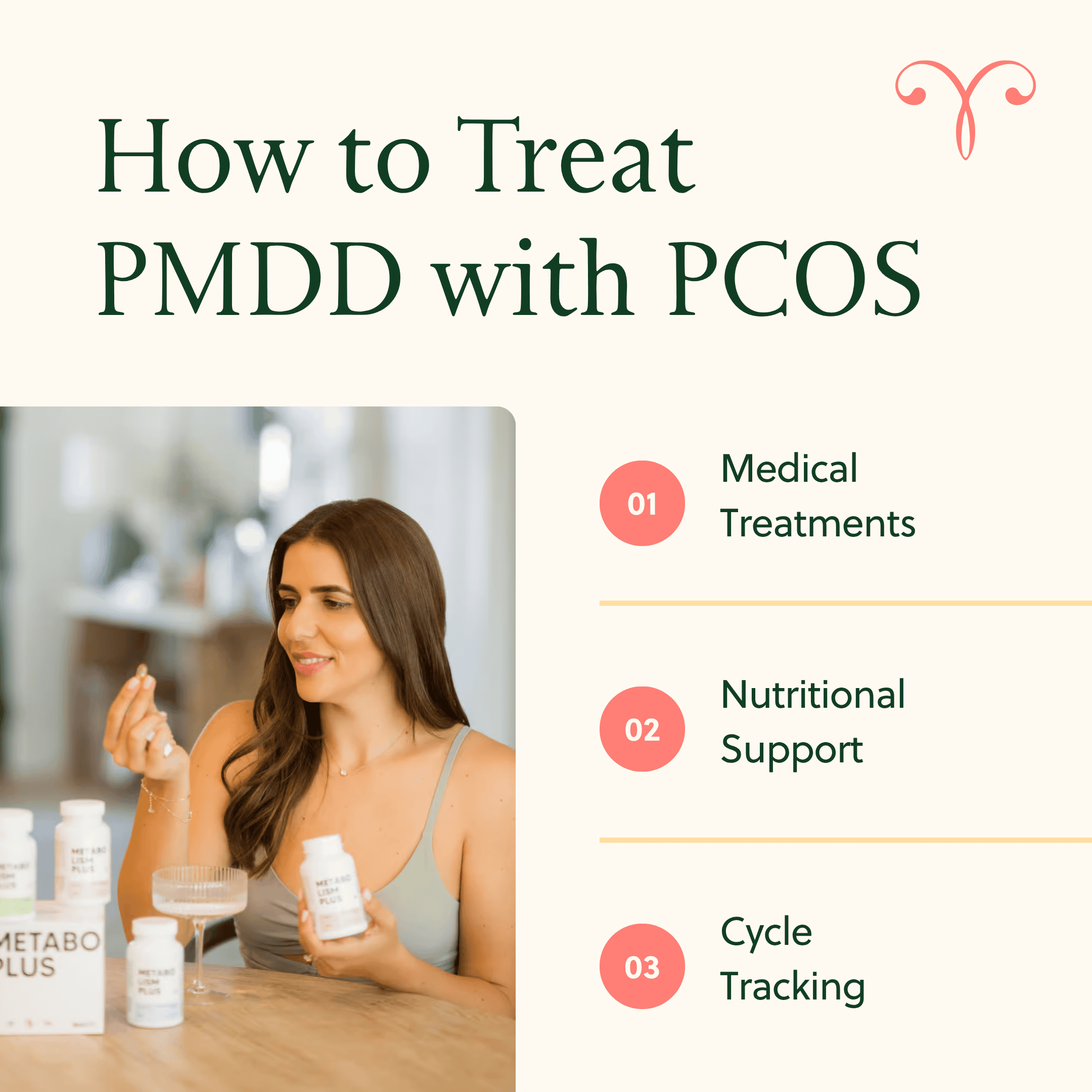
How to Treat PMDD with PCOS
This is the part where we turn “What’s wrong with me?” into “Here’s my plan.” There’s no one-size-fits-all fix, but you do have real options across medical care, lifestyle, nutrition, cycle tracking, and supplementation. Let’s walk through them.
Medical Treatments
This is where you have the most day-to-day power, and where I spend most of my time with the women I coach. Small, consistent shifts add up. Consistency over perfection, always. Here’s what to consider:
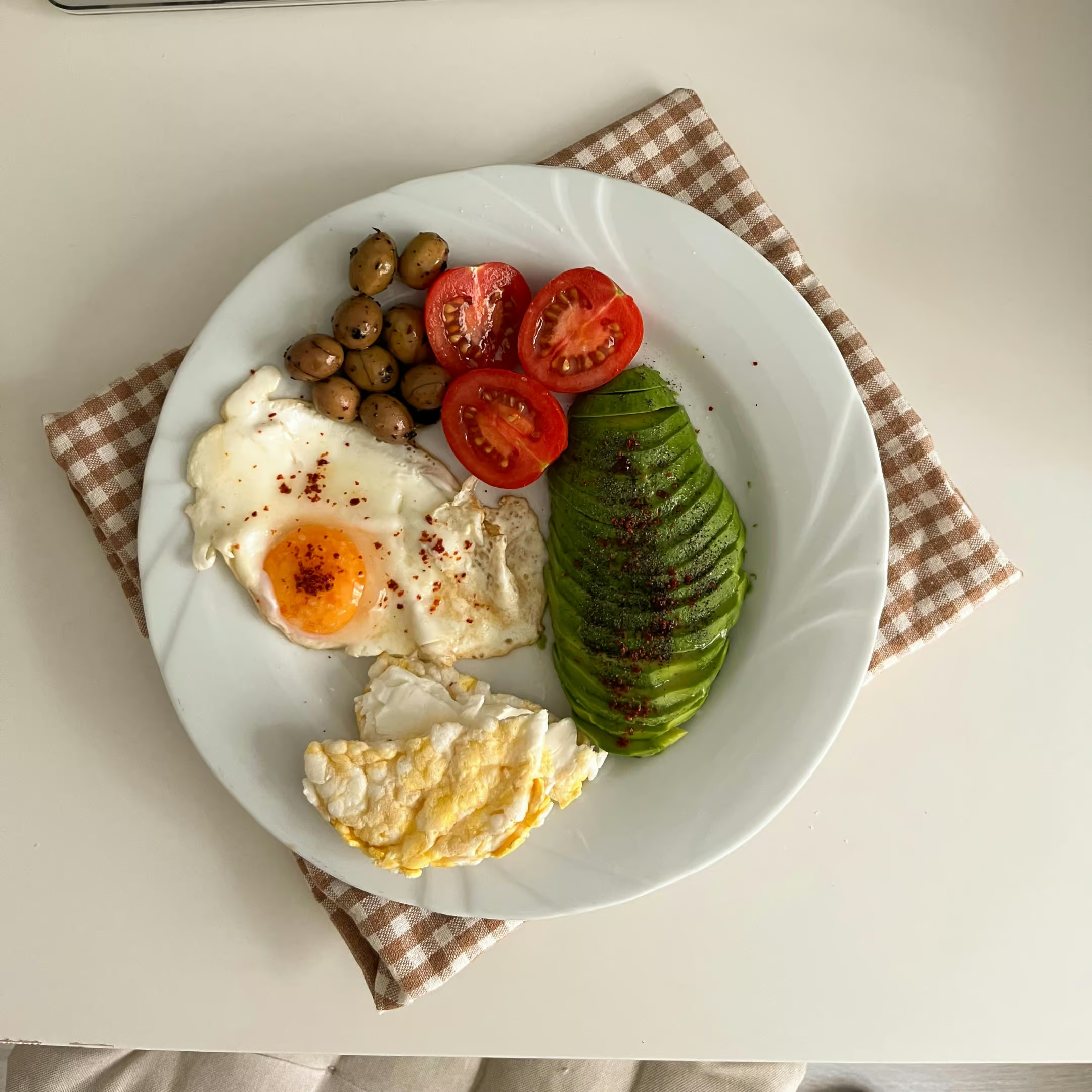
- Build balanced meals. Pair protein with fiber-rich carbohydrates and healthy fats to support steadier blood sugar throughout the day. Additionally, try and incorporate a gluten- and dairy-free anti-inflammatory diet as much as possible. The more you can reduce foods that may trigger inflammation, the better you may feel.
- Regular exercise. Regular, low-impact movement can support insulin sensitivity, metabolic health, and mood. You don’t need to rely on exhausting workouts; emphasis on “low-impact.” Slow weighted workouts, walking, or Pilates are movements you can consistently maintain without raising your cortisol levels.
- Prioritize Sleep: Sleep affects everything from insulin sensitivity to appetite to mood. Creating a consistent sleep routine can be especially valuable when you’re already managing hormonal and premenstrual symptoms.
The goal isn’t to overhaul your entire routine; it’s to start with sustainable habits that you can repeat consistently. And you don’t have to do this alone! Download the Cysterhood app, your PMOS dietitian on the go. Here, you can receive access to live coaching calls, real responses, hundreds of PMOS-friendly recipes, slow-weighted workout routines, and a supportive community.
PMOS and PMDD may feel lonely, but the Cysterhood app is here to remind you that you’re supported by thousands of women going through what you’re experiencing.
Nutritional Support
A few specific nutrients have research behind them for premenstrual mood symptoms. As a dietitian, I really love these, because they are practical and gentle. (Always run new supplements by your doctor, especially if you’re on medication.)
- Magnesium: Research has explored magnesium supplementation for premenstrual symptoms, including mood changes, bloating, breast tenderness, and fluid retention. If you want a meaningful way to support magnesium supplementation, you may enjoy Ovafit’s Metabolism Plus Daily Multi, made with 20+ targeted nutrients in better absorbed forms.
- Vitamin B6: Involved in neurotransmitter production, including serotonin, vitamin B6 has been studied for helping relieve PMS symptoms. This is another one of the many nutrients we incorporate into our Metabolism Plus Daily Multi, for those looking for a comprehensive approach to supplementation.
- Inositol: When used a clinically studied 40:1 ratio of myo-inositol and chiro-D-inositol, this can help improve how the body uses insulin, lower male hormone levels, and support egg quality. Wanna skip the guesswork? Check out Inositol Complete 40:1, Ovafit’s inositol powder that prioritizes research, science, purity and potency, and FDA-registered facilities.
- Omega-3 Fatty Acids: Omega-3s have anti-inflammatory properties that have long been studied for their potential role in supporting metabolic and premenstrual symptoms. More specifically, with consistency, you may notice reduced inflammation, fewer mood swings, and reduced digestive discomfort. (Key word: consistency!)
For women with PMOS, the goal isn’t to find one “magic” supplement. It’s to figure out what addresses the root causes of your symptoms, implement PMOS-targeted supplements and nutrients, and stay consistent. Big changes are often the result of small habits!
Cycle Tracking
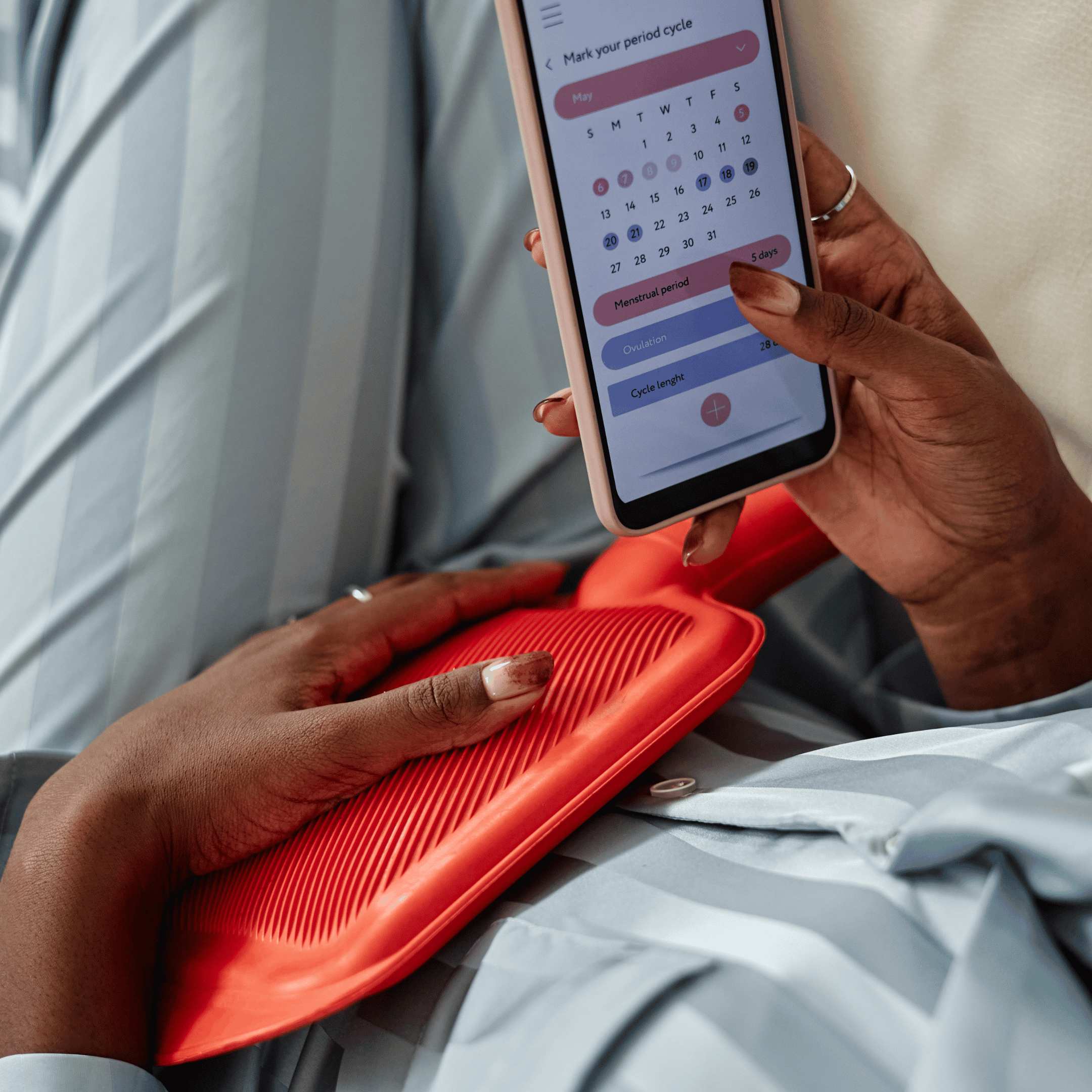
When PMOS makes your cycles unpredictable, tracking can help you better understand what’s happening throughout the month. You can use an app, journal, or whichever method you’re more likely to stick with to track things like…
- Mood
- Energy
- Cravings
- Sleep
- Physical symptoms
- Emotional symptoms
- Bleeding
- Signs of ovulation
- Time you took supplements
Over time, you may begin to notice whether certain symptoms appear after ovulation and begin when your period ends. That information can also be equally useful to bring to your healthcare provider when discussing the possibility of PMDD.
Understanding the connection between PMOS and PMDD can help you create a more informed PMOS management plan.
Here is what I want you to hold onto: your body isn’t broken, it just works differently. And once you learn how it works, you can work with it instead of against it. PMDD and PCOS overlapping does not make PMOS a forever thing. When you know the “why” behind what you feel, you’ll be more equipped to address symptoms and root causes.
Not sure where to start? Take my free PCOS quiz to get pointed toward the next right step for your symptoms. And when you’re ready to go deeper, you can always download The Cysterhood App and start today.
You’ve got this,
Tallene, RD
Written by Tallene Hacatoryan, MS, RD, founder and formulator of OvaFit. Tallene is a Registered Dietitian who specializes in PCOS (now called PMOS) nutrition and has PCOS herself.
Medical disclaimer: This content is for informational purposes only and is not intended as medical advice. Always consult your healthcare provider before making changes to your diet, supplements, or treatment plan.
These statements have not been evaluated by the Food and Drug Administration. This product is not intended to diagnose, treat, cure, or prevent any disease.
Feeling lost with PCOS?
Find out your PCOS type and get your next steps in under 2 minutes.
Find My PCOS Type →