

PCOS Name Change to PMOS: All Your Questions Answered

If you were diagnosed with PCOS, you’ve probably seen the headlines by now, and you probably have questions. The condition we’ve all known as PCOS has officially been renamed, and I want to walk you through exactly what that means for you. Not the clinical version, the real one, from someone who has been living with this and coaching women through it for years.
Polycystic ovary syndrome (PCOS) has been officially renamed polyendocrine metabolic ovarian syndrome (PMOS) following a landmark global consensus study published in The Lancet.
That paper came out in May 2026, after years of work. And no, nothing about your body changed overnight because a name did.
I’m Tallene, a Registered Dietitian with a Master’s degree who specializes in PCOS, now PMOS, and I have the condition myself. I was diagnosed at 18 after a ruptured ovarian cyst, then handed the same “just lose weight” advice you probably got. So when the name changed, I read the actual research, so I could explain it with the facts and information we need moving forward.
Here’s what the PCOS name change means:
PCOS Name Change: Everything You Need to Know
Polycystic ovary syndrome (PCOS) is now polyendocrine metabolic ovarian syndrome (PMOS). More than 50 patient and professional organizations, including The Endocrine Society, took part in the process to develop the new name. And this affects a lot of us. And by a lot, I mean more than 170 million women worldwide.
A name change sounds dramatic, but honestly, it’s genuinely good news for how this condition gets understood and treated going forward. Below, I’m answering the questions I keep getting: why the change happened, what PCOS vs. PMOS actually means, and whether you need to do anything right now (spoiler, you do not).
Why Was PCOS Renamed?
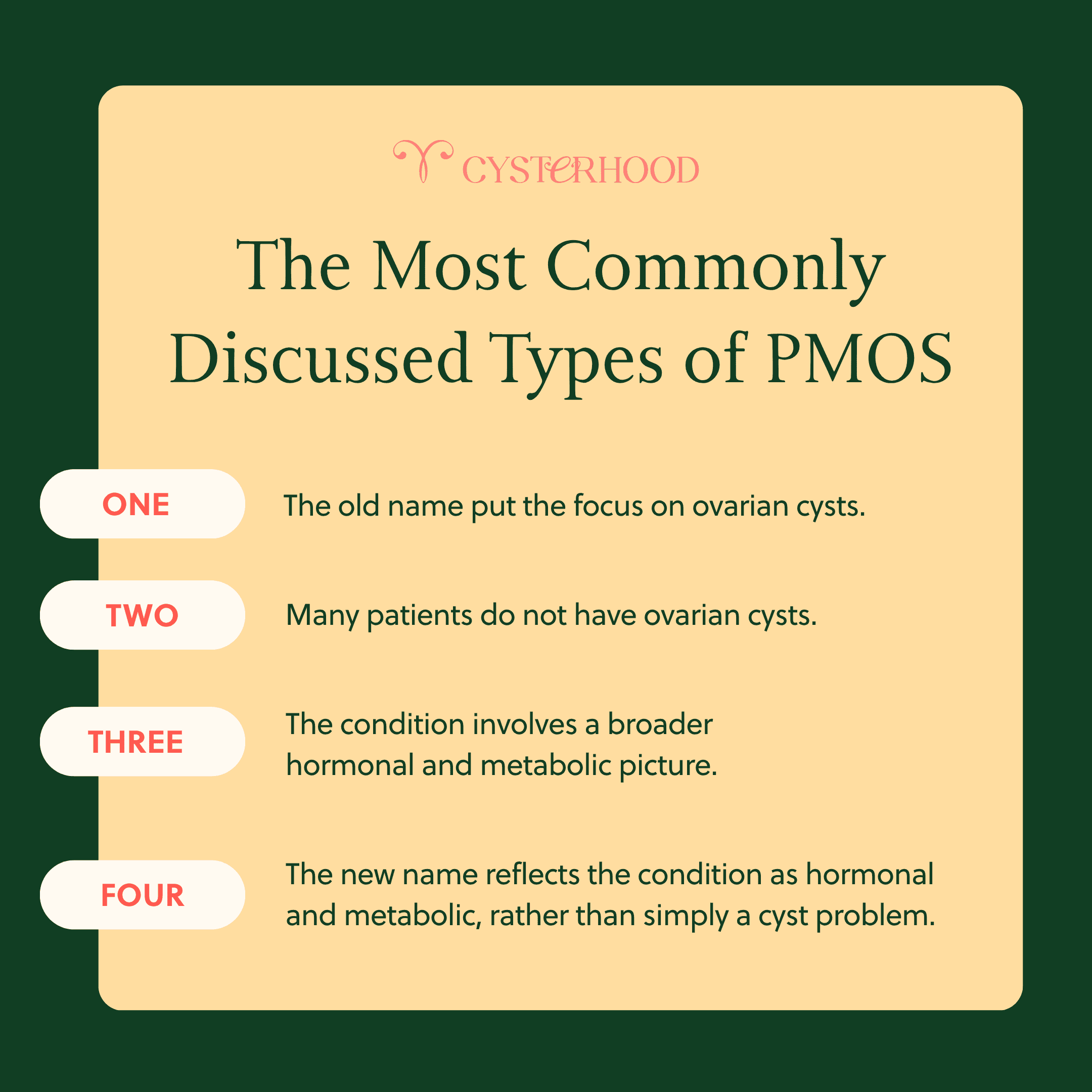
The old name was misleading, plain and simple. It put the whole spotlight on ovarian cysts, when cysts were never really the core issue.
Despite its name, many patients do not have ovarian cysts, which has obscured the condition’s broader health implications. More specifically, it’s contributed to delayed diagnoses, fragmented care, stigma, and missed opportunities for early intervention in metabolic and cardiovascular risks.
That’s why so many of us got dismissed for so long. When doctors are looking at your ovaries and calling it a cyst problem, they miss the hormonal and metabolic picture underneath. The new name fixes that framing. It reflects the condition as a hormonal and metabolic one, which is closer to what’s actually happening in your body.
In short, this reflects the condition through the eyes of real patients, not just researchers.
PCOS vs. PMOS, What’s the Difference?
Let me put your mind at ease first. It’s the same condition with a more accurate name, not a new diagnosis. You didn’t suddenly develop something different! The difference is in what the name emphasizes. The old term pointed at your ovaries. The new one recognizes the full picture.
“Polyendocrine” recognizes the condition involves multiple interacting hormonal disturbances, including insulin, androgens, and neuroendocrine hormones, rather than being an isolated ovarian condition. “Metabolic” acknowledges features such as insulin resistance and increased risks for type 2 diabetes and cardiovascular disease. “Ovarian” retains the connection to ovulatory disturbances and fertility.
That middle piece, the metabolic condition tied to insulin resistance, is what I talk about constantly. For many women (though not every woman with PMOS), insulin resistance is a big part of the puzzle, and it connects to the long term metabolic risk the new name is trying to highlight. Understanding these hormonal conditions as connected, rather than a cyst problem, changes how you approach managing them. If you want to go deeper on the condition itself, here is my full breakdown: “What is PMOS?”
Curious where you might land with your own symptoms? My free PCOS quiz is a good place to start.
What the PMOS Name Change Means for Your Diagnosis
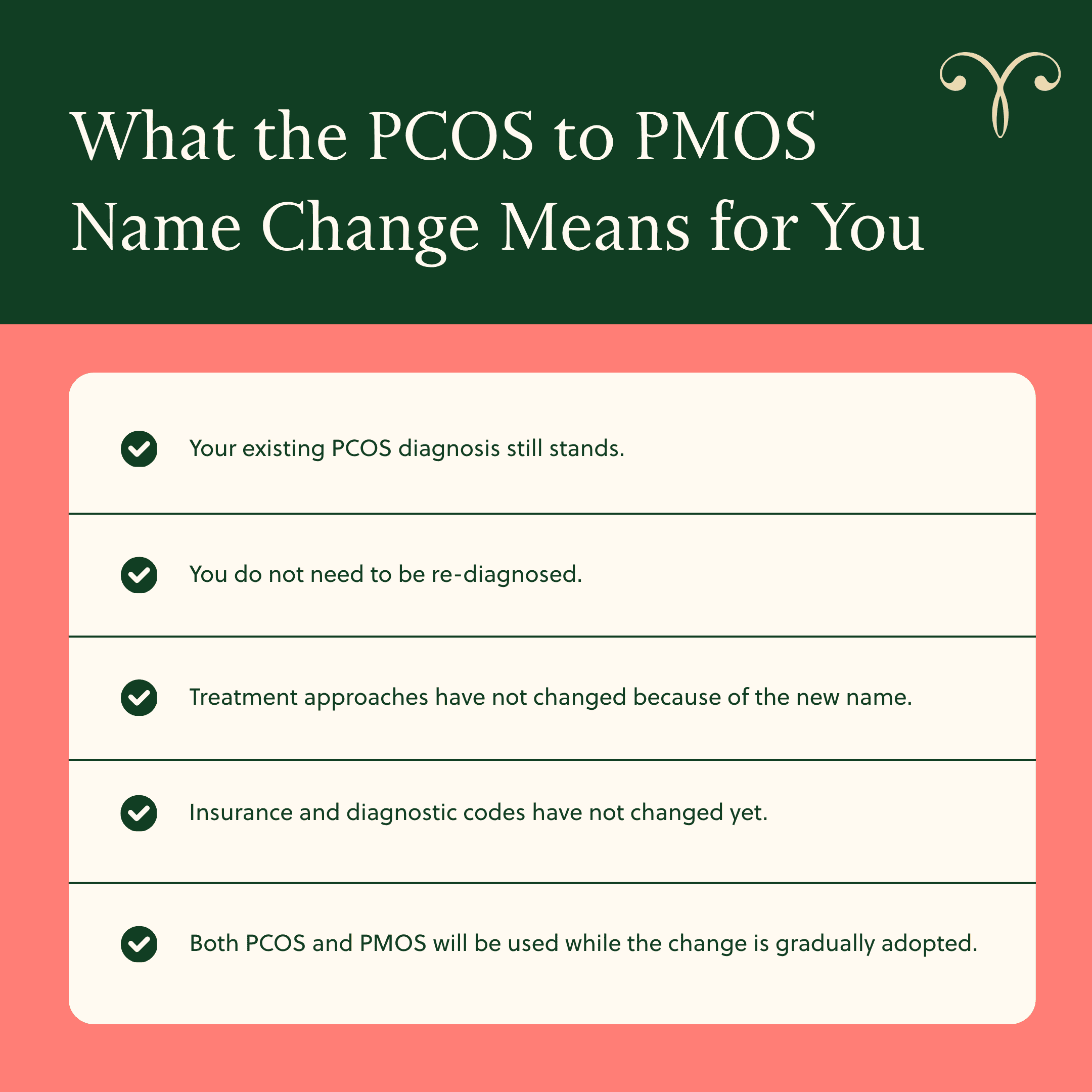
Here is the honest, reassuring truth. If you were diagnosed with PCOS, your diagnosis still stands, and nothing about your body has changed. You do not need a new appointment to be re-diagnosed. You are not starting over.
What the name is meant to do is improve diagnosis and care over time. By naming the hormonal and metabolic reality upfront, the hope is that future women get recognized sooner and treated more completely.
PMOS is characterised by fluctuations in hormones, with impacts on weight, metabolic and mental health, skin, and the reproductive system. For too long, the name reduced a complex, long-term hormonal or endocrine condition to a misunderstanding about cysts and a focus on ovaries.
That better recognition should also help with metabolic health and fertility care specifically, two areas that got overlooked when everything centered on ovaries. One thing to be clear about, though: day-to-day adoption will be gradual. It’s important not to expect immediate changes to diagnosis or treatment, and the adaptability of the new name will take time.
If insulin resistance is part of your story, my guide on insulin resistance and PCOS walks through what to actually do about it.
Does the PCOS Name Change Affect Treatment or Insurance Coding?
For now, honestly, no. And I know that can feel anticlimactic after such big news.
Treatment approaches haven’t changed because of the name. Your insurance and diagnostic codes haven’t changed yet either.
The recategorizing will include updates to clinical guidelines, medical education, and international disease classification systems, ensuring the new terminology is adopted consistently worldwide. That kind of update, across coding systems and guidelines, simply takes time to roll out.
So you don’t need to do anything right now. You don’t need to call your insurer or your doctor to update paperwork. If your provider still says “PCOS,” that’s completely normal for a while. Both terms will be in use as the change works its way through the system.
What This Means for Managing Your PMOS
However it’s named, the day-to-day work of feeling better looks the same. Managing this condition still centers on your metabolic health, on supporting insulin resistance, and on the symptoms that actually affect your life, like irregular cycles, cravings, fatigue, and hair growth. The name caught up to what many of us already knew: this is a whole-body, hormonal and metabolic condition, not a cyst problem.
That’s why my approach leans on supporting insulin sensitivity and calming inflammation, gently and consistently. A gluten and dairy-free diet, low-impact movement, quality sleep, and supplements designed for women with PMOS can make a significant difference in symptom relief. I won’t promise it will fix the condition, but these habits can be a meaningful piece of a larger PMOS management puzzle.
The PCOS name change doesn’t change your diagnosis; it changes how we understand it.
Here is the encouraging part I always come back to. PMOS can be reversed and you can live symptom free. Remember: three months is enough time to change the picture of your ovaries, so consistency over perfection is the goal.
If you want the meal plans, PCOS-friendly workouts, and a community doing this alongside you, download The Cysterhood App and let it carry the planning for you. And if you need a little extra guidance, take the free PCOS quiz to figure out your best next step.
You’ve got this,
Tallene, RD
Medical disclaimer: This blog is for educational purposes only and is not a substitute for professional medical advice, diagnosis, or treatment. Always talk to your doctor or a qualified provider before making changes to your diet, supplements, or medications, especially anything touching fertility, pregnancy, or a current prescription. Never stop or change a prescribed medication without your doctor’s guidance.
Feeling lost with PCOS?
Find out your PCOS type and get your next steps in under 2 minutes.
Find My PCOS Type →