
Can You Have Regular Periods And Have PMOS?
If you have PCOS (now called PMOS) and your periods show up randomly, you might be wondering if you even have it at all. One of the questions I get all the time is whether you can even HAVE regular periods with PMOS. People tend to think either your periods are always super irregular or you just don’t have one. Ever.
There are a lot of women with PMOS out there who do have regular cycles! Your period doesn’t exist in its own little bubble; it’s connected to so many other things going on in your body, including insulin resistance and metabolic health. I know, it feels like your head is spinning. Trust me, I’ve been there.
I’m Tallene, a Registered Dietitian who specializes in PMOS and has the condition myself. I was diagnosed at 18 after a ruptured ovarian cyst. I know firsthand how confusing it can be when what your body is doing doesn’t seem to match what you’ve been told, so I’m here to tell you what you need to know about regular periods and PMOS.
Can You Have Regular Periods And Have PMOS? The Short Answer
You can have regular periods with PMOS! The condition looks different for everyone, and your period is no exception. Irregular cycles are definitely common, but there are also women with PMOS whose cycles come pretty predictably every month.
That’s why looking at the whole picture is so important. PMOS can involve insulin resistance and elevated androgens that don’t suddenly disappear just because your period came on time.
On top of that, an estimated 10 to 13% of women globally are thought to have PCOS, but up to 70% of affected women are undiagnosed. That’s a HUGE number of women who may not even know they have it because they have regular cycles.
What Does Regular Period Mean, Really?
Before we talk about ovulation, let’s talk about what the term “regular” even means. A normal menstrual cycle lasts between 21 and 35 days for women without PMOS. But regularity isn’t just about hitting an exact number of days. We’re also looking at whether your cycle stays consistent from month to month.
Getting your period doesn’t necessarily mean you ovulated. You can still bleed without releasing an egg, which is known as an anovulatory cycle. In fact, women who aren’t ovulating can still have periods that seem more or less regular.
For women with polycystic ovary syndrome (PCOS), now called polyendocrine metabolic ovarian syndrome (PMOS), cycles often run longer and can range from 35 to 90+ days, with some women having fewer than 8 periods per year.
Remember though, that’s not everyone’s experience with PMOS. If you want a deeper look at cycle patterns, I broke this down in my full guide, “What Are Periods Like with PMOS?”
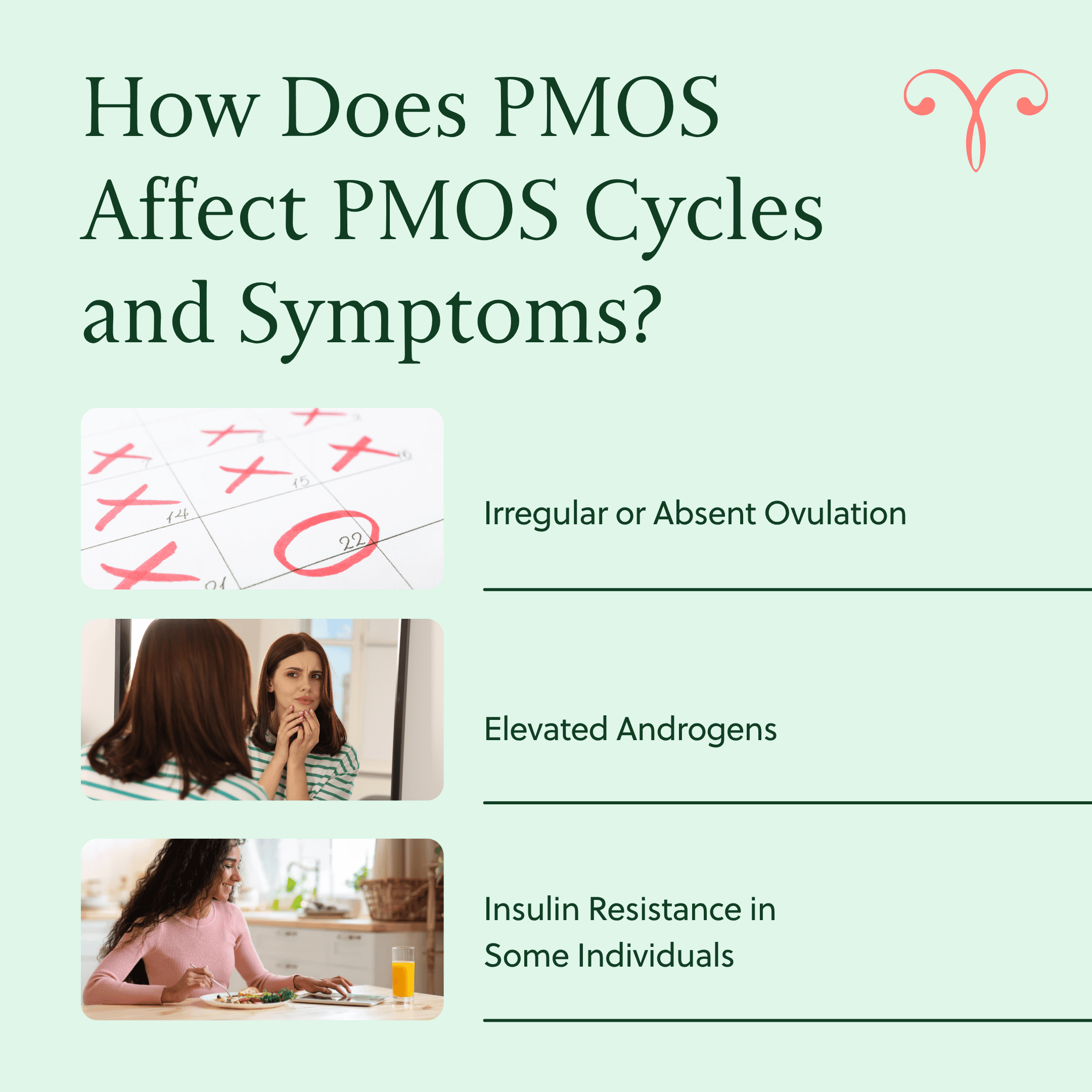
How Does PMOS Affect PMOS Cycles and Symptoms?
PMOS works through a few core hormonal imbalances, and each one shapes your menstrual cycles differently. Here are a few of the big ones to know about.
Irregular or Absent Ovulation
Two hormones from the pituitary gland regulate cycle length: follicle-stimulating hormone (FSH) and luteinizing hormone (LH). With PMOS, these hormones can become imbalanced and interfere with normal egg development and ovulation. When ovulation doesn’t happen consistently, cycles can stretch out or disappear. This is also why PMOS is often linked to trouble getting pregnant for so many women.
Elevated Androgens
Higher-than-typical androgen (male hormone) levels drive some of the most frustrating symptoms. Think: excess hair growth on the face and body, acne, and thinning hair on the scalp. These can show up even when your period is regular, which is why I always recommend bringing up skin and hair changes to your OB-GYN. Elevated androgens can also interfere with normal follicle development, which affects ovulation.
Insulin Resistance in Some Individuals
Insulin resistance is a BIG piece of the PMOS puzzle for a lot of us. When your body isn’t responding to insulin as well as it should, it starts making more of it to compensate. And that extra insulin can signal your ovaries to produce more androgens.
This is one of those domino effects I talk about all the time with PMOS. Insulin resistance can show up alongside things like stubborn weight gain and cravings, but it can also affect your long-term health, too, like increasing the risk of type 2 diabetes and heart disease.
Can You Have PMOS With Regular Periods and Not Know It?
You can have PMOS and still have periods that look regular, but those cycles may not always involve normal ovulation.
Having regular periods doesn’t always mean you’re ovulating regularly, and many women with PMOS actually don’t ovulate even with regular cycles. This is especially important to keep in mind if you’re trying to get pregnant because ovulation, not just bleeding, is what matters for fertility.
It’s possible to experience menstrual bleeding during an anovulatory cycle, so bleeding alone may not always indicate that you ovulated. This is where your doctor may need to do a little more digging. Generally, diagnosing PMOS can involve looking for physical signs of hormonal imbalances, bloodwork to check hormone levels, and an ultrasound that may show small cysts, all guided by the Rotterdam criteria.
And contrary to the old name, PCOS, you don’t need ovarian cysts to have PMOS. That’s actually one of the reasons we’re moving away from the name “polycystic ovary syndrome” in the first place. Because as people with PMOS know all too well, it’s not just an “ovary” condition.
How to Track Your Cycle With PMOS
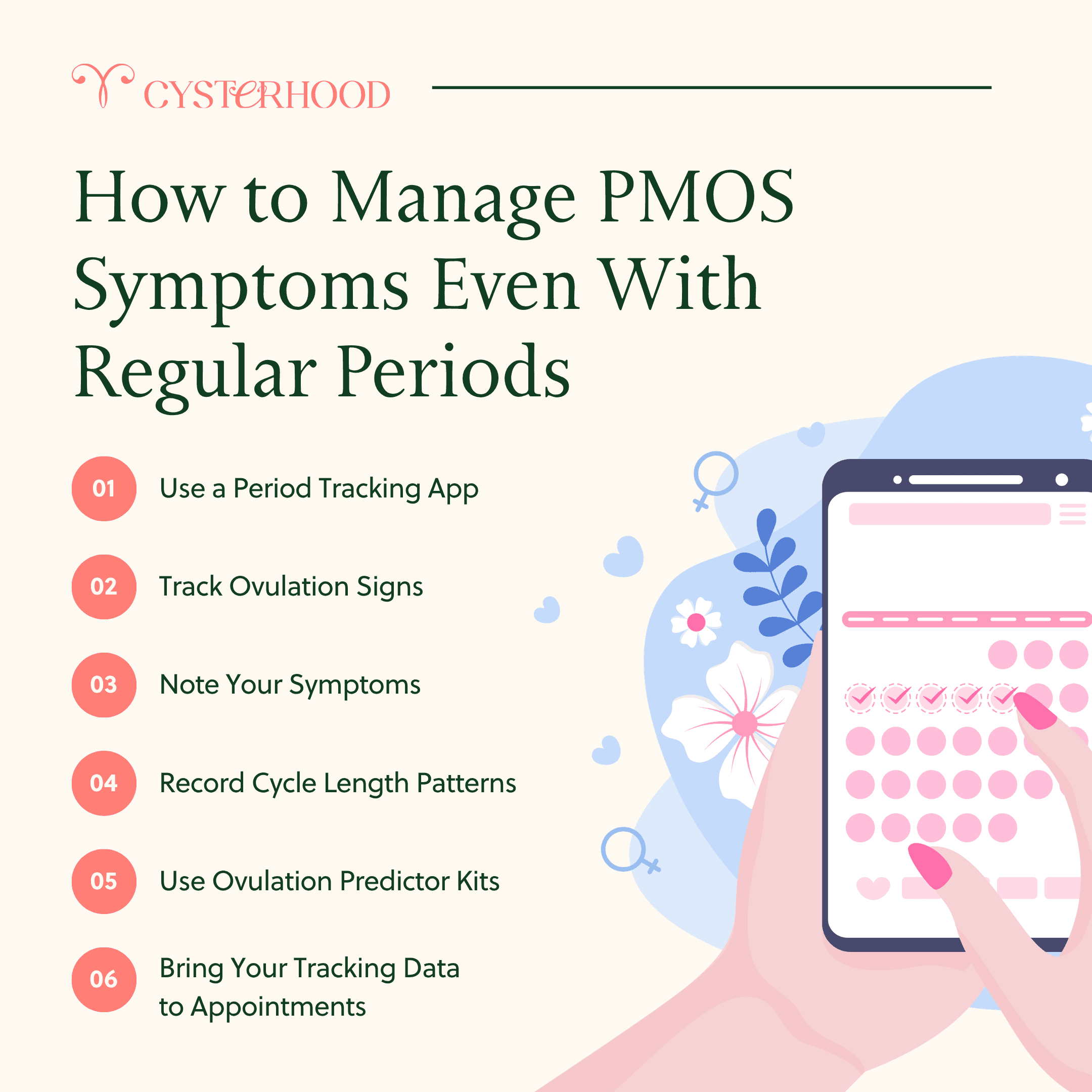
If your periods look regular, tracking is how you learn what’s actually happening underneath. Here’s what I recommend using to keep an eye on things:
Use a Period Tracking App
Log the first day of every period and let the app map your cycle length over a few months. Patterns you can’t see month to month become obvious across several cycles when you’re able to actually see them through an app. Plus, you’ll have actual dates to bring to your doctor instead of trying to remember how your period was three months ago.
Track Ovulation Signs
Basal body temperature (BBT) and cervical mucus give clues about whether you’ve ovulated or not. BBT is the body’s lowest resting temperature, which typically rises slightly after ovulation. A steady rise in temperature may suggest that an egg was released that cycle.
Note Your Symptoms
Keep track of symptoms like acne flares, hair changes, cravings, energy dips, and mood shifts alongside your cycle days. This can help you and your provider connect symptoms to hormonal patterns, especially when you seem to be bleeding normally but your symptoms don’t really add up.
Record Cycle Length Patterns
Watch for cycles that suddenly lengthen. Signs of a PMOS flare-up can include longer cycles alongside more noticeable androgen-related symptoms, like acne. For example, if your cycles usually last 30 days but suddenly it’s jumping to 50, that’s worth making noting.
Use Ovulation Predictor Kits
Tracking LH patterns with ovulation tests may provide additional insight into whether ovulation likely happened in a given cycle. One thing to keep in mind with PMOS, though, is that because LH can run high, these kits sometimes read positive without a true ovulation, so pair them with BBT for a fuller picture.
Bring Your Tracking Data to Appointments
When it’s time for your appointment with your OB-GYN or provider, don’t show up empty handed! Bring everything you’ve been keeping track of, like cycle length and signs of ovulation. This way, it becomes much harder to brush things off and much easier to get real answers.
How to Manage PMOS Symptoms Even With Regular Periods
Not dealing with irregular periods already feels like a MAJOR win. But even regular periods don’t mean the hormonal imbalances behind PMOS are “gone.” Managing the root causes still matters for how you feel now and for your health over time.
Diet and Lifestyle Adjustments
Gluten and dairy can be super common triggers for women with PMOS, which is exactly why I focus on a gluten- and dairy-free diet. Because it may help calm inflammation and support steadier blood sugar, this can truly make a difference when insulin resistance is part of your PMOS picture.
The right kind of movement is just as important. And yes, I meant to say the right kind! You don’t need to punish yourself with super intense or exhausting workouts just to support your metabolic health. Low-impact, slow-weighted workouts generally don’t spike cortisol like intense exercises do and can be just as, if not more, beneficial.
And you don’t have to figure out either of these lifestyle changes alone! Our PMOS-friendly meals and slow-weighted workouts live inside The Cysterhood App, so you’re never left guessing what to do or where to turn.
Not sure where your symptoms fall? Take our free PMOS quiz and get a starting point tailored to you.
Medical Treatments if Needed
Some women use options like birth control or metformin as part of their approach. Birth control works by supplying steady synthetic hormones, which can regulate bleeding and lower androgen symptoms, while metformin may be prescribed to help with insulin resistance.
Here’s my take on it: I’ll always support a woman’s journey to finding relief with PMOS. That said… A lot of people with PMOS find that their symptoms come right back as soon as they stop taking whichever medicine they were prescribed. This is why you’ll always hear me say that I believe every medication needs an exit plan
Never stop or start a medication without talking to your doctor first, especially if it’s anything regarding fertility or diagnosis.
Monitoring Long-Term Health
Because PMOS is connected to insulin resistance, keeping an eye on things like blood sugar, blood pressure, and cholesterol supports your health long-term
Women with PMOS, especially those with hyperandrogenic traits, are about 2.5 times more likely to develop type 2 diabetes and have a higher risk of cardiovascular disease compared to the general female population.
That’s why these numbers are worth keeping on your radar even when your periods seem totally normal.
Targeted supplement support can help too. For insulin resistance and cycle support, many women with PMOS use inositol. Ovafit’s Inositol Complete 40:1 was formulated to support insulin sensitivity, cycle regularity, and hormone balance. View it as support rather than a cure; it works best alongside the food and lifestyle changes I discussed above.
What Regular Periods Really Mean for Your PMOS Journey
So, can you have regular periods and have PMOS? Yes! And now you know why. A predictable cycle doesn’t guarantee ovulation, and it doesn’t erase the hormonal imbalances underneath. That’s actually empowering information, because it means you can pay attention to the full picture instead of one date on the calendar.
You’ve got this,
Tallene, RD
Medical disclaimer: This post is for educational purposes only and is not medical advice. It is not intended to diagnose, treat, cure, or prevent any condition. Always talk with your doctor or qualified healthcare provider before making changes to your diet, supplements, or medications, especially anything involving fertility, pregnancy, or existing prescriptions.
Supplement disclaimer: These statements have not been evaluated by the Food and Drug Administration. OvaFit products are not intended to diagnose, treat, cure, or prevent any disease.
Feeling lost with PCOS?
Find out your PCOS type and get your next steps in under 2 minutes.
Find My PCOS Type →