


What is the Best Time To Fast During your Menstrual Cycle?

If you’ve spent any time online looking up how to lose weight or the best diet tips, you’ve definitely run across the concept of intermittent fasting. Sirak and I have actually talked about if intermittent fasting is good for PCOS on the A Cyster and Her Mister podcast. Every Cyster is different, and for some, strategic intermittent fasting can help them to lose weight.
The word “strategic” is key. Going too long without eating can send your body into fight-or-flight mode and increase inflammation, insulin resistance, and hormone imbalances (worsening all the things you’re trying to improve). Plus, there are other factors to consider when deciding when to fast, like the changing of your body throughout the menstrual cycle!
So, today, I am going to explain how to best fast during your menstrual cycle. Being intentional about your fasting strategy will ensure that you actually reach your goals without worsening any of your PCOS symptoms. Here’s the best way to fast during your period:
What is the Best Time To Fast During Your Menstrual Cycle?
First of all, if you’re not super familiar with your menstrual cycle, take a second to jump over to my post explaining each phase of your period. There’s your period, the follicular phase, ovulation, and the luteal phase, and in each one, different things happen in your body that make fasting more or less beneficial.
The best time to fast during the menstrual cycle? The follicular phase. In this phase, your insulin levels and energy levels peak, allowing your body to handle a longer fasting window. However, with PCOS, I recommend fasting for 12 hours or 14 hours.
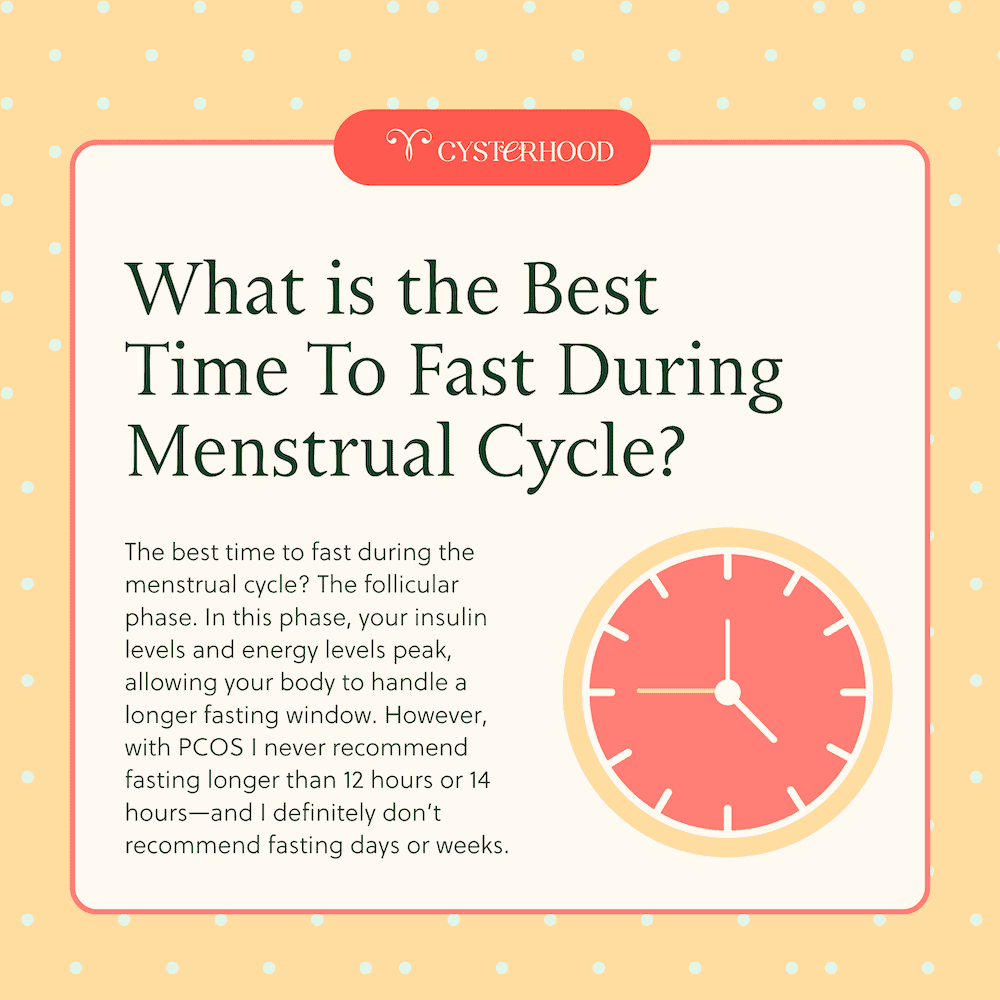
This is because your body already runs on “emergency mode” pretty frequently, and when your body thinks it’s in danger due to inflammation, stress, or limited food intake, it can actually cause your body to hold on to fat (instead of burning it) and raise insulin resistance in preparation for the coming storm. So, to stay out of that fight-or-flight mode, start by fasting around 12 hours. Gradually increase your fast to 13 or 14 hours, but monitor how you feel and see if it’s right for you. Don’t force it!
Is It Safe to Fast on Your Period?
Yes, you can fast safely on your period (as long as you do it the right way). I often recommend a gentle overnight fast of around 12-14 hours. That’s usually pretty well tolerated by women regardless of their menstrual phase. It can be a good way to support healthy blood sugar balance without putting too much stress on your body.
That said, be aware that the week before your period (the luteal phase) may not be the best time to fast. During this stage of your cycle, your body actually needs more energy and nutrients to support healthy estrogen and progesterone levels as it prepares for menstruation. Because of that, you should avoid long fasting periods or considerable calorie restriction. It could make it harder to get your daily nutrients and increase your stress hormones, which could potentially worsen hormone balance throughout the rest of your body.
Instead of forcing a strict fasting schedule throughout your entire cycle, consider adjusting your fasting window based on how you feel. If you’re experiencing increased hunger, fatigue, cravings, dizziness, or low energy around your period, it’s perfectly okay to shorten your fasting window or skip fasting altogether. Supporting your body with balanced, protein-rich meals during this time is often the better choice.
As always, everyone’s body responds differently. If you have PMOS, diabetes, are pregnant or breastfeeding, have a history of disordered eating, or have another underlying health condition, talk with your healthcare provider before trying intermittent fasting or making significant changes to your eating pattern.
Benefits of Fasting While on Your Period
As I’ve said, it’s generally safe to do gentle fasting during menstruation. However, you may be asking, “Is there any real postive effect of intermittent fasting for women who are on their periods?” The answer is, yes! Gentle fasting may offer several benefits for women’s health during this stage of your cycle.
Here’s the breakdown:
- May help keep your blood sugar steady: A gentle 12-14 hour overnight fast can help by improving blood sugar stability. This is important during your period since big swings in blood sugar can contribute to cravings, energy crashes, and mood changes, especially with PMOS.
- May help calm inflammation: Gentle intermittent fasting may help lower chronic inflammation over time. Since inflammation plays a role in period cramps and discomfort, this may help support a more comfortable cycle.
- May ease bloating: Giving your digestive system a break overnight may help you feel a little less bloated and sluggish during your period.
- Supports healthy insulin levels: If you have PMOS, a shorter fasting window can continue supporting healthy insulin sensitivity without putting extra stress on your body.
- Makes it easier to focus on nourishing foods: A moderate fasting schedule still gives you plenty of time to enjoy balanced meals packed with protein, healthy fats, and key nutrients like iron and magnesium that your body needs during menstruation.
How To Fast During Menstrual Cycle
Step One: Identify when the follicular phase is.
With PCOS, periods are usually pretty unpredictable. Due to low insulin sensitivity, high blood sugar, and sex hormonal imbalances, women with PCOS often experience irregular periods or absent periods. Of course, as you naturally heal your PCOS, you can actually repair your period, track your phases, and get everything back to normal. That’ll be your first step!
Step Two: Make a plan for a 12-hour fasting window.
Next, make a plan for your fasting window. I recommend starting your fast after dinner and doing the bulk of your fasting while you sleep. This is a great way to fast effectively without making yourself super uncomfortable! You could even do this long-term at any stage of the menstrual cycle if you find that it doesn’t impact your symptoms negatively.
Step Three: Plan your meals carefully.
Fasting and a balanced diet go hand-in-hand. During your eating window, you want to eat plenty of protein, healthy fats, and vegetables! To feel good during your fast and avoid intense cravings, you need to make the right food choices. You can find tons of great PCOS-friendly (and fasting-friendly) recipes for breakfast, lunch, dinner, and snack time on The Cysterhood app!
Step Four: Stay hydrated.
Staying hydrated will help your body maintain its regular bodily functions while supporting detoxification that often happens during fasting. Plus, staying hydrated can reduce cravings and help you fight brain fog during your fasting window.
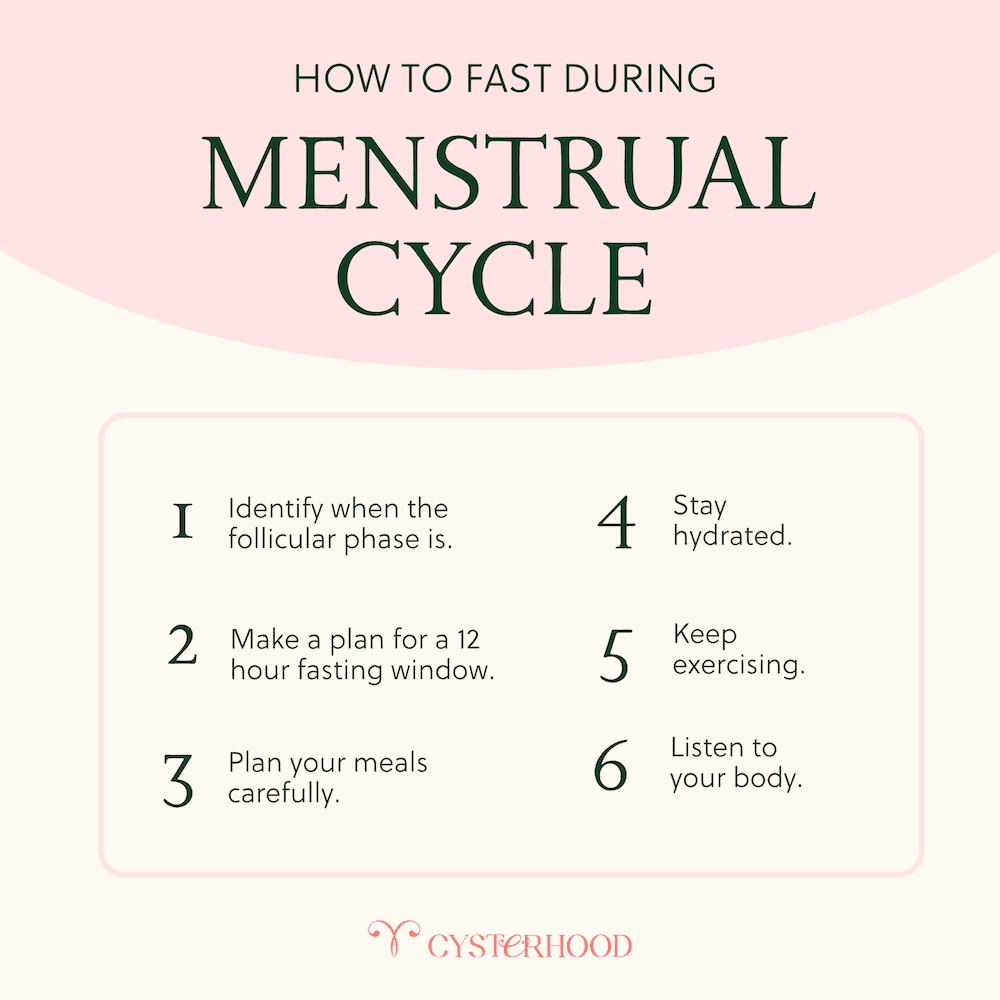
Step Five: Keep exercising.
Don’t stop exercising with your fast! Exercising will actually increase your insulin sensitivity and increase fat burning to make your fast more effective. On top of that, the right kind of workouts can help relieve PCOS symptoms (and PMS symptoms!) So, no matter your phase of the menstrual cycle or the schedule of your fast, keep doing slow-weighted workouts you can find on The Cysterhood app.

Step Six: Listen to your body.
At the end of the day, your body will tell you if it’s the right time to fast. If it’s too difficult during this phase or 12 hours is too long, don’t push it! It’s really not for everyone, and we have other ways to help you find what works best for your body. Listen to your body and realize there are lots of ways to reach your goals.
The best time to fast during your menstrual cycle is during the follicular phase!
If you’re wanting to lose weight and improve your symptoms of PCOS, you’ve come to the right place. Figuring out how to navigate your condition isn’t as easy as a quick Google search . . . you need a tailored approach that makes sense for a Cyster’s unique body. Luckily, there are lots of natural ways to reach all your PCOS goals including weight loss, and we are here to help!
For all the best meal plans, workout routines, and resources to heal your body, head over to the PCOS Weight Loss blog and download The Cysterhood app. As a Registered Dietitian specializing in PCOS (and as someone who personally has reversed my PCOS symptoms), my goal is to help you finally live symptom-free with PCOS. Let’s do this!
Feeling lost with PCOS?
Find out your PCOS type and get your next steps in under 2 minutes.
Find My PCOS Type →


Tracking your cycle consistently not only helps you identify patterns but also allows you to optimize your overall well-being.
Absolutely!