

Mediterranean Diet For PCOS (PMOS): Food and Benefits Guide
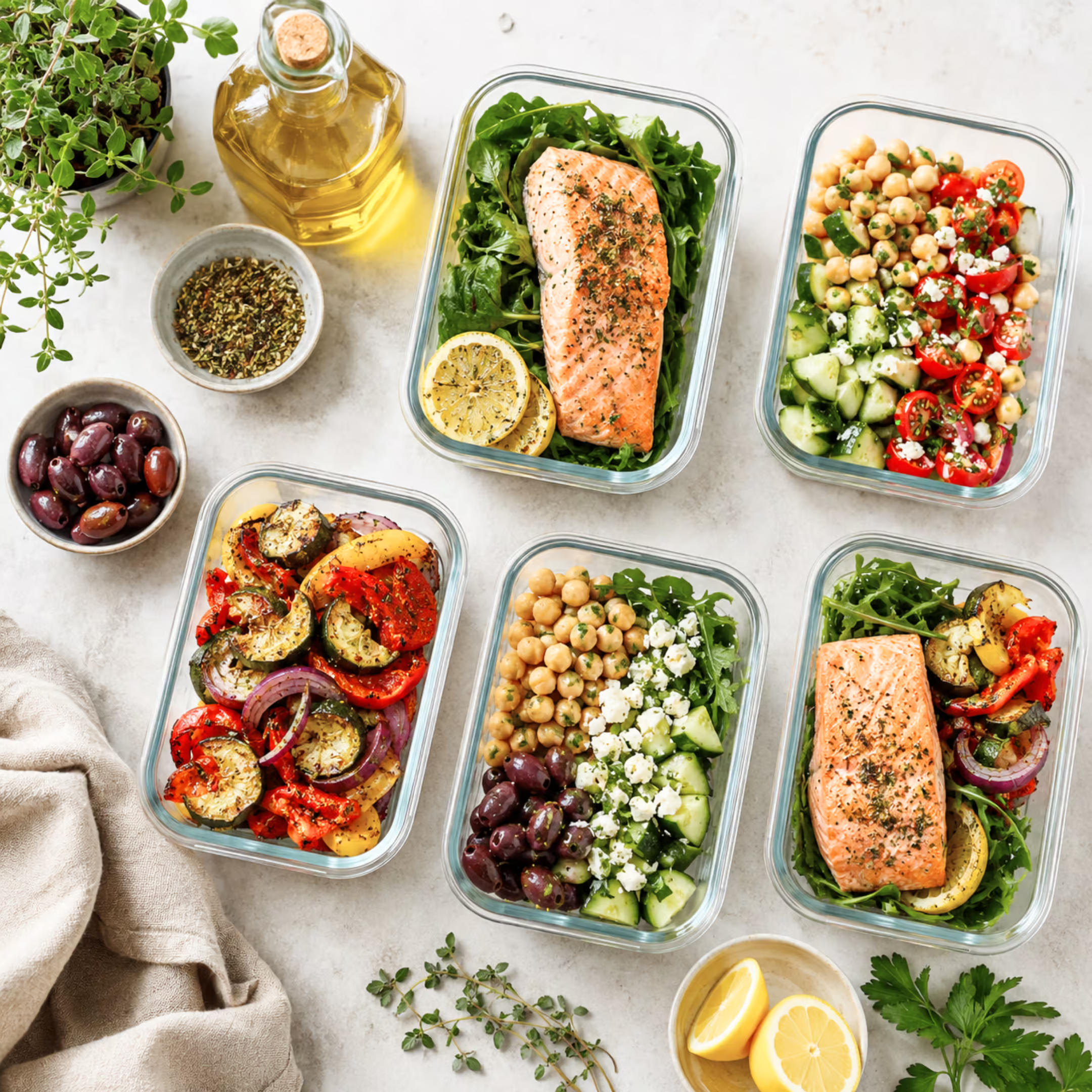
If you’re a woman managing the symptoms of polyendocrine metabolic ovarian syndrome (PMOS), formerly known as polycystic ovarian syndrome (PCOS), you may know that diet plays a huge role in how you feel. PMOS doesn’t just affect your hormones; it also affects your metabolism!
The truth is, your metabolic and endocrine systems influence one another. So, when one isn’t functioning optimally, the other usually experiences problems too. This is why PMOS can feel so difficult to manage, because there’s often a negative feedback loop happening inside your body all the time.
However, what and how you eat can help break that cycle. By supporting your metabolism, you can also help balance hormones, reduce inflammation, and finally get the symptom relief you’ve been working for! But you may be asking: what diet should I adopt? There are so many out there!
In the past, we’ve covered how a vegetarian diet, carnivore diet, low-carb diet, ketogenic diet, and vegan diet all impact PMOS. But today? We’re talking about the Mediterranean diet and whether it’s a good idea for Cysters!
Mediterranean Diet For PCOS (PMOS): Food and Benefits Guide
PMOS is one of the most common hormonal conditions impacting women of reproductive age. But aside from a few medications that mask symptoms, there’s no single procedure or pill that can reverse it. However, don’t get discouraged! Luckily, there are many natural ways to support healing and get real symptom relief.
Getting on a strategic diet is the habit change that can have the biggest impact on your PMOS. This is because the condition often comes with insulin resistance and metabolic dysfunction. And if these issues go unmanaged, they can eventually lead to long-term PMOS complications like cardiovascular disease, metabolic syndrome, and type 2 diabetes.
Though you may be tempted to start dieting right now, keep reading. The truth is, there are a lot of problems with diet culture. However, one major issue is that most “protocols” are highly restrictive, unscientific, and impossible to follow long-term.
This is why I recommend Cysters adopt a gluten- and dairy-free anti-inflammatory diet. It doesn’t feel limiting at all and actually helps you fight cravings. I even developed The Cysterhood app, with hundreds of recipes and a handy meal planner, to help make changing your diet as easy as possible. Because the goal isn’t to do a 30-day fix or detox. We’re looking at a permanent lifestyle change to help you feel your best and manage PMOS long term.
But what about the Mediterranean diet? If you’ve dived into my personal food content, you may have been wondering about this eating strategy. Is it just another short-term fix, or is this a diet change that could create lasting results? You may be surprised to hear that we’re big fans of the Mediterranean diet… with a few modifications.
Here’s why:
How Diet Affects PCOS Symptoms
Diet can have a huge impact on PCOS (PMOS) symptoms. If you’re experiencing things like weight gain, cravings, and fatigue, here’s what might be happening inside your body:
- Blood Sugar Spikes: Blood sugar spikes from foods high in carbs and sugar can make your body less responsive to insulin over time.
- Insulin Resistance Develops: This leads to insulin resistance (IR), in which your body struggles to properly convert glucose into energy and instead stores more of it as fat.
- Cravings and Hunger Intensify: Since your cells still need energy, you may experience intense cravings and constant hunger. That can lead to eating more high-sugar foods, worsening insulin resistance even further.
- Hormonal Imbalances Worsen: When your body becomes insulin-resistant, it produces more insulin to compensate. Excess insulin, another hormone, can signal your ovaries to produce more androgens like testosterone. Then comes a cascade of other hormonal imbalances.
- Stress Triggers Inflammation: All this dysfunction can activate your immune system, leading to chronic inflammation. Chronic inflammation can further worsen both insulin resistance and hormonal imbalance.
Do you see the issue? Poor eating habits can keep this negative feedback loop going. Though that may sound overwhelming or frustrating, it’s actually good news. It means one strategic change can make a huge difference in your PMOS symptoms.
What Is the Mediterranean Diet?
The Mediterranean diet is a traditional eating pattern inspired by countries like Greece, Italy, and Spain. It focuses on whole, nutrient-dense foods like vegetables, olive oil, seafood, legumes, nuts, seeds, and quality proteins instead of heavily processed foods.
Researchers have even analyzed the diet to determine its cardiometabolic and anti-inflammatory benefits. Many study participants following a Mediterranean-style diet experienced improvements in insulin sensitivity, inflammation, blood sugar balance, and heart health. All these are especially important for women managing PMOS!
What Does the Mediterranean Diet Consist Of?
When I say the word “diet,” I’m not referring to restrictive habits, food guilt, or unsustainable eating rules. Instead, I’m referencing a mindful, intentional approach to the foods you choose and the habits that shape your overall well-being. And fortunately, the Mediterranean diet aligns with that perfectly!
Here are a few things you can expect to incorporate into your plate:
- Healthy fats
- Lean proteins
- Complex carbohydrates
- Fruits
- Colorful vegetables
- Green leafy vegetables
- Whole grains
- Beans and legumes
- Nuts and seeds
- Fish and seafood
- Extra virgin olive oil
- Herbs and spices
- Fermented dairy in moderation
- High-fiber foods
- Antioxidant-rich foods
- Minimally processed foods
Is Mediterranean Diet Good for PCOS or PMOS?
Overall, yes, the Mediterranean diet can be a good choice for those with polyendocrine metabolic syndrome (PMOS), formerly known as polycystic ovary syndrome (PCOS). It focuses on many of the same things I recommend in my PMOS diet plan! Whole foods, fiber, healthy fats, and blood sugar balance are central to the Mediterranean strategy. And those are all essential to mine too!
What I also love about the Mediterranean diet is that it’s actually sustainable long term. And I always recommend people make long-term changes to their eating habits rather than 30-day cleanses or resets. A “diet” you adopt for life will always have a bigger impact than these trendy fixes.
In fact, research found that patients with PCOS/PMOS on the Mediterranean diet had significant improvements in symptoms after just three months. They had reduced waist circumference (WC), reduced insulin resistance, improved lipid profiles, and better hormonal balance.
However, I don’t think the benefits should have to stop there! To make the Mediterranean diet more PMOS-friendly, consider removing dairy and gluten, and prioritize a higher protein intake.
Does cutting those foods feel intimidating? Here’s how to start going gluten- and dairy-free for PMOS. I hope it helps!
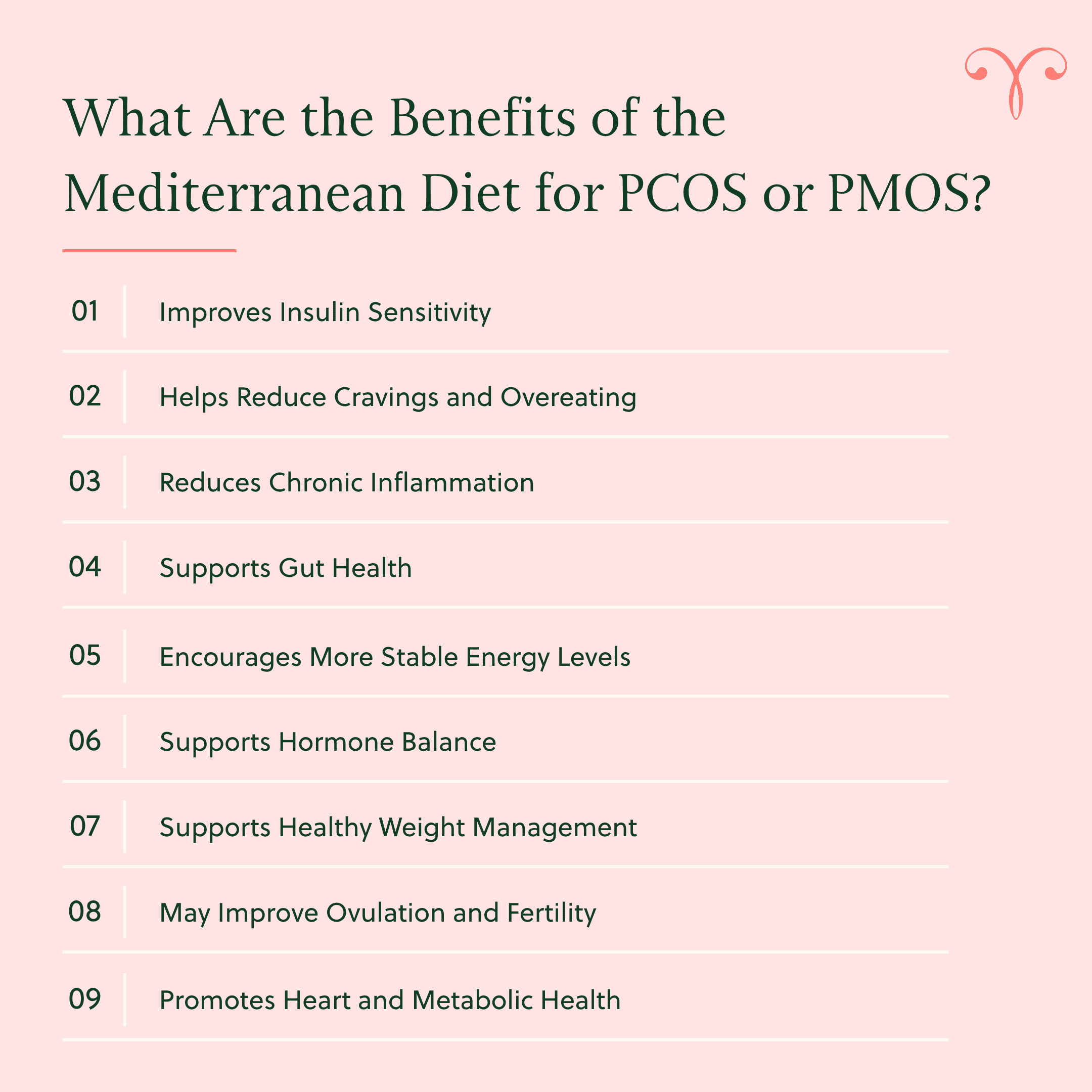
What Are the Benefits of the Mediterranean Diet for PCOS or PMOS?
Improves Insulin Sensitivity
The Mediterranean diet prioritizes high-fiber, anti-inflammatory foods and balanced meals. This can help slow digestion, decrease your total energy intake, prevent blood sugar spikes, and ease stress on the body. All of that can significantly improve insulin sensitivity!
Helps Reduce Cravings and Overeating
When you have your blood sugar and insulin levels under control, your body properly uses glucose for energy. As your insulin sensitivity improves, it’ll likely help you resist cravings and prevent overeating.
Reduces Chronic Inflammation
The Mediterranean diet says to ditch highly processed foods, added sugars, and refined carbs that are extremely inflammatory. Plus, if you also cut dairy and gluten like I recommend, your meals will likely be free of inflammatory triggers!
Supports Gut Health
The Mediterranean diet is naturally high in fiber-rich foods like vegetables, legumes, nuts, seeds, and fruit. This helps support a healthier gut microbiome, better digestion, and even more inflammation relief throughout the body.
Encourages More Stable Energy Levels
Inflammation and insulin resistance are two of the main factors contributing to fatigue in people with PCOS (PMOS). Because the Mediterranean diet emphasizes fiber-rich carbohydrates, healthy fats, lean proteins, and blood-sugar-supportive whole foods, it may help improve insulin sensitivity over time. As those root issues begin to improve, your body can use glucose more effectively!
Supports Hormone Balance
Without all the excess insulin, your ovaries likely won’t produce any excess testosterone. And without inflammation, your cortisol (stress) levels stay regulated, too. Plus, healthy fats like fatty fish and seeds can help with balanced hormone production. When the endocrine and metabolic systems finally run optimally again, usually Cysters feel significant relief!
Supports Healthy Weight Management
As I mentioned earlier, many women with PMOS see improvements in their weight or body mass index (BMI) on the Mediterranean diet. With balanced hormones and blood sugar, it’s much easier to eat well, exercise, and focus on your healing.
May Improve Ovulation and Fertility
When insulin resistance and hormone imbalances improve, ovulation often becomes more regular, too. Since the Mediterranean diet supports both metabolic and endocrine health, many women notice improvements in cycle regularity and overall fertility.
Promotes Heart and Metabolic Health
PMOS increases the risk of long-term complications like high cholesterol, cardiovascular disease, and type 2 diabetes. The Mediterranean diet is one of the most widely researched eating styles for supporting heart health, cholesterol levels, blood pressure, and overall metabolic function.
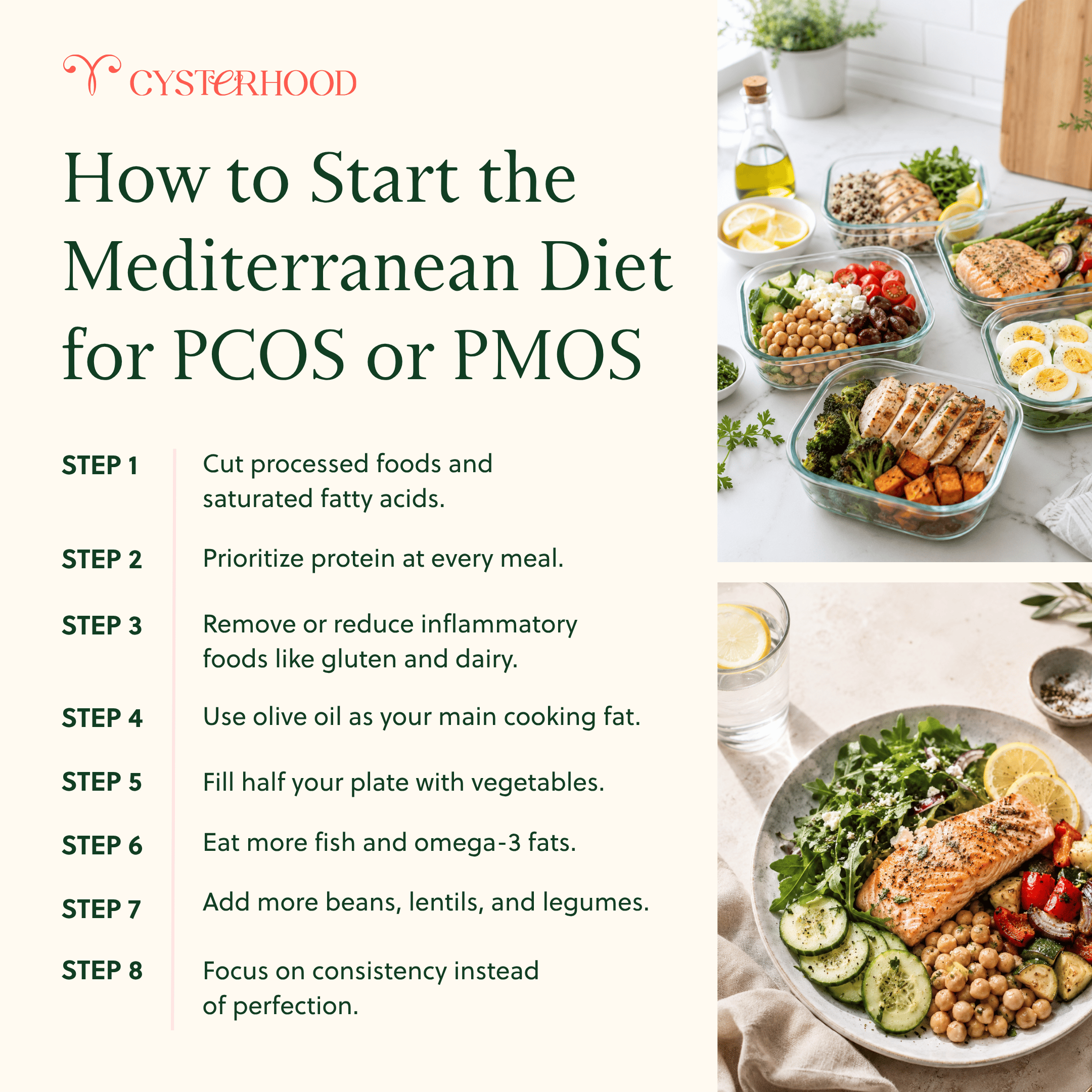
How to Start the Mediterranean Diet for PCOS or PMOS
With any diet, it’s always a good idea not to go all in right away. We’re looking for sustainable change, not an all-or-nothing approach. So, take your transition into a PCOS-friendly Mediterranean diet one step at a time.
Step 1: Cut processed foods and saturated fatty acids.
Start by cutting out processed foods and saturated fats. (Think packaged snacks, soda, sugary cereals, chips, etc.) It’s one of the best first steps, because you can usually feel the impact right away. Think: more energy, fewer cravings, clearer skin, and maybe even weight loss!
Step 2: Prioritize protein at every meal.
Once you’re comfortable there, make sure you prioritize protein at every meal. Women with PMOS need plenty of lean protein to stabilize blood sugar and fully support the metabolism. If you struggle to get enough, start using Ovafit’s Crave Control Protein Powder. With a triple plant protein blend and PCOS/PMOS-specific ingredients, it’s a great way to fill nutritional gaps without it feeling like a chore.
Step 3: Remove or reduce inflammatory foods like gluten and dairy.
Processed foods make up a good chunk of the inflammatory foods category. However, I also recommend you cut gluten and dairy altogether, particularly if you notice they tend to worsen digestive comfort. It can also help to reduce your intake of red meat, alcohol, fried foods, and excess caffeine, all of which may contribute to inflammation or make it harder for your body to feel balanced!
Step 4: Use olive oil as your main cooking fat.
One of the biggest staples of the Mediterranean diet is olive oil. It’s rich in healthy fats and antioxidants that support heart health, hormone balance, and inflammation reduction. So, swap out inflammatory oils and butter when possible and start cooking primarily with extra virgin olive oil instead.
Step 5: Fill half your plate with vegetables.
The Mediterranean diet is all about those veggies. They’re packed with fiber, antioxidants, vitamins, minerals, and anti-inflammatory compounds to support your healing. Plus, they provide plenty of volume for relatively few calories, helping you feel satisfied without overloading your plate. It’s a win-win! For the biggest benefits, aim to fill about half your plate with non-starchy veggies at most meals.
Step 6: Eat more fish and omega-3 fats.
Your protein sources are really important for a PMOS Mediterranean diet. I recommend you eat fatty fish at least twice a week to get as many natural omega-3s as possible. Our brain is actually 60% omega-3 fatty acids, and our body can’t make them on its own. Even if you eat lots of salmon, I still recommend an omega-3 supplement from Ovafit.
Step 7: Add more beans, lentils, and legumes.
Beans, lentils, and legumes are some of the best high-fiber carbohydrates you can eat on the Mediterranean diet. They help stabilize blood sugar, support digestion, and keep you fuller longer without causing huge glucose spikes. Plus, they’re packed with nutrients that support both metabolic and hormone health.
Step 8: Focus on consistency instead of perfection.
Remember, PMOS healing isn’t about eating perfectly 24/7. It’s about creating sustainable habits that support your body long term. If you mess up, eat something inflammatory, or have a weekend where things aren’t ideal, that doesn’t mean you failed. Just get back on track at your next meal and keep moving forward.
Mediterranean Diet for PCOS Meal Plan
As I mentioned, my PMOS diet is essentially Mediterranean with a little more protein and no dairy or gluten. So, if you want to start eating well and feeling better, let’s start right now! Below, I’ve shared an example PMOS Mediterranean one-week meal plan. You can find all these recipes on The Cysterhood app. Just use the meal planning feature to drop them all in place!
Day One:
- Breakfast: Green Goddess Shakshuka
- Lunch: Mediterranean Chicken Tahini Wrap
- Dinner: Garlicky Pepper Steak Stir Fry
- Snack: Mason Jar High Protein Raspberry Cheesecake Jars
Day Two:
- Breakfast: Blackberry Coconut Chia Pudding
- Lunch: Greek Style Lentil Salad with Shrimp
- Dinner: Mediterranean Chicken and Chickpea Soup
- Snack: Beet Hummus and Vegetables
Day Three:
- Breakfast: Mexican Sweet Potato Casserole
- Lunch: Leftovers
- Dinner: Mediterranean Sheet Pan Bake
- Snack: Apple Cider Blondies
Day Four:
- Breakfast: Apple Pie Protein Smoothie
- Lunch: Smoked Salmon Sandwich
- Dinner: Chicken Tinga Tacos
- Snack: Dairy-Free Taco Dip
Day Five:
- Breakfast: Peanut Butter Banana Oatmeal Bake
- Lunch: Mediterranean Tuna Salad Bowl with Roasted Red Peppers
- Dinner: Red Curry Lentil Soup
- Snack: Healthy Cranberry Apple Crisp
Day Six:
- Breakfast: Breakfast Platter with Berries, Poached Egg, and Smoked Salmon
- Lunch: Mediterranean Tuna White Bean Salad
- Dinner: Sheet Pan Thai Salmon with Peanut Sauce
- Snack: Chickpea Fritters
Day Seven:
- Breakfast: Sweet Potato Avocado Toast
- Lunch: Leftovers
- Dinner: Greek Lemon Chicken Soup
- Snack: High-Protein Cookie Dough
The Mediterranean diet is beneficial for women with PMOS.
You can’t heal PMOS with an extreme diet trend or the perfect meal plan. But you can reverse your symptoms with strategic lifestyle changes. These aren’t quick fixes or short-term wellness fads. The new habits represent the next stage of you as you overcome PMOS symptoms and step into a healthier, more energized version of yourself!
Feeling lost with PCOS?
Find out your PCOS type and get your next steps in under 2 minutes.
Find My PCOS Type →