
If you’re a woman who has experienced a miscarriage, I first want to say that I am deeply sorry for your loss. Losing a baby and struggling with infertility are two of the most difficult symptoms a woman faces with polycystic ovary syndrome (PCOS).
Since PCOS is a condition that negatively impacts the balance of reproductive hormones, it makes sense that Cysters experience reproductive-related symptoms like infertility, irregular menstrual cycles, and/or recurrent miscarriages. In fact, the miscarriage rate for women with PCOS is between 30% – 50%, which is higher compared to women without PCOS.
What can make this even more difficult is that many women are diagnosed with PCOS in the middle of their fertility journey, meaning not only do these Cysters have to mentally deal with the struggles of trying to conceive, but they also have to figure out a treatment plan for their condition. It can be a lot to handle!
If this is you, know that all of us in The Cysterhood are here for you. But more than that, I want you to know that there is hope for naturally healing your PCOS symptoms and carrying a healthy pregnancy to term!
Here’s what you need to know about miscarriages and PCOS:
Can a Miscarriage Cause PCOS?
The short answer is no. Miscarriages of any kind, whether recurrent miscarriages, missed miscarriages, early pregnancy loss, late pregnancy loss, or another type of miscarriage, don’t trigger any long-term hormonal imbalances that would cause PCOS.
However, as mentioned, a lot of Cysters first realize they have PCOS during their fertility journey, which may make miscarriage seem like the cause of their metabolic condition. However you can think of it this way: PCOS usually happens first, and infertility is second. Once a woman starts looking at the symptoms of PCOS beyond fertility, they usually realize they’ve had warning signs and chronic symptoms for years. Some common symptoms of PCOS include weight gain, acne, mood swings, fatigue, irregular periods, and hair loss.
All that being said, I want to provide you with some hope… many Cysters have had successful PCOS pregnancies! I’ve witnessed it myself in our private interactive group of The Cysterhood app. It’s truly one of the most inspiring updates we read daily and I love when the Cysters all gather online in the comments to share love and support. Here’s more on how PCOS affects pregnancy, and we’ll jump into how to avoid miscarriage and high-risk pregnancies with PCOS:
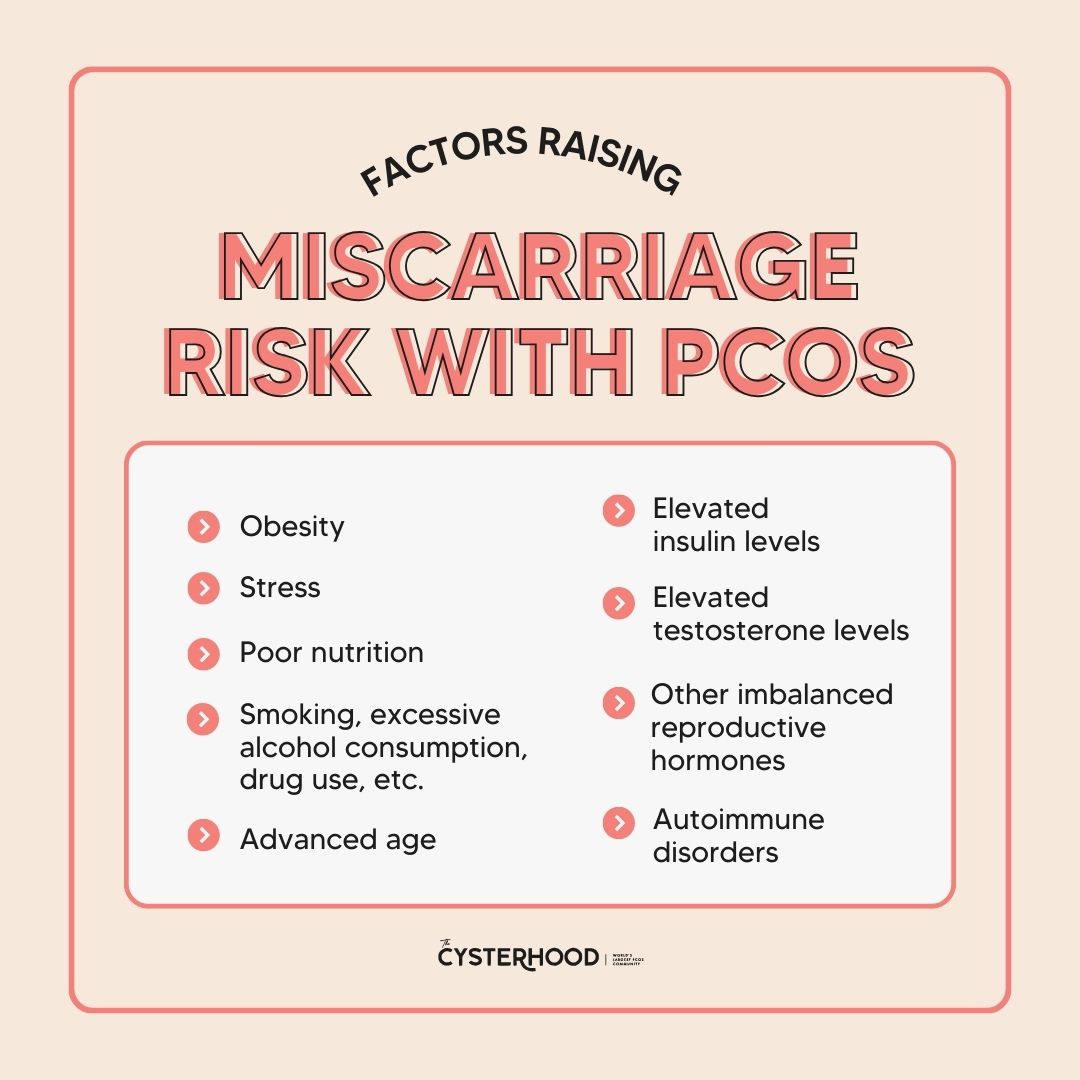
Things That Increase Risk Of Miscarriage with PCOS
- Obesity
- Stress
- Poor nutrition
- Smoking, excessive alcohol consumption, drug use, etc.
- Advanced age
- Elevated insulin levels
- Elevated testosterone levels
- Other imbalanced reproductive hormones
- Autoimmune disorders
How To Support Your Pregnancy With PCOS
Maintain a healthy weight.
Being overweight or obese is one factor that can increase miscarriage risk. However, I know firsthand that when you have PCOS, losing weight can be really difficult! This is because women with PCOS have insulin resistance, which is when your body doesn’t process glucose properly. Instead of converting the sugar to energy, your body stores it as fat and absorbs it into the bloodstream.
Insulin resistance makes weight loss difficult and raises your blood sugar levels, which increases your risk of gestational diabetes mellitus. Gestational diabetes can lead to pregnancy complications and increase your risk of miscarriage, but the right strategies can help you maintain your weight levels appropriate for pregnancy and lower your high blood sugar levels. Remember that this is a hormonal and metabolic disorder, so targeting the root causes of weight gain through small lifestyle changes can help you maintain a healthy weight in each stage of pregnancy. Be sure to talk to your doctor about healthy weight goals throughout your journey.
Eat 3-5 times a day.
You and your baby need fuel to get through the pregnancy! What you eat now will help your baby grow and develop as healthy as possible, to give them a great start to their life. I recommend you eat regularly, meaning 3 main meals and a snack or two in between, if necessary. Follow recipes from the app and prioritize foods that are rich in fiber, protein, iron, calcium, and healthy fats.
While we recommend an anti-inflammatory, gluten-free and dairy-free diet for most women with PCOS, be sure to talk to your doctor if this is something you can continue during your pregnancy. You can always get back to this lifestyle after you give birth and we will help you every step of the way!

Avoid drinking too much caffeine.
Excessive amounts of caffeine have been linked to some pregnancy complications. Plus, caffeine with PCOS can worsen hormonal imbalance (such as high cortisol and androgen levels) and insulin resistance. So, it’s best to avoid consuming caffeine or at least opting for decaf options in moderation.
Stay hydrated.
Drinking lots of water during pregnancy is very important. It prevents dehydration, supports adequate amniotic fluid levels, reduces uterine irritability, and promotes blood circulation. All of this is good for a healthy and successful pregnancy!
Get plenty of sleep.
Good sleep is essential for all aspects of health! So, of course, it can help you maintain a healthy pregnancy, too. Improving sleep hygiene can help reduce stress, promote balanced hormone levels, improve immune functions, increase healthy blood flow, and overall reduce the risk of pregnancy complications. And, yes, I know good sleep can be difficult with PCOS, but try these tips to get better sleep with PCOS!
Continue with gentle exercise.
Of course, we don’t want you to be doing any vigorous, intense exercises when you’re pregnant. Regular, pregnancy-safe exercises can be hugely beneficial for your body! (And, truthfully, high-intensity workouts aren’t good for PCOS bodies whether pregnant or not.) Staying active by doing slow-weighted workouts, yoga, walking, etc. for 150 minutes a week can help reduce your risk of complications like gestational diabetes while balancing hormones, reducing inflammation, and increasing insulin sensitivity.

Reduce your stress levels.
High stress levels can worsen reproductive hormone balance, weaken the immune system, lower insulin sensitivity, and increase inflammation, which can all increase the risk of miscarriage and worsen your PCOS symptoms. So, to foster a healthy pregnancy, do your best to reduce stress. Some daily self-care, regular exercise, time in nature, morning meditation, and other lifestyle changes can have a big impact on your stress levels and help you improve your stress management techniques for a healthier body and pregnancy.
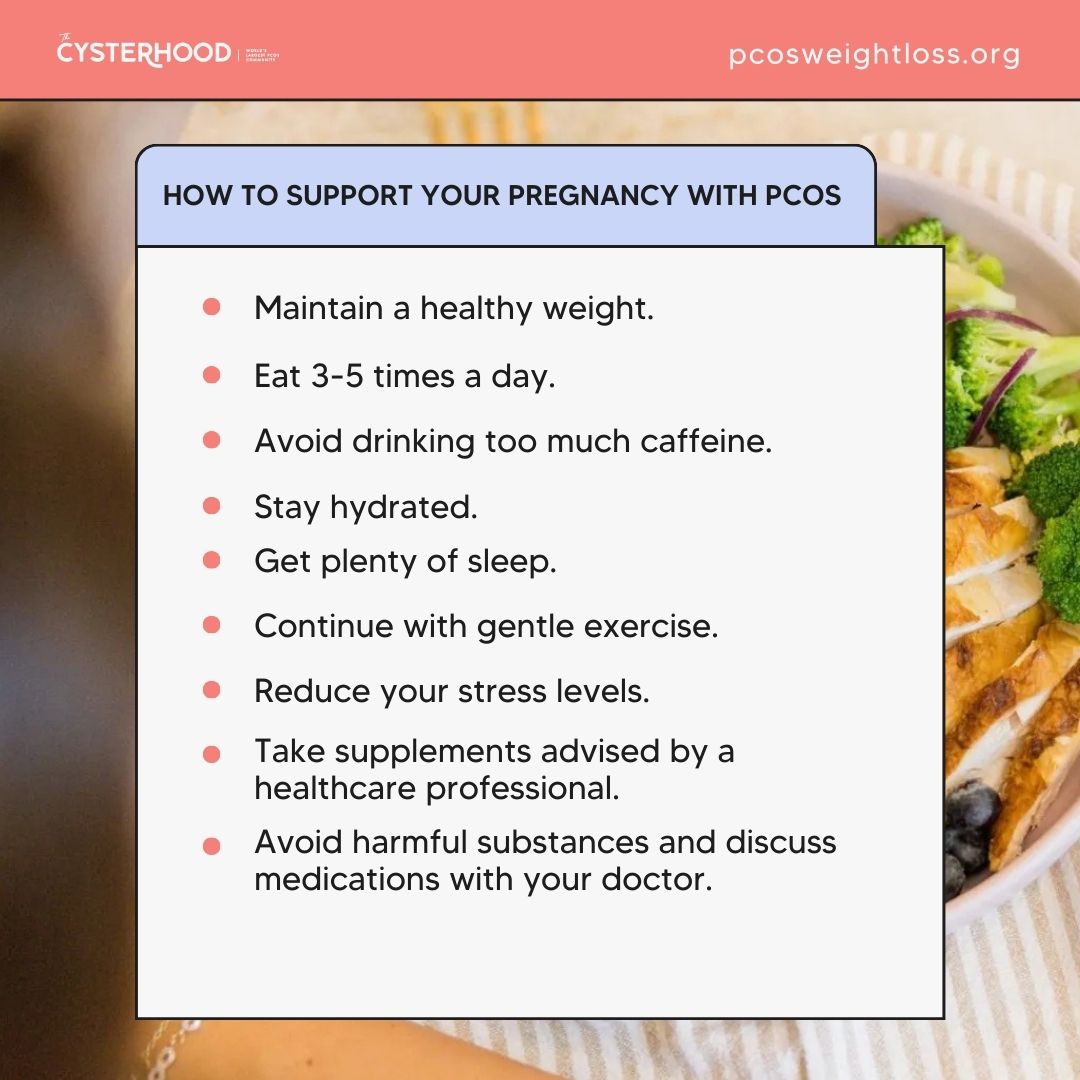
Take supplements advised by a healthcare professional.
Most pregnant women with PCOS or without are told to get a high-quality multivitamin or prenatal vitamin for pregnancy support. Other supplements like curcumin, omega-3 fatty acids, and Ovasitol have also been shown to be beneficial for pregnancy and overall PCOS health. So, talk with your doctor about taking NSF-certified supplements like mine from Ovafit to give your body tons of extra nutritional support to maintain your pregnancy.

Avoid harmful substances and discuss medications with your doctor.
When pregnant, you should avoid all harmful substances like alcohol and any kind of non-prescription drugs. If you struggle with any of these, see a healthcare professional right away. Additionally, if you take any prescription drugs, you need to discuss with your doctor of potential risk factors of taking that drug and whether it’s safe for your pregnancy. Certain medications can be potentially harmful.
Miscarriage does not cause PCOS, and there are ways you can promote a healthy pregnancy even with PCOS!
Growing a family is an incredible part of anyone’s life journey, and if you’re a Cyster, you are worthy of this milestone too! Despite setbacks from PCOS, there are plenty of ways you can improve your condition naturally to give you a higher chance of having a healthy pregnancy.
For more ways to support your body, reverse PCOS, and conquer infertility, head over to the PCOS Weight Loss blog and listen to the A Cyster and Her Mister podcast. There is hope for all your health goals!