
When we think about the menstrual cycle, there’s really only one phase everyone expects symptoms: your period. Cramping, fatigue, cravings, and bleeding (of course) are all common during this stage. But the rest of the cycle? Most women don’t have any noticeable side effects or changes to report.
However, ovulation is definitely an exception. Research actually suggests that 20–40% of women experience symptoms during ovulation. And if you’re a woman with polycystic ovary syndrome (PCOS), you likely experience many heightened ovulatory symptoms. Hormonal imbalances, for example, can trigger bloating, pelvic pressure, headaches, and, commonly dismissed, mood swings.
While the physical symptoms of PCOS are challenging, it’s usually the impact on mental health that hits the hardest. For many Cysters, ovulation can come with emotional shifts that can make us feel totally out of control. So in this post, I want to explore why women with PCOS experience mood swings during ovulation, and share practical, natural ways to relieve ovulation symptoms.
Mood Swings During Ovulation for Women with PCOS
Before we get too deep into ovulation, it’s important to understand how the entire menstrual cycle works. Many Cysters are already very familiar with what menstruation is like with PCOS. They expect heavy, painful, or irregular periods and may even understand why they happen.
However, women often overlook the other phases of menstruation. To better understand what’s happening during your period, ovulation, and everything in between, read my post on the four stages of the menstrual cycle. It’s a great foundation for understanding how hormonal shifts throughout your cycle influence symptoms, mood, and overall hormone balance.
Today, I’m discussing mood swings. But, for additional ovulation symptom support, I also have a post on PCOS bloating during ovulation and PCOS ovulation pain. If you also struggle with either of these symptoms, read those articles next!
Are Mood Swings Common During Ovulation for Women with PCOS?
Yes! PCOS affects the way your brain responds to hormonal shifts, stress signals, and blood sugar changes. That means mood swings aren’t uncommon at any stage of the cycle! But they’re especially prominent during ovulation because of the rapid hormone changes happening at that time.
You can read about this more in my post on PCOS and mood swings.
What Do Mood Swings Feel Like During Ovulation for Women with PCOS?
- Sudden irritability or feeling “on edge” for no obvious reason
- Heightened anxiety or restlessness, even if nothing stressful is happening
- Emotional sensitivity or tearfulness
- Feeling overstimulated or overwhelmed more easily
- Brain fog or trouble concentrating
- Increased frustration with things that normally wouldn’t bother you
- Feeling emotionally reactive in conversations or relationships
- A mix of high energy and emotional intensity, followed by a crash
- Difficulty sleeping or feeling wired but tired
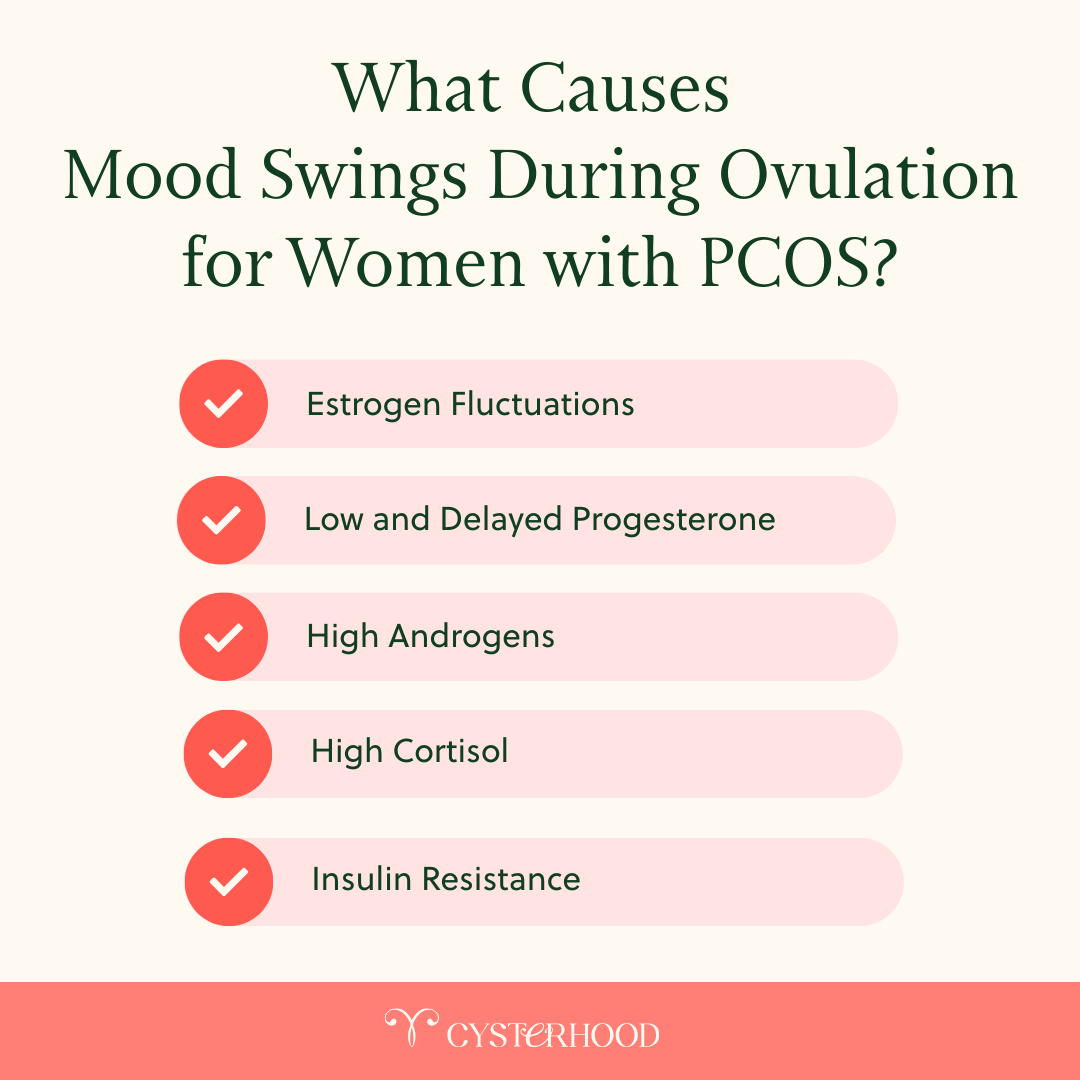
What Causes Mood Swings During Ovulation for Women with PCOS?
Estrogen Fluctuations
Estrogen naturally rises throughout the first half of the cycle to help mature an egg and trigger ovulation. That part is normal. The issue is that estrogen directly influences serotonin and dopamine, two neurotransmitters that play a huge role in mood and emotional regulation.
When estrogen levels fluctuate more dramatically than they should, which is common in PCOS, it can disrupt nervous system balance and make your mood feel unstable or unpredictable.
High Androgens
High androgens (male sex hormones like testosterone) are common in PCOS. It’s one of the main drivers of symptoms like hair loss, acne, excessive hair growth on the face and body, and weight gain. Elevated androgens can also interfere with normal ovulation and even cause cysts (small fluid-filled sacs) to form on the ovaries. This is exactly why many women with PCOS ovulate irregularly or not at all.
When your body experiences delayed ovulation, estrogen continues to rise without the normal release that comes from on-time ovulation. This can lead to excessively high estrogen followed by a sudden drop once ovulation finally happens. That hormonal swing can result in big mood changes because of estrogen’s effect on the nervous system!
Here are more common symptoms of high testosterone with PCOS.
Low and Delayed Progesterone
Your body releases progesterone only after ovulation. Progesterone’s job here is to calm the nervous system and help stabilize mood after estrogen drops. That means that when ovulation happens late or inconsistently, progesterone levels remain low or arrive too late to provide that calming effect.
Without enough progesterone to oppose the estrogen, the body struggles to regulate emotions. Many women notice increased irritability, anxiety, poor sleep, and lower stress tolerance during ovulation.
For more on the importance of this reproductive hormone, listen to my episode of A Cyster and Her Mister called ”PCOS and the Progesterone Hormone with Dr. Samina Mitha.”
High Cortisol
Ovulation asks a lot of your body. It takes extra energy, immune support, and hormone coordination to release an egg. So, it’s actually normal for stress hormones like cortisol to rise a bit during this time.
For women with PCOS, however, cortisol already tends to run high or stay elevated longer than it should. So when cortisol bumps up around ovulation, it can push the nervous system into overdrive. That’s when Cysters tend to feel the most anxiety, restlessness, and mood instability.
Insulin Resistance
As I mentioned, ovulation demands a lot from our bodies. However, our reproductive system struggles to get energy from our metabolic system due to insulin resistance. (Not all women with PCOS have insulin resistance, but most do.)
When your body struggles to meet those energy demands, blood sugar levels can swing more than usual. Those ups and downs can affect brain function, raise stress hormones, and make mood symptoms like irritability, fatigue, brain fog, and emotional crashes more intense.

How to Control Mood Swings During Ovulation for Women with PCOS
Track your cycle to anticipate mood shifts.
Before taking any other steps, start tracking your menstrual cycle. This can be hard for people with PCOS because of the irregularity of everything, but it is possible! Read this guide to tracking ovulation with PCOS and begin noting your symptoms and cycle patterns. Over time, this will help you anticipate mood shifts and measure your progress as you work to balance your hormones.
Here’s a list of the best ovulation tests for PCOS to help you get started.
Be intentional about what, when, and how you eat.
Since blood sugar has a big effect on your emotions, it’s important to make intentional changes to what, when, and how you eat. This can help improve insulin sensitivity and hormone balance. (Plus, it’s great for reducing your risk of things like heart disease, type 2 diabetes, and high blood pressure.)
Here are a few tips:
- Adopt a gluten- and dairy-free anti-inflammatory diet to remove common drivers of inflammation, hormonal imbalances, and insulin resistance.
- Eat balanced meals with protein, fiber, and healthy fats to stabilize blood sugar.
- Time your meal consistently throughout the day to prevent cortisol spikes. If you’re wondering, here’s how I feel about intermittent fasting with PCOS as a dietitian.
- Slow down when you eat. Mindful eating prevents increases in cortisol during meals.
- Limit ultra-processed foods and added sugars, which can trigger blood sugar swings.
Here’s more on how to reverse PCOS with the right foods.
Take supplements that support your hormones and metabolism.
Even with an intentional diet, it’s difficult to get all your daily recommended vitamins and minerals. However, your body really needs key nutrients to carry out essential metabolic and reproductive processes.
Thankfully, there’s lots of research out there that shows that certain supplements can act as insulin sensitizers and hormone balancers for women with PCOS! Here are the research-backed supplements for PCOS I recommend:
- Crave Control Protein Powder for blood sugar stability.
- Testosterone Relief Tea to lower androgen levels and balance hormones.
- Inositol Complete 40:1 to improve insulin sensitivity and hormone balance.
- Berberine Advanced for blood sugar regulation and insulin management.
- Meta Multivitamin to support neurotransmitter production and stress regulation.
- Meta Omega to support brain health and reduce inflammation.
- Curcumin to lower inflammation and support cortisol balance.
- CoQ10 for overall reproductive health.
Stay hydrated and add electrolytes when needed.
Hydration plays a much bigger role in mood management than people realize. Even mild dehydration can increase cortisol levels, leading to irritability and fatigue. And during ovulation, natural fluid shifts mean our body actually needs more hydration support. So, drink plenty of water and add electrolytes to support deeper hydration and nervous system functioning.
Avoid drinking caffeine and alcohol when possible.
Caffeine and alcohol both place extra stress on the nervous system. Caffeine especially is like liquid stress to the PCOS body, consistently raising cortisol and adrenaline levels. Mood issues related to alcohol have more to do with its effect on blood sugar, sleep, and hormone clearance.
Since hormones are already fluctuating during ovulation, it’s best to limit caffeine and alcohol at this point in the menstrual cycle. This will ensure you’re not adding more fuel to the fire. But, if you still want a fun drink for your daily ritual, you’ll find plenty of mocktails and happy sips on The Cysterhood app.
Swap intense workouts for gentler movements.
If you’re already exercising, I first want to celebrate that. You’re already taking steps to care for yourself and improve your PCOS symptoms! That said, not all workouts are equally beneficial to a PCOS body. At one time, I was kickboxing multiple times a day, and I actually gained weight, and my symptoms got worse.
Sounds crazy, right? Here’s what happened: high-intensity exercises like HIIT, sprinting, kickboxing, and tabata elevate your heart rate, raise adrenaline, and . . . spike cortisol levels. Instead of helping your body heal, these workouts can actually contribute to the chaos.
So, swap intense movement for gentler options. I recommend slow-weighted workouts for PCOS, but you can also sprinkle in walking, Pilates, and yoga for additional gains. For PCOS-friendly workout routines, download The Cysterhood app.
Prioritize better sleep hygiene and stress management.
Sleep is one of the most powerful tools for regulating mood. Poor sleep increases cortisol, worsens insulin resistance, and reduces your brain’s ability to cope with hormonal changes. Prioritizing consistent sleep and stress-reducing habits helps buffer mood swings and improve emotional resilience throughout ovulation.
Of course, I understand that’s easier said than done with PCOS. After all, Cysters are more likely to experience sleep disturbances than other women. To help, check out my resource for getting better sleep with PCOS. I hope it helps you get some quality rest!
Limit your exposure to endocrine disruptors.
Endocrine disruptors are chemicals that interfere with hormone signaling. Common sources include things like plastics, artificial fragrances, and certain cleaning or beauty products. For women with PCOS, whose hormone systems are already sensitive, reducing exposure can help support estrogen balance, reduce inflammation, and make mood swings less severe over time.
Here’s how to remove endocrine disruptors for PCOS.
Mood swings are common with PCOS ovulation, but you can reverse them!
Mood swings during ovulation are common for women with PCOS, and they’re driven by real hormonal and metabolic changes. Estrogen fluctuations, delayed progesterone, insulin resistance, and stress hormone dysregulation all play a role in how the brain responds during this phase of the cycle.
While there’s no one-size-fits-all approach to PCOS, consistent lifestyle support can make ovulation feel more manageable and predictable instead of disruptive. For more help, browse the PCOS Weight Loss blog and listen regularly to A Cyster and Her Mister.