

Does Water Fasting Affect Menstrual Cycles with PCOS?
For many women with PCOS, losing weight is one of our number one goals. Part of that is wanting to feel happier and more confident in your body, since PCOS can cause lots of unwanted weight gain. However, that’s not all of it! Losing weight with PCOS can actually reduce your symptoms and help you finally get control over your PCOS. So for Cysters, it’s about our entire health, not just the way we look in the mirror.
Because losing weight is a big part of our journey, you probably find yourself looking at all sorts of diet fads and weight loss hacks, because, let’s be real . . . you feel like you’ve tried it all! Cutting carbs, working out, drinking more water– all the usual stuff feels like it’s not working. However, polycystic ovarian syndrome (PCOS) is complex and some ways of losing weight are not only ineffective for a PCOS body, but they can actually cause negative side effects that get you further away from your goals.
Today, I am going to talk about another type of lifestyle that Cysters are looking into called water fasting and whether it’s a good idea for PCOS. We’ll discuss this popular weight loss method and how fasting can affect your menstrual cycle and other aspects of your PCOS.
Does Water Fasting Affect Menstrual Cycles with PCOS?
The short answer, yes! Water fasting can impact your menstrual cycles . . . and not for the better. As a Cyster, your periods are probably already irregular, heavy, and even painful the last thing you need is something else making them more difficult. I’ll get into more details about why water fasting isn’t a good idea in the rest of the post.

What Is Water Fasting?
Water fasting is when you only drink water and no other food or drink for 24-72 hours. Though this is a recent fad, water fasting has been around for thousands of years to help with weight loss, heart health, autophagy, inflammation reduction, blood pressure regulation, and more. However, only consuming water for 1-3 days is a pretty extreme dieting method and it can have some unfortunate side effects that outweigh the potential benefits.
Are There Water Fasting Benefits for PCOS?
Traditional water fasting isn’t a good idea for PCOS. On the surface, it may seem like a good idea because for many people a calorie deficit usually turns into weight loss. However, for women with PCOS when our calorie intake gets extremely low, we put our bodies in a state of stress, and it’s likely we won’t see ourselves losing weight and feeling symptom relief. In fact, our PCOS symptoms may get worse especially when it comes to menstruation and fertility!
Here’s why water fasting for 24-72 hours is a no-go:
Disrupts Hormone Balance
One of the main reasons it’s hard to lose weight with PCOS is because of hormonal imbalance. High cortisol and high androgens, for example, worsen insulin resistance, making it harder for your body to convert glucose to energy. And, weight gain isn’t the only symptom of PCOS caused by hormonal imbalance! Everything from menstrual regularity and fertility to acne and mood swings can find hormone imbalances to be at the root of the problem.
Water fasting can make hormone balance worse, not better, which means it’s not going to get to the root of your weight gain issues and it’ll likely worsen other symptoms too. When our body is deprived of nutrients and carbs of all kinds, it can send our bodies into a totally fight-or-flight mode, disrupting hormone balance.
Worsens Menstrual Regularity
Irregular periods are another common issue that comes with PCOS due to hormone imbalance. When you water fast, it can stress the hypothalamus, releasing the hormone GnRH (which is responsible for the production of other hormones) in an irregular quantity. This then leads to imbalances of luteinizing hormone (LH) and follicle-stimulating hormone (FSH). These two hormones are important for regular menstruation, so all these potential imbalances can lead to irregular periods, anovulation, and even amenorrhea.
Beyond that, the increased stress on your body and the significant nutrient deficiencies you will likely experience can put your body into a survival mode where it focuses on surviving over menstruating. All around, water fasting impacts menstruation big time!
Triggers Infertility
The balance of your fertility hormones is the key to reproductive health. However, water fasting can negatively impact a lot of reproductive hormones, including luteinizing hormone (LH), follicle-stimulating hormone (FSH), testosterone, estrogen, and progesterone. When these hormones aren’t in balance, it’s not a supportive environment for conception, ovulation, egg quality, and early fetal development.
Even if you’re not wanting to get pregnant at this time, our reproductive health and menstrual regularity are a good indication of our overall health as women. It’s a good idea to always consider your reproductive hormone balance and how a potential diet or weight loss fad may impact that part of our feminine health.
Prompts a Stress Response
When water fasting, our body responds to stress. From an evolutionary perspective, our bodies take “lack of food” as a sign of an emergency situation. All the alarm bells go off and your cortisol levels rise! Cortisol is our stress hormone, and not only do you feel irritable and anxious when your cortisol is high, but a lot happens internally that can trigger PCOS symptoms.
First of all, when your body becomes too nutrient deficient, those blood sugar levels and your insulin resistance can actually increase! This is because your body is trying to preserve and store any glucose available. (Yes, that means this kind of fasting could actually increase weight gain.) Then, when you start eating again, your body may struggle to adjust with those insulin levels still sky high as though packing on pounds for the winter!
When we’re stressed, inflammation also increases, as well as other hormonal imbalances like high androgens. Inflammation and high androgens can lead to acne, weight gain, body aches, fatigue, hirsutism, mood swings, sleeping problems, digestive issues, and more. Long story short, this type of fasting just isn’t kind on a PCOS body!
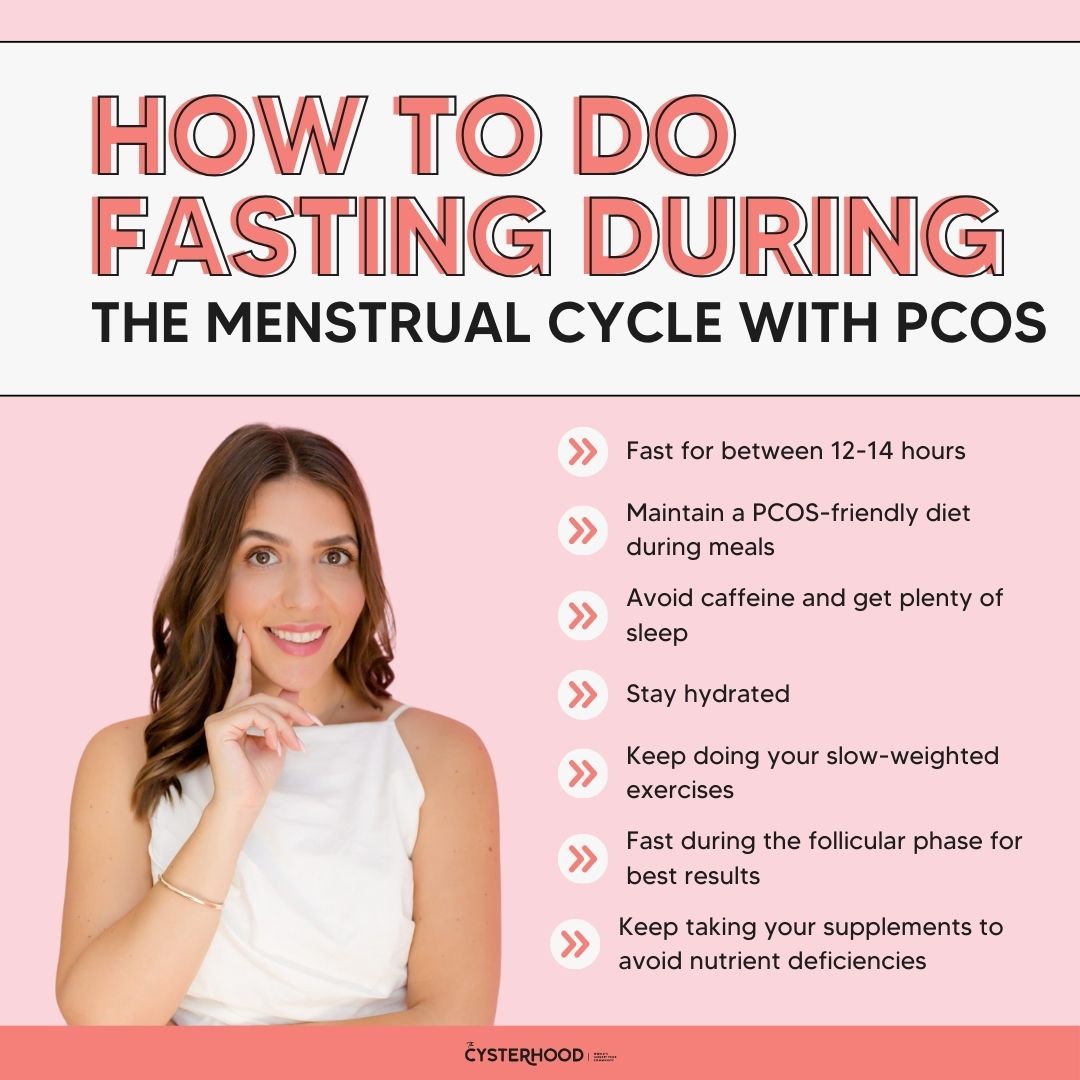
How To Do Water Fasting During Menstrual Cycle PCOS
At the end of the day, extended fasting isn’t something I recommend for someone with PCOS! However, that doesn’t mean fasting is off the table altogether! Fasting can actually be a really useful weight loss and symptom management tool when done correctly. You can avoid all these negative side effects and get the benefits if you instead opt for intermittent fasting.
A good fasting regimen for PCOS looks like this:
- Fast for between 12-14 hours (this could start after your last meal of the day and continue while you sleep)
- Maintain a PCOS-friendly diet during meals
- Avoid caffeine and get plenty of sleep
- Stay hydrated
- Keep doing your slow-weighted exercises
- Fast during the follicular phase for best results
- Keep taking your supplements to avoid nutrient deficiencies

Water fasting can negatively impact your PCOS healing journey try intermittent fasting instead!
There are a lot of ways you can take control of your PCOS and reverse your symptoms, but water fasting is not the most sustainable lifestyle. Instead, try the routine we suggest above and see how it feels!
Always listen to your body, some Cysters find lots of success fasting for shorter bursts while making other lifestyle changes too. For more PCOS-friendly meal plans, exercises, resources and support, download The Cysterhood app!
Feeling lost with PCOS?
Find out your PCOS type and get your next steps in under 2 minutes.
Find My PCOS Type →