


How To Keep Ovaries Healthy with PCOS

Your reproductive health matters—whether you’re trying to get pregnant or not. It’s not just about fertility. Hormonal imbalances can impact mood, energy levels, sex drive, and menstrual cycles. Poor reproductive health can also increase the risk of conditions like uterine fibroids, ovarian cysts, or ovarian cancer.
For women with polycystic ovarian syndrome (PCOS), supporting reproductive health is key to managing symptoms and balancing hormones. In fact, many PCOS symptoms—irregular cycles, acne, hair loss, mood swings—can be traced back to poor ovarian function.
Your ovaries do so much more than regulate fertility. They play a role in:
– Estrogen & progesterone production (which affects everything from mood to metabolism)
– Regulating your period & ovulation
– Bone, heart, skin, and hair health
The bottom line? Taking care of your ovarian health = supporting your overall well-being and making your PCOS symptoms easier to manage. Let’s talk about how to do that!

How To Keep Ovaries Healthy with PCOS
In this post, I’ll give you insight into ovary health and PCOS! I’ll discuss what healthy ovaries look like, how you can assess ovary health, and how you can improve your ovary health if needed!
Here’s what you need to know:
What Do Healthy Ovaries Look Like?
Ovaries are located on each side of the uterus, and healthy ones are smooth, oval-shaped glands about the size of a walnut. Unfortunately, you can’t tell from the outside what’s happening on the inside, so you’ll have to use other means to determine how healthy your ovaries are!
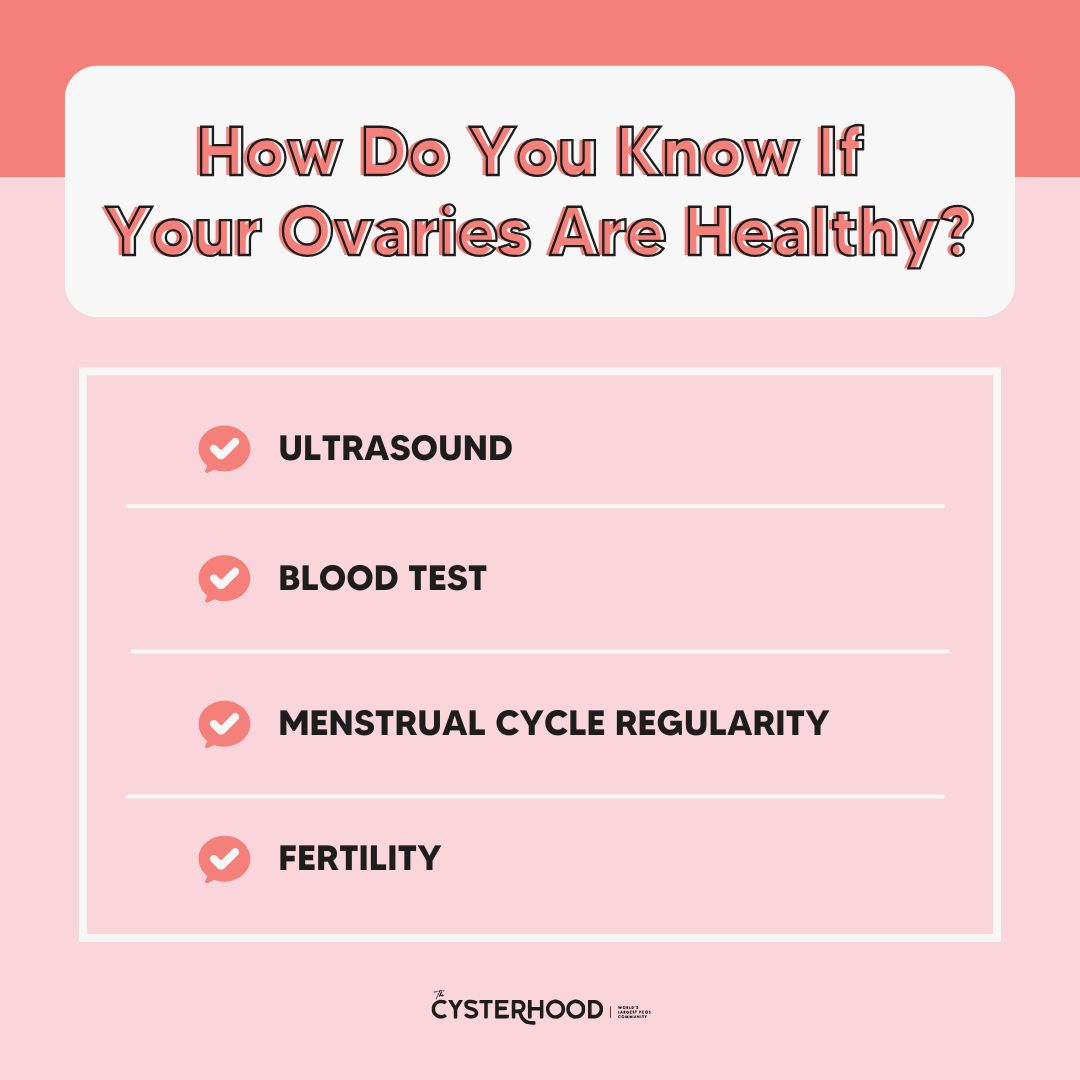
How Do You Know If Your Ovaries Are Healthy?
There are a few ways to assess the health of your ovaries! Some require medical intervention, while other examinations you can do yourself.
Ultrasound
To get a clear visual of the ovaries and assess their health, a pelvic ultrasound is typically required. This imaging scan helps identify ovarian cysts, tumors, enlarged ovaries, or issues with the fallopian tubes that may impact reproductive health.
There are two types of ultrasounds used for evaluating ovarian health:
- Abdominal ultrasound: A non-invasive procedure where a transducer is moved over the lower abdomen. This method is less detailed but may be used as an initial assessment.
- Transvaginal ultrasound: A more detailed scan where a small probe is inserted into the vagina to get a closer look at the ovaries. While not necessarily painful, it can be uncomfortable depending on sensitivity levels.
Ultrasounds can be performed by an OBGYN, reproductive endocrinologist, or radiologist and are an essential tool in diagnosing PCOS and assessing ovarian function. If you’re unsure what to expect, discussing any concerns with your doctor beforehand can help ease any anxiety about the procedure.
Blood Test
Remember, ovaries are important for hormone balance! So, if you find that certain hormones are imbalanced, that may mean your ovaries need some care. A blood test can measure your estrogen, progesterone, and anti-mullerian hormone (AMH) levels, which are all regulated by the ovaries. So, an imbalance of any or all of those hormones could be a result of poor ovary health. You can discuss labs with your doctor or order a test yourself.
Menstrual Cycle Regularity
Another way you can determine the health of your ovaries is by evaluating your menstrual cycle! If your periods are irregular and involve heavy bleeding and severe menstrual cramps or pelvic pain, that could be a sign of a problem with your ovaries. If everything is normal with your menstrual cycles, then that’s a good indication your ovaries are healthy, too!
Fertility
One way to assess reproductive health is by looking at fertility. If you’ve been able to conceive successfully, it’s a sign that your ovaries are functioning well. However, if you’ve experienced difficulty getting pregnant, it may indicate that your ovarian health and hormone balance need additional support.
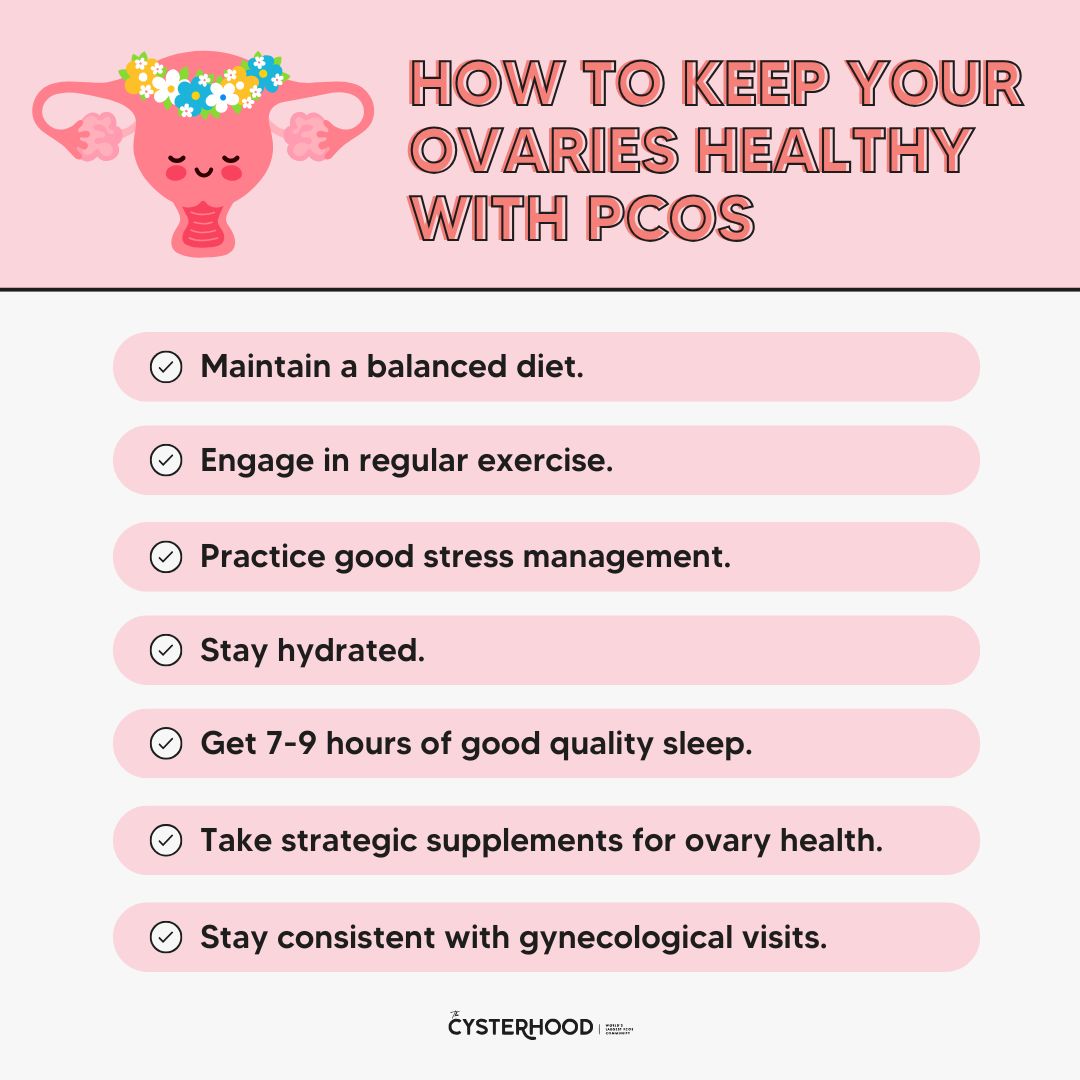
How To Keep Your Ovaries Healthy with PCOS
If your ovaries aren’t in optimal health, don’t worry. There are lots of ways to improve your ovarian health naturally without taking drastic measures. You probably don’t need to remove your ovaries or get on hormonal birth control with the right lifestyle changes.
Here’s what you can do:
Maintain a balanced diet.
A balanced diet can make a huge difference in ovarian health! The right pairing of foods can improve insulin sensitivity, regulate hormone balance, and reduce inflammation all essential to healthy ovaries!
I recommend a gluten- and dairy-free anti-inflammatory diet that prioritizes protein-rich and nutrient-dense foods– try it for 30 days to see if it makes a difference with your PCOS symptoms! Of course, like any diet, there are foods to avoid (or have in moderation) with PCOS. However, this diet is more about adjusting recipes that you love to work for your body. So often you’ll find us replacing ingredients that trigger symptoms with substitutes that are PCOS-friendly. Download The Cysterhood app for plenty of healthy meal plans that can help relieve PCOS symptoms and boost ovary health!

Engage in regular exercise.
Exercise plays a crucial role in supporting ovarian health, and the right types of movement can make all the difference for Cysters. Regular physical activity helps improve insulin sensitivity, which is key for balancing hormones like estrogen, progesterone, and testosterone—all of which directly affect ovary function. Additionally, movement helps reduce chronic inflammation, which is often elevated in women with PCOS and can contribute to ovarian dysfunction.
But here’s the thing—not all workouts are created equal when it comes to PCOS. Intense cardio or HIIT sessions can actually spike cortisol (stress hormones), which may lead to worsened hormone imbalances and cycle irregularities. That’s why the best exercises for PCOS and reproductive health are low-impact, restorative workouts like slow-weighted exercises, walking, yoga, and pilates. These types of movement not only support hormone balance but also reduce stress, regulate ovulation, and improve overall metabolic health.
All my PCOS-friendly workout plans inside The Cysterhood app are designed around slow-weighted exercises to support hormone health while making weight loss and symptom management easier. So if you’re not sure where to start, that’s a great place to begin!

Practice good stress management.
Stress manifests in the body as the hormone cortisol. When cortisol levels are high (which is common with PCOS), they can disrupt the balance of reproductive hormones, increase inflammation, raise insulin resistance, and more! So, learning to manage stress is huge for your overall health, including your ovarian function. Some stress management techniques you can try are acupuncture, meditation, journaling, spending time in nature, and practicing self-care.
Stay hydrated.
Hydration is the foundation of all health—including reproductive health. Proper hydration ensures that all of your body’s physiological processes function smoothly, including hormone regulation, circulation, getting rid of toxins, and energy production—all of which directly impact ovary function.
Drinking enough water can also reduce inflammation, which is a key driver of hormonal imbalances in PCOS. When the body is dehydrated, it can lead to higher cortisol levels, thicker blood, and sluggish lymphatic drainage, all of which may contribute to poor ovarian health.
So how much water should you be drinking? A good rule of thumb is to aim for at least half your body weight in ounces of water per day. For example, if you weigh 160 lbs, aim for about 80 oz of water daily.
Get 7-9 hours of good quality sleep.
Like I mentioned, hydration could be considered the foundation of health, but so could good sleep! While we sleep, our body goes through lots of important processes to maintain our overall health. With good quality sleep, you’ll likely see improved hormone balance, insulin sensitivity, cortisol levels, and inflammation. If sleep is a struggle for you, here’s how to sleep better with PCOS.
Take strategic supplements for ovary health.
Even with all the right healthy lifestyle changes, our bodies still need the right vitamins and nutrients to thrive! That’s why I created OvaFit, a line of high-quality, rigorously tested supplements specifically formulated for women with PCOS. The right nutrients can help support hormone balance, insulin sensitivity, and reproductive health. Here are some of my favorites for supporting healthy ovarian function:
- CoQ10: A powerful antioxidant that supports mitochondrial function and cellular energy production, which play important roles in egg quality and reproductive health.
- Inositol: Myo-inositol and D-chiro-inositol can help improve insulin sensitivity, support hormone balance, and promote healthy ovulation in women with PCOS.
- Omega-3 Fatty Acids: These essential fatty acids support a healthy inflammatory response and may help improve metabolic health and insulin sensitivity.
- Vitamin D3: An essential vitamin that supports reproductive health, hormone function, and healthy insulin sensitivity, especially for women with low vitamin D levels.
- Magnesium: This important mineral supports blood sugar regulation, energy production, and normal muscle and nerve function.
- Chromium: A trace mineral involved in insulin function and glucose metabolism, making it a helpful nutrient to consider for overall metabolic health.
- Zinc: An essential mineral that supports immune function, reproductive health, and normal hormone production.
The best part? You don’t have to buy every vitamin separately! Our Metabolism Plus Daily Multi combines important nutrients like CoQ10, vitamin D3, magnesium, chromium, and zinc in one convenient formula designed for PCOS. You can also add Inositol Complete 40:1 for additional support with insulin sensitivity and hormone balance. Just remember to check with your doctor before starting new supplements!

Stay consistent with gynecological visits.
Regular gynecological visits are an essential part of taking care of your reproductive health. These checkups give you the opportunity to discuss any concerns with your doctor, monitor your ovarian function, and stay on top of routine screenings.
Be sure to ask your OBGYN how often you should come in for checkups and what types of tests or evaluations are best for your health goals. Whether you’re focused on regulating your cycle, optimizing fertility, or simply maintaining overall wellness, clear communication about your reproductive health goals can help you get the care and support you need.”
Keep your ovaries healthy naturally using diet, exercise, and other intentional lifestyle changes!
Your ovarian health is an essential part of your feminine health. Whether you’re trying to get pregnant, improve your mood, or reverse your PCOS, it’s important to assess your ovarian function and address any concerns as soon as you can.
Although these are options available to you, you don’t need to get on birth control pills or do anything invasive to develop a healthier reproductive system if that isn’t what you’re looking for. You can naturally improve your ovary health using diet, exercise, and other natural methods! For more on how to do this, head to the PCOS Weight Loss blog and tune in to A Cyster and Her Mister podcast!
Feeling lost with PCOS?
Find out your PCOS type and get your next steps in under 2 minutes.
Find My PCOS Type →

