


Spearmint Tea For PCOS

Herbs and tea have been a part of holistic wellness routine for centuries, and spearmint tea is one of my personal favorites for women with polycystic ovary syndrome (PCOS), now referred to as polyendocrine metabolic ovarian syndrome (PMOS). I’m Tallene, a Registered Dietitian who has PMOS myself, and I’m especially interested in natural approaches that have real research behind them.
Spearmint tea (Mentha spicata) is one of my favorite natural additions for supporting some PMOS symptoms. Not only does it taste minty fresh, but researchers have studied its potential anti-androgen effects, which can be especially relevant for women dealing with elevated testosterone.
Of course, spearmint tea isn’t an overnight solution to your PCOS (PMOS) symptoms, but it can be a great companion to your natural healing journey. So today, I’m dedicating this post to spearmint tea, what the research actually shows, and how it may support hormonal balance. Here’s the tea:
Spearmint Tea For PCOS
There are several beneficial teas for women with PCOS, but spearmint tea has received particular attention for its potential anti-androgen effects. In a 30-day randomized controlled clinical trial, women with PMOS who drank spearmint tea twice daily experienced significant reductions in both total and free testosterone compared with their starting levels.
Researchers also found increases in luteinizing hormone (LH) and follicle-stimulating hormone (FSH). An earlier five-day study similarly found a decrease in free testosterone and increase in LH, FSH, and estradiol after women drank spearmint tea twice daily.
These findings make spearmint especially interesting for women with PMOS and elevated androgen levels. However, research is still limited. In the 30-day trial, women reported improvements in hirsutism, but researchers didn’t find a significant objective change in hair growth during the short study period.
Try drinking spearmint tea consistently and tracking your symptoms to see how it fits into your overall PMOS routine.
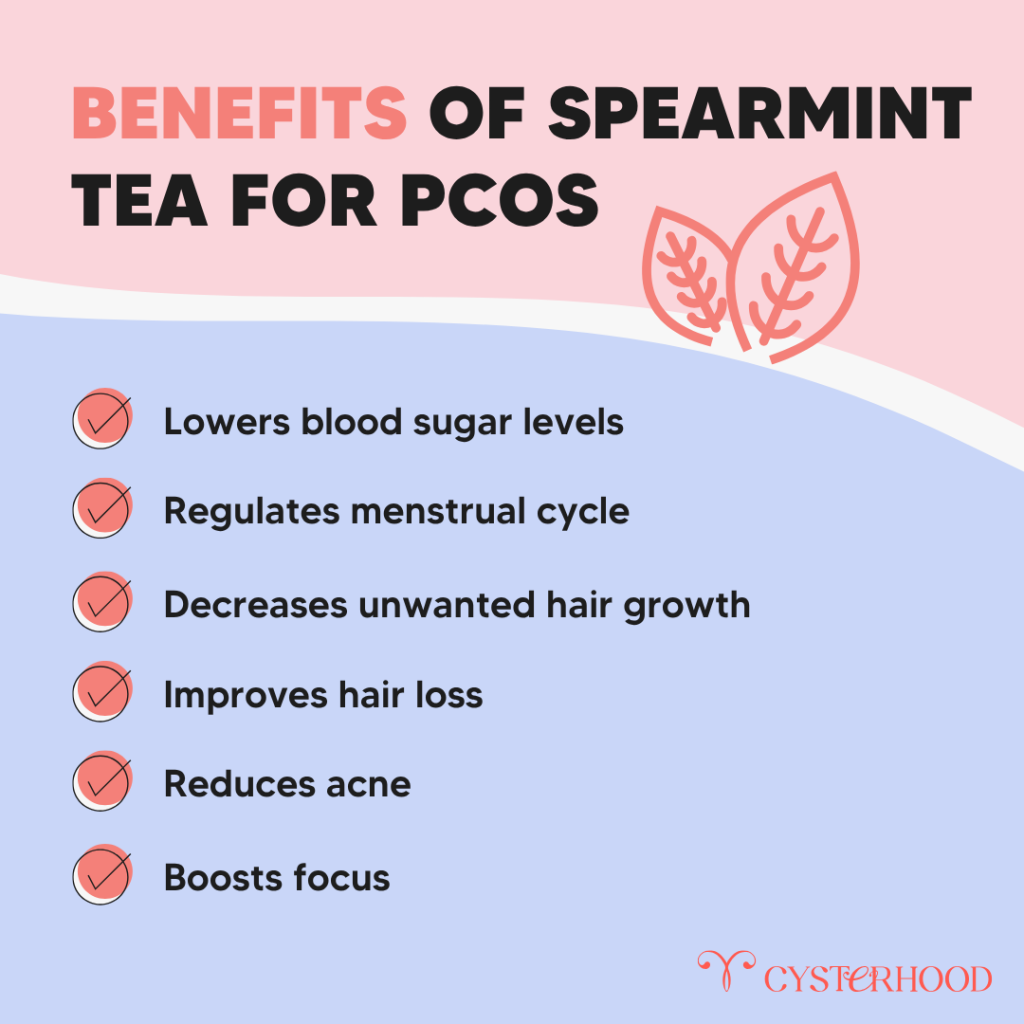
Benefits of Spearmint Tea For PCOS
- Lowers blood sugar levels
- Regulates menstrual cycle
- Decreases unwanted hair growth
- Improves hair loss
- Reduces acne
- Betters focus
Benefits of Spearmint Tea for Skin
Balances Oil Production
Spearmint has natural anti-androgenic effects, meaning it can help lower male sex hormones that contribute to excess oil production on the face and body. By reducing androgen levels, spearmint tea can help regulate your skin’s natural oil balance. So, you’re less likely to deal with that constant greasy shine.
Reduces Hormonal Acne
Excess oil is one of the biggest triggers of hormonal acne. When oil mixes with bacteria and dead skin cells, it clogs pores and leads to breakouts. Because spearmint helps lower testosterone levels, it can help reduce oil production at the source. This helps to clear existing acne and prevent future flare-ups!
Protects from UV Damage
Spearmint is rich in antioxidants, which help defend the skin against damage caused by UV exposure. Now, it’s not a replacement for sunscreen. Drinking spearmint tea supports your skin from the inside by neutralizing free radicals that contribute to premature aging, dark spots, and skin sagging.
Eases Inflammation
Chronic inflammation is the reason for SO many skin issues. Think acne, redness, sensitivity, and even uneven texture. Spearmint contains anti-inflammatory compounds that can help calm the skin and reduce irritation. Over time, this can lead to a more even, less reactive complexion that just looks healthier overall.
Difference Between Peppermint and Spearmint Tea
Flavor and Strength
- Peppermint tea: Strong, sharp, and cooling with a more intense menthol taste
- Spearmint tea: Milder, sweeter, and more refreshing
Compounds
- Peppermint tea: Very high in menthol, which gives it its characteristic cooling sensation
- Spearmint tea: Lower in menthol and contains compounds such as rosmarinic acid. Spearmint has also been studied for its anti-androgenic effects, including its potential to lower free testosterone
Uses
- Peppermint tea: Commonly used for digestive concerns such as bloating and nausea
- Spearmint tea: Often used as part of routines focused on hormonal balance and excess androgens
Side Effects
- Peppermint tea: Can trigger acid reflux or worsen GERD in some people
- Spearmint tea: Generally well tolerated in food amounts, but medicinal amounts can have side effects such as digestive upset
Spearmint Tea Side Effects and Who Should Avoid It
Spearmint tea is generally well tolerated, but natural doesn’t automatically mean risk-free. Drinking it in the amounts you would normally consume as a beverage is different from regularly using larger or medicinal amounts.
If you’re pregnant or breastfeeding, stick to normal food amounts unless your healthcare provider says otherwise. There isn’t enough reliable evidence to establish the safety of larger medicinal amounts during breastfeeding, and larger amounts of spearmint tea aren’t recommended during pregnancy.
Because spearmint has demonstrated anti-androgenic effects, talk with your healthcare provider before drinking medicinal amounts if you already have low testosterone or take hormonal medication. The same caution makes sense if you’re managing a thyroid condition, since we don’t have enough human research to know how concentrated or long-term spearmint intake may affect thyroid function.
Can You Drink Spearmint Tea While Pregnant or Trying to Conceive?
If you’re trying to conceive, always talk with your healthcare provider before using spearmint tea specifically for its medicinal or hormone-related effects. The small studies showing changes in reproductive hormones aren’t enough to establish that spearmint improves fertility or increases the likelihood of pregnancy.
That’s an important distinction from the idea that spearmint “increases fertility.” Research has found changes in hormones such as free testosterone, LH, and FSH, but that doesn’t mean researchers have demonstrated higher pregnancy rates.
Once you’re pregnant, avoid drinking spearmint tea in large or medicinal amounts unless your healthcare provider approves it. Spearmint used in normal food amounts is generally considered differently from concentrated or medicinal intake, but large amounts aren’t recommended during pregnancy.
How Does Spearmint Tea Help Hormones?
Step One: Lowers Excess Androgens
Spearmint tea has demonstrated anti-androgenic effects in small human studies. In the 30-day clinical trial mentioned above, women with PMOS who drank two cups daily had significant reductions in both free and total testosterone over the study period.
This may be particularly relevant for women with PMOS who have elevated androgen levels, although we still need larger studies to understand how much these hormonal changes translate to improvements in individual symptoms.
Step Two: Reduces Excess Oil and Skin Disruptions
Androgens can stimulate the sebaceous glands and contribute to excess oil production, which is one reason elevated androgen levels can be associated with hormonal acne. By potentially reducing excess androgen levels, spearmint may support some of the hormonal factors involved in oily skin and breakouts.
Step Three: Regulates Ovulation and the Menstrual Cycle
Elevated androgen levels can interfere with normal ovulation in women with PMOS. While improving an underlying hormone imbalance may support a more balanced menstrual cycle, current spearmint studies haven’t yet established that drinking the tea will restore ovulation or regular periods for everyone.
Step Four: Improves Estrogen–Progesterone Balance
Estrogen and progesterone naturally fluctuate throughout the menstrual cycle, and ovulation plays an important tole in progesterone production. Spearmint has been shown to affect certain reproductive hormones, but we don’t yet have enough evidence to say it directly balances estrogen and progesterone in women with PMOS.
Step Five: Reduces Hormone-Driven Symptoms
Because elevated androgens can contribute to symptoms such as acne, excess facial hair, and hair loss, researchers are interested in whether spearmint’s anti-androgenic effects could help. However, hormone changes can happen faster than visible changes in symptoms.
For example, the 30-day study found hormonal changes and improvements in women’s self-reported hirsutism, but not a significant objective reduction in hair growth over that short period.
Step Six: Supports Long-Term Hormonal Stability
Spearmint tea isn’t a quick fix for PMOS, but it can be an easy caffeine-free addition to a broader routine focused on nutrition, movement, stress management, and other strategies appropriate for your individual symptoms.
Does Spearmint Tea Increase Estrogen?
Honestly, there isn’t enough evidence to say that spearmint tea consistently increases estrogen in women with PMOS. Nonetheless, there’s still some solid research worth mentioning.
In one small five-day study of women with hirsutism, spearmint tea was associated with increased estradiol alongside lower free testosterone and higher LH and FSH. However, the larger 30-day study I keep mentioning didn’t establish spearmint tea as an androgen-boosting treatment.
So… If you’re wondering whether spearmint tea increases estrogen? The most accurate answer to that is: we don’t know yet! Its anti-androgenic effects have stronger human evidence than any specific estrogen effect.
How Long Does It Take Spearmint Tea to Work?
The burning question: “How long does spearmint take to work?” The available human research suggests it’s better to think in terms of weeks rather than days.
The randomized clinical trial had women drink spearmint tea twice daily for 30 days, with hormone levels at the beginning, 15 days, and 30 days. An earlier study found hormonal changes after just five days, but that doesn’t mean visible PMOS symptoms will change that quickly.
Take hair growth, for example! Even though hormone levels changed during the 30-day trial, researchers noted that the study wasn’t long enough to demonstrate a significant objective change in hirsutism. If you choose to drink spearmint tea, consistency matters, and visible changes may take longer than changes in lab markers.
Spearmint Tea vs. Spearmint Capsules
Both tea and spearmint capsules provide compounds from the spearmint plant, but they shouldn’t be treated as interchangeable doses.
The human PMOS research we’re discussing here primarily studied spearmint tea, with participants drinking it twice daily. Capsules contain a concentrated amount of spearmint extract or powder, and the exact doses can vary considerably between products. That means you can’t assume one capsule provides the equivalent of one cup of tea.
Tea may more sense if you enjoy drinking it and want to follow a routine similar to what’s been used in the available human research. Capsules can be more convenient for someone who doesn’t enjoy tea, but we have less PMOS-specific clinical evidence to tell us what capsule dose would produce the same effects.
If you’re considering a concentrated spearmint supplement rather than tea, check the amount and type of extract on the label. And of course, talk with your healthcare provider about where it’s appropriate for you and your goals.
When to Drink Spearmint Tea?
- Morning (easy daily hormone support): To maximize the effects of spearmint tea, aim to drink two cups a day—stay consistent! Grab your first cup in the morning for a caffeine-free hormone boost.
- Midday (helps manage cravings + energy dips): Drinking a cup in the afternoon can help support more stable blood sugar and reduce energy crashes.
- After meals (supports digestion + insulin response): Sipping spearmint tea after eating may help with mild bloating and support better blood sugar balance.
- Evening (supports stress + hormone regulation): Enjoying it at night is a great way to wind down since it’s caffeine-free and won’t disrupt sleep.
How To Drink Spearmint Tea For PCOS
Drink it hot.
Probably the simplest way to drink spearmint tea for PMOS is to brew it and drink it hot! Simply boil water over the stove or use an electric kettle with temperature control to get the perfect temp for steeping. (The best for herbal teas is between 208˚ – 212˚F.)
Keep your tea infuser in your mug for 3-5 minutes and then remove it. Leaving it in there longer will make the tea stronger, but eventually make it bitter, so make sure you don’t leave it in the entire time you’re drinking your tea. If you don’t love the flavor, try adding some lemon.
Drink it cold.
If hot beverages aren’t your favorite, try iced tea! Steep the tea the same way (yes, steep it hot), and then pour the finished tea over a pitcher or glass of ice. Then, enjoy!
Again, you could add flavors to your tea, but consider avoiding sugar or dairy products that could work against your PMOS healing goals!

Add it to a smoothie.
Tea is something you can add to smoothies too. This is a great way to mask the base tea flavor, but enhance the health benefits and taste of your morning smoothie. Spearmint tea tastes especially delicious in a smoothie that contains coconut milk, a little strawberry and mango, and protein powder!
Make popsicles.
After you’ve made your hot tea, let it cool a bit, and then pour it into popsicle molds (or ice cube trays) with fresh fruit, mint leaves, and lemon juice. In a few hours, you’ll have a tasty summer treat that can help you combat PCOS symptoms! Want to take it up a notch and curb your cravings? Add a serving of Inositol Complete 40:1 in each popsicle mold!
Add fresh fruit.
Lastly, adding fresh fruit to your tea can help enhance the flavors and make it more palatable while you’re still getting used to the flavor. Use this list of PMOS-friendly fruits as a guide. A few good options would be oranges, kiwi, grapefruit, strawberries, papayas, and pomegranates.

Best Spearmint Tea For PCOS
Testosterone Relief Tea
When it comes to choosing a spearmint tea for PCOS (PMOS), our Testosterone Relief Tea combines spearmint with several other herbs selected to support a hormone-conscious routine.
Spearmint is one of the main ingredients, and human research has shown that drinking spearmint tea may lower free and total testosterone levels. The blend also includes other herbs and flavors, including:
- Nettle: Traditionally used in herbal preparations and included as part of our hormone-supporting blend. Research into nettle and androgen-related pathways is still developing, so we don’t want to overstate its role in removing or lowering androgens.
- Cinnamon: Included to complement a PMOS-friendly routine, with research investigating its potential effects on insulin sensitivity and menstrual cycles.
- Chamomile: A caffeine-free herb commonly enjoyed for its calming properties.
But what’s not in your tea matters just as much as what is. Our Testosterone Relief Tea uses pyramid-shaped sachets made without plastic. Some plastic-based tea bags, including those made with nylon or PET, can release microplastics particles when steeped in hot water. Using plant-based sachets lets you brew the blend without relying on those plastic materials.
Researched, handcrafted, and designed for women with PMOS by a fellow PMOS Registered Dietitian, this blend was formulated with hormonal and metabolic support in mind. Whether you’re sipping it in the morning or as part of your evening wide-down routine, it’s an easy way to work spearmint and other herbs into your day.

Spearmint tea holds a lot of PCOS-fighting benefits!
Though there is no quick fix for PMOS, there are lots of natural ways we can address our symptoms—and what you eat (and DRINK!) is a big part of that. I recommend an anti-inflammatory, gluten and dairy-free diet, which you can follow in The Cysterhood App. I’ve got tons of recipes and all the information you need to get your life back on track. And enjoy a couple cups of spearmint tea while you’re there…because life is too short to spend most of it plucking our chin hairs!
You’ve got this,
Tallene, RD
Medical disclaimer: This content is for educational purposes only and is not a substitute for professional medical advice, diagnosis, or treatment. Always talk to your doctor or a qualified healthcare provider about your individual health, medications, and any changes to your diet, especially if you are managing insulin resistance, digestive symptoms, or other health concerns.
Feeling lost with PCOS?
Find out your PCOS type and get your next steps in under 2 minutes.
Find My PCOS Type →


Where can it be found
I want to try it i have read everything and am honestly feel pleased!! Thank you guys so much!!!
Excited to see how it works for you!
Very curious, I always see spearmint tea touted for PCOS, but nobody ever mentions whether simply incorporating lots of fresh spearmint leaves into the diet would have a similar effect? I have tried for years to choke this tea down but I never manage to stick with it lol – however I love spearmint in actual composed dishes with other ingredients. Has anyone had luck eating their spearmint vs drinking it?
Hey Cyster! Thank you for your comment. That’s such a great question! Most of the studies linking spearmint to reduced androgen levels in PCOS have been done with spearmint tea—specifically about 2 cups a day. Unfortunately, there’s not enough research yet on whether eating fresh spearmint has the same hormone-balancing effect, but it still has antioxidant and anti-inflammatory benefits, so including it in your meals definitely doesn’t hurt! I know I like to include it as garnish when I make mocktails. And since straight up spearmint tea just hasn’t been your thing, you’re not alone! That’s actually why we created Testosterone Relief Tea…it’s not just spearmint, but a blend of hormone-supportive herbs like chamomile, cinnamon, nettle, and more making the flavor so much more enjoyable (and soothing!) Hope you get a chance to check it out if you’re interested 🙂
Hi, may I ask which brand would be the best in terms of effective or not?
The tea mentioned (my “Testosterone Relief Tea” from Ovafit) was actually formulated specifically for women with PCOS!