


What Causes PCOS (PMOS) Face Shape?
Polycystic ovary syndrome (PCOS), now known as polyendocrine metabolic ovarian syndrome (PMOS) is a hormonal condition that affects millions of women of reproductive age. Because symptoms can vary so much, PMOS is often difficult to diagnose and usually requires multiple tests and evaluations. But here’s the good news: you don’t need to wait for an official diagnosis to start making changes that support your hormones! Simple lifestyle strategies can help you take control of your symptoms and start feeling better today.
One symptom that often flies under the radar? PMOS face shape. Yep, if you’ve noticed changes in your facial features, it could be linked to your hormones! But that’s not all. PMOS can also be behind weight gain, bloating, digestive problems, a weakened immune system, excessive hair growth, and more. And here’s the thing: many of these symptoms stem from the same root cause that contributes to PMOS face shape.
As a Registered Dietitian and woman with PMOS myself, I know what’s like to have a million questions swirling around without any specific answers. That’s why below, I’m talking about PMOS face shape, what causes these changes, and what you can do about it.

What Causes PCOS (PMOS) Face Shape?
Because PMOS is a hormonal disorder, it affects your entire body—including your face. Hormonal imbalances can impact facial fat distribution and inflammation, sometimes leading to changes known as ‘moon face.’
If you’re asking… “What Is PMOS Moon Face?“, you’re not alone! This is a common experience in women within the PMOS community and, honestly, it’s often misunderstood. Here’s what you need to know:

What is PCOS (PMOS) Moon Face?
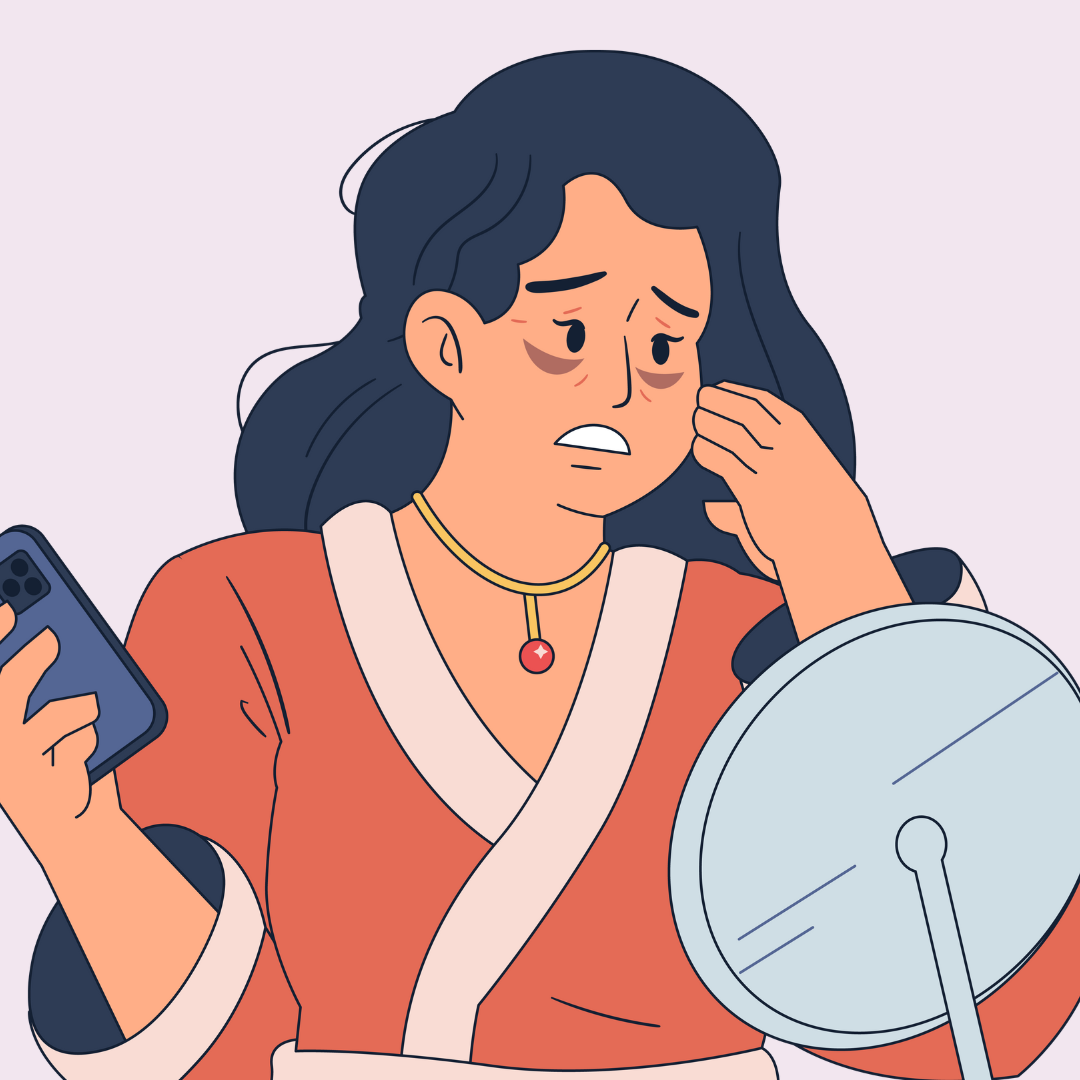
“Moon face” refers to some common facial features seen in women with PMOS. Often, women with this condition have rounder, fuller cheeks, puffy eyelids, double chins, and even excess facial hair growth (hirsutism). Of course, the way PMOS may affect your physical appearance isn’t the most important reason to want to get to the root drivers of your symptoms.
However, these facial features can be a sign of an underlying problem that may be contributing to a lot of your other chronic symptoms. Beyond that, those same concerns could be increasing your risk of common PCOS long-term complications, like type 2 diabetes and heart disease. All in all, it’s a good idea to discover what’s the root cause of your moon face to support your PMOS healing journey.
Not completely sure where to start? Take my free “What’s Your PMOS Type?” quiz, where you fill out a short questionnaire that helps you learn more about the root causes of your condition.
How Does PCOS (PMOS) Change Your Face Shape?
PMOS can change your face shape, as well as the rest of the body, due to its effect on inflammation, hormone imbalance, and insulin resistance. Here’s how each plays a role:
Inflammation
First of all, inflammation can cause bloating and facial swelling. Chronic inflammation is when your immune system is overactive and attacks healthy cells. This state causes our bodies to retain fluid and bloat! Inflammation can also contribute to insulin resistance, which is another culprit of PMOS moon face.
Learn more about insulin resistance by reading my guide, “How to Eat for Insulin Resistance & PCOS: A Beginner’s Guide.”
Insulin Resistance
Insulin resistance occurs when your cells don’t process glucose (AKA sugar) properly. Instead of using it for energy, your body stores it as fat—contributing to weight gain and elevated blood sugar levels. Over time, this can also affect where fat is stored, including your face, leading to noticeable changes in facial shape.
But that’s not all. Insulin resistance can also prolong inflammation and contribute to hormonal imbalances, which may worsen other PMOS symptoms like bloating, acne, and excess hair growth. Addressing insulin resistance is key to balancing hormones and reducing these effects!
Hormonal Imbalances
Hormonal imbalances are a big contributor to PMOS moon face. Progesterone is a necessary hormone for digestion, and at low levels, our bodies have a tendency to retain water. Women with PMOS are often deficient in progesterone, leading to fertility and menstrual problems. (One of the main signs of low progesterone is irregular periods or no periods.)
Progesterone, though, as we’ve just discussed, can impact physical appearances, too! Progesterone isn’t the only hormone playing a role in PMOS facial feature changes. Let’s talk about androgens.
PCOS (PMOS) Facial Hair, Hair Loss, and Excess Hair Growth
Excess male hormones (androgens) in the body can worsen insulin resistance, further prompting weight gain. But, high androgen levels can also cause excess facial or body hair growth, leading to unwanted dark, coarse hair. This is called hirsutism, which often causes excess hair growth in all of the places women typically don’t grow hair. Think: the jawline, upper lip, chest, back, abdomen, and sides of the cheeks.
At the same time, high androgen levels can cause hair thinning and loss, which people often refer to as “male-pattern baldness.” However, for women with PMOS, that hair loss looks a little different than traditional male-pattern baldness. High androgens, like testosterone, can convert into DHT and shrink hair follicles, leading to thinning along the part, crown, and top of the head. (Learn more by reading my guide, “Hair Loss with PMOS.”
Hair loss and hair growth at the same time? I know, it’s contradictory.
Though appearance isn’t the most important part of your healing journey, for many women, getting their body back is essential to feeling empowered, confident, and joyful again. The changes in your body are signs of bigger troubles within, so let’s take some time to discuss how to lower inflammation, increase insulin sensitivity, and balance excess androgens and other hormones. Here’s what you can do to reduce or prevent PMOS moon face:

How To Reduce PCOS Moon Face
Reduce Stress
Reducing stress can be helpful when trying to reduce the appearance of PMOS moon face. Chronic stress can affect everything from sleep and appetite to the hormones involved in metabolism, which may make weight management feel that much harder.
But when I say “reducing stress,” I don’t just mean taking a bubble bath and calling it a day. (If only!) Research suggests that women with PMOS may experience differences in the way the body regulates cortisol (the stress hormone). Finding realistic ways to manage ongoing stress can be an important part of supporting your overall hormonal and metabolic health!
You can relieve stress with PMOS by spending time in nature, getting better sleep, cutting back on commitments, doing slow-weighted workouts, engaging in a hobby, and more. Figure out what helps you relax, and this may help with weight gain and bloating.
Drink More Water
Staying hydrated is one of the simplest yet most effective ways to reduce fluid retention—especially in the face! When your body senses dehydration, it holds onto excess water, leading to puffiness and swelling. Drinking enough water helps flush out excess sodium and toxins, reducing bloating and inflammation.
Hydration also plays a key role in liver function, which is essential for hormone balance. Your liver helps process excess androgens and estrogen, so supporting it with proper hydration can aid in reducing hormonal imbalances that contribute to facial swelling, acne, and weight gain.
✨ Pro tip: Swap sugar-sweetened beverages for filtered water, herbal teas, or lemon water to keep inflammation low and hydration high!
Consume Less Salt and Processed Foods
We all know that salt is the worst when it comes to swelling. Processed foods aren’t any better! So, cutting back on these two things can do a lot for PMOS face shape.
Specifically, having salt and processed food only in moderation can help reduce water retention, improve insulin sensitivity, decrease inflammation, and balance hormones. Yes, all that! The way we eat can have a big impact on our PMOS symptoms, including moon face!

Maintain a Balanced Diet Overall
A balanced diet can play a meaningful role in a PMOS management plan. The goal is to make food our best friend and not our worst enemy. Remember, we can still have delicious food and our favorite meals with PMOS-friendly modifications.
I recommend trying an anti-inflammatory gluten- and dairy-free diet for 30 days to see how you feel. Many women with PMOS find this approach helpful because gluten and dairy can trigger inflammation, worsen insulin resistance, and disrupt hormone balance—all key drivers of symptoms.
Gluten may contribute to gut inflammation, which can lead to leaky gut and heightened immune responses, making PMOS symptoms like bloating, fatigue, and cravings worse. Dairy contains hormones and insulin-spiking proteins that can increase testosterone levels, leading to acne, weight gain, and excess facial hair growth.
If you need a place to start, check out my guides like:
Exercise Regularly
Exercise is also great for your overall PMOS healing goals! Focusing on slow-weighted workouts or other meditative exercises can help reduce stress, lower insulin resistance, lower inflammation, balance hormones, and, of course, promote PMOS weight loss! All these things can help shape your face and get rid of PCOS moon face.
Like I said, not all exercises are made for PMOS. High-intensity workouts that get your heart rate up and pump your body full of cortisol and adrenaline probably won’t help you reach your goals. You can learn more about PMOS exercises here and make sure you download The Cysterhood app for all the best PCOS-friendly workout plans!

Get Better Sleep
So many of our body’s physiological processes take place while we’re asleep. That means when we don’t get enough good quality sleep, our body can’t carry out the essential functions necessary to ditch PCOS face shape.
By prioritizing better sleep, you may begin to see improvements in root issues that play a role in PMOS face shape. (This includes insulin resistance, inflammation, and hormone balance.)
Take PMOS-Supportive Supplements
Even with a well-balanced PMOS-friendly diet, getting all the essential vitamins and minerals can be challenging. And that’s a big deal because nutrient deficiencies are common in women with PMOS and can contribute to inflammation, insulin resistance, and even moon face. Your body may benefit the right nutrients to support hormone balance, reduce inflammation, and optimize metabolism. This is why supplementing can make a significant difference!
Inositol Complete 40:1 is one of my favorite PCOS supplements because it helps regulate insulin resistance and hormone imbalances, two of the biggest culprits behind stubborn PCOS symptoms (including facial bloating and puffiness). Learn more about it in this episode of A Cyster and Her Mister podcast!
A high-quality multivitamin, like Ovafit’s Metabolism Plus Daily Multi, can be another meaningful addition. It’s packed with dozens of essential nutrients that many women with PCOS are deficient in, helping give your body the full-spectrum support it needs to function at its best. When your body gets the nutrients it needs, it often has a ripple effect in symptoms.
Interested in finding more supplements that may complement your PMOS management routine? Explore Ovafit’s supplements, protein powder, herbal tea, and balanced bundles.

Talk to Your Doctor
If you’re struggling with PMOS symptoms, talking to a doctor is an important step. But I know how discouraging it can be when you leave an appointment with more questions than answers. Many of us have been given quick-fix solutions without real guidance on why our bodies are struggling in the first place.
That’s why it’s so important to keep searching for the right healthcare provider—someone who listens, understands PMOS, and works with you to find a treatment plan that feels right for you. They may suggest birth control, metformin, spironolactone, or other prescriptions. While these can be helpful for some, make sure to do your own research, ask questions, and weigh the pros and cons before making your decision.
At the end of the day, you are your best health advocate—and you deserve to feel heard, supported, and empowered in your PMOS journey.
How Long Does It Take to Reduce PMOS Moon Face?
There’s no set timeline for reducing what’s commonly called “PCOS moon face,” since facial fullness can have several underlying causes. If changes are related to weight, fluid retention, or metabolic factors associated with PMOS, improvements may happen gradually as you address those factors and support your overall health.
Is PMOS Moon Face Permanent?
No, facial fullness associated with PMOS isn’t necessarily permanent. Your face shape can change over time alongside changes in body composition, fluid retention, hormones, and other factors that may contribute to facial puffiness or fullness.
Can You Prevent Moon Face with PMOS?
There’s no guaranteed way to prevent facial changes with PMOS, especially because “moon face” isn’t a formal symptom of the condition. However, habits that support healthy blood sugar, stress management, sleep, movement, and overall metabolic health may also help address some of the factors that contribute to facial fullness.
Is Moon Face a Side Effect of Any PMOS Medications?
True moon face, or moon facies, is most strongly associated with long-term corticosteroid use rather than standard PMOS medications. (Or those doctors most commonly prescribe to women with PMOS.) If you notice a significant change in your face after starting any medication, talk with your healthcare provider rather than assuming PMOS itself is responsible to rule out any medical conditions.
How Do You Tell PMOS Moon Face Apart From Normal Weight Gain?
It can be difficult to tell based on appearance alone. Facial fullness that develops alongside overall weight gain may simply reflect changes in body composition. On the other hand, sudden or significant facial swelling or puffiness could have another cause and is worth discussing with your healthcare provider.
PCOS (PMOS) Face Shape and Moon Face: What to Know
Once you get a PMOS diagnosis, treatment for PCOS can feel limited . . . meanwhile, the symptoms can be overwhelming. But, don’t worry! There are so many ways to naturally reverse your PMOS and live symptom-free.
Here at PCOS Weight Loss, I’m all about helping you find relief from all your symptoms by presenting you all the options you may not have known were possible. To take your PCOS journey to the next level, download The Cysterhood app, join our community, and let’s do this thing together!
Written by Tallene Hacatoryan, MS, RD, founder and formulator of OvaFit. Tallene is a Registered Dietitian who specializes in PCOS (now called PMOS) nutrition and has PCOS herself.
Medical disclaimer: This content is for informational purposes only and is not intended as medical advice. Always consult your healthcare provider before making changes to your diet, supplements, or treatment plan.
These statements have not been evaluated by the Food and Drug Administration. This product is not intended to diagnose, treat, cure, or prevent any disease.
Feeling lost with PCOS?
Find out your PCOS type and get your next steps in under 2 minutes.
Find My PCOS Type →

I’m ready to begin this journey
You’ve got this Dorothy!
Yes ready to commence this fat loss PCOS
You got this, Cyster! I hope all our different posts, podcast episodes, resources, and more are helpful to your PCOS goals!