
7-day PCOS Diet Plan
pcos diet plan

Polycystic ovary syndrome (PCOS) is a hormonal disoder that affects many women of reproductive age. Since it’s hormonal, PCOS can impact your whole body with symptoms ranging from brain fog and fatigue to infertility and excessive body hair growth. Though there’s no quick procedure or pill that cures your PCOS, there are plenty of ways to naturally heal your body and reverse your symptoms! One of the best ways to get relief from the side effects of PCOS is by addressing the root cause of your symptoms in order to improve weight loss.
Research shows a balanced diet and weight managements plays a crucial role in managing PCOS symptoms. This is because hormone balance, insulin resistance, thyroid issues, and inflammation can improve when you lose weight. So, drop a few pounds and you’ll probably see universal symptom improvement! Easy, right? WRONG!
Note: PCOS recently had a name upgrade! It’s now called “polyendocrine metabolic ovarian syndrome (PMOS).” This name much more accurately describes the condition! In fact, I’ve been a big supporter of a name change for years, so you’ll see me slowly transition over to using the new terminology. You’ll see me use both terms below.
Why is Weight Loss Difficult with PCOS?
It can be really difficult to lose weight with PCOS. There are a lot of reasons it’s harder for Cysters than other people, but it centers on the fact that your body is in a unique state of “survival mode.” Basically, your body is misinterpreting a lot of your habits and conditions as threats. External factors like stress, anxiety, and yo-yo dieting as proof that you’re in distress. Plus, your body can interpret foods you eat as toxins (like gluten and dairy), which further show your systems that you need help!
What does your body do when you need help? Ignites the immune system and stores fat! Your body thinks it’s protecting you when it’s really just creating this cycle of inflammation, hormone imbalance, insulin resistance, and stress that makes you gain weight and experience a long list of PCOS symptoms. For a more detailed breakdown of this, check out the episode of A Cyster and Her Mister called 4 Reasons Why It’s So Hard To Lose Weight With PCOS.
How Do Women With PCOS Lose Weight?
Now that we’ve established losing weight is hard with PCOS, what can be done about it? Cysters, you just need the right diet and lifestyle changes for PCOS! The meal plan has to understand your specific condition and what’s going on inside your body. Believe it or not, certain diet plans can actually make your weight gain and symptoms worse, even if they helped your friend without PCOS drop lots of pounds. Luckily, as a PCOS Registered Dietitian (and Cyster myself) I have developed an anti-inflammatory gluten- and dairy-free diet plan that can help you manage PCOS symptoms and finally reach your weight goals.
You can find the full plan when you download The Cysterhood app, but I wanted to share today a 7-day PCOS meal plan that’ll show you how you can still eat delicious, satisfying meals while losing weight and with PCOS. Hopefully, when you commit for just 7-days to my nutrition tips, you’ll already find symptom relief and hope for weight loss that’ll motivate you to take on all your health goals! I promise, we can eat well, feel full, and thrive symptom free with PCOS!
Try this 7-day PCOS diet plan:
*You can find all the recipes on The Cysterhood app! Or, go ahead and use this 7 Day Meal Plan download to get another version sent right to your email!
7-day PCOS Diet Plan
Day 1
- Breakfast: Raspberry Rose Smoothie
- Lunch: Shrimp Caesar Salad
- Dinner: Blackened Salmon with Rice & Veggies
- Snack: Peach and Prosciutto
Day 2
- Breakfast: Apple Pie Chia Seed Pudding
- Lunch: Chicken Pesto Wrap
- Dinner: Fish Taco Bowls
- Snack: Chocolate Hummus and Fruit
Day 3
- Breakfast: Mexican Sweet Potato Casserole
- Lunch: Red Curry Lentil Soup
- Dinner: Buffalo Chicken Pizza
- Snack: Kale Chips
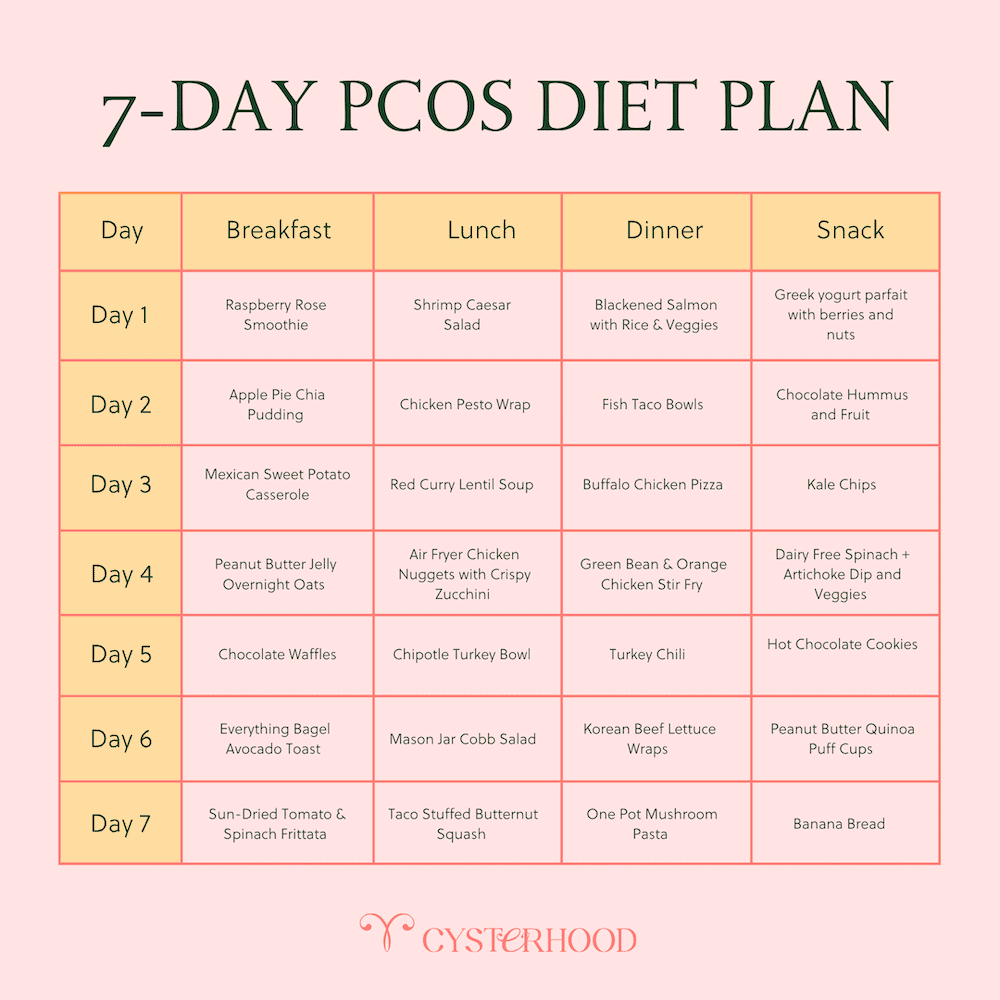
Day 4
- Breakfast: Peanut Butter Jelly Overnight Oats
- Lunch: Air Fryer Chicken Nuggets with Crispy Zucchini
- Dinner: Green Bean & Orange Chicken Stir Fry
- Snack: Dairy Free Spinach + Artichoke Dip and Veggies
Day 5
- Breakfast: Chocolate Waffles
- Lunch: Chipotle Turkey Bowl
- Dinner: Turkey Chili
- Snack: Hot Chocolate Cookies
Day 6
- Breakfast: Everything Bagel Avocado Toast
- Lunch: Mason Jar Cobb Salad with Dark Leafy Greens
- Dinner: Korean Beef Lettuce Wraps
- Snack: Peanut Butter Quinoa Puff Cups
Day 7
- Breakfast: Sun-Dried Tomato & Spinach Frittata
- Lunch: Taco Stuffed Butternut Squash
- Dinner: One Pot Mushroom Pasta
- Snack: Banana Bread
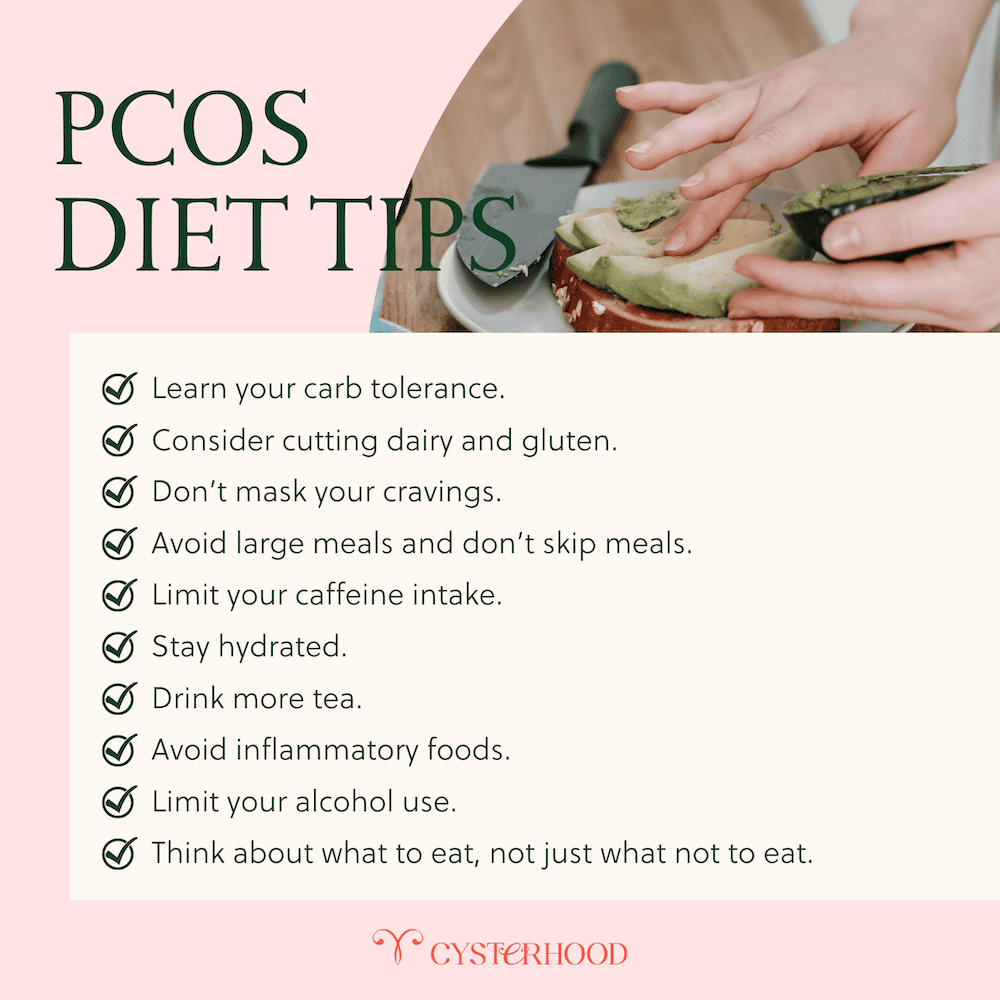
11 PCOS Diet Tips
Learn your carb-tolerance.
The first step in a PCOS diet is to learn your carb tolerance. Your instinct may be to just deprive your body from as many carbs as possible, but this actually isn’t the best idea. Low-carb in theory is always smart for dieting, however, going too low carb can push your body deep into that survival mode I talked about earlier!
If your body experiences too few carbs, it could see that as an emergency, thinking there’s a food insecurity issue. When your body is worried about not getting enough food to thrive, what does it do? Store the carbs you do eat as fat! So, going too low carb can actually contribute to weight gain, fatigue, cravings, irregular periods, and more.
This is why many people with PCOS or PMOS struggle with low-carb centered diets like the Mediterranean diet and the ketogenic diet (keto diet) and sometimes actually have weight gain when on these plans! Instead, what you need to do is figure out your carb tolerance. Everyone’s carb tolerance is different, so you need to find the range that your body finds acceptable. Basically, one where you lose weight, but don’t send your body into survival mode.
Here’s our podcast episode on figuring out your carb tolerance, but my recommendation is to start with 120-150g a day! Then, gauge how your body is responding to that number. Are you having mood swings? Energy issues? Digestive problems? Those might be signs you’re going too low. If you’re feeling good, try dropping that number a bit. It’ll take some time to figure it out, but once you do, you’ll find a perfect number to help support your PCOS healing journey.
Consider cutting dairy and gluten.
I recommend any woman with PCOS try cutting dairy and gluten. The proteins in dairy and gluten can trigger an autoimmune response where your body identifies the foods as toxic and harmful. Inflammation leads to insulin resistance and hormonal imbalances, worsening your PCOS symptoms. Not everyone has this type of response to gluten and dairy, but it’s worth trying out to see if you feel significantly different and start losing weight.
If you’re intimidated with how to start going gluten- and dairy-free, download The Cysterhood app all of my recipes are gluten- and dairy-free! And, check out these other resources:
- How to Know if a Food Contains Dairy
- How to Know if a Food Contains Gluten
- Surprisingly Tasty Dairy Alternatives

Don’t mask your cravings.
Cravings with PCOS can be super intense. Pretending they’re not there and constantly fighting to not give in can be really stressful and overwhelming. And, what does stress do? Worsen cravings by raising your insulin resistance. Of course, I’m also not saying you should eat a sleeve of Oreos or a bag of Doritos either.
Instead, try to take steps to prevent the cravings in the first place. Going gluten and dairy-free can help a lot with that, but so can stress management, good sleep, weight lifting, and eating more small meals throughout the day, rather than big ones all at once. These things can help boost insulin sensitivity to get rid of cravings!
Plus, eating delicious foods like I have in my PCOS meal plan will be super helpful. Sure, you might be craving a chocolate bar or a bowl of chips, but how does almond butter fudge sound? Or, no-bake peanut butter cookies? Or, taco dip and gluten-free crackers? All looks delicious, right? See! You can eat well and indulge in healthy, but tasty treats with the right PCOS diet plan. (Here are some of my favorite snacks for PCOS!)
Track your macros.
Keeping track of your macros is another helpful tool to help you reach your goals with a PCOS diet. If you’re not familiar with the process, you track how much protein, healthy fats, and carbs you eat to make sure you’re hitting the right balance—typically around 30–35% protein, 30–35% healthy fats, and 30–40% carbs. Eating too many carbs can cause blood sugar spikes, too little protein can leave you feeling hungry and tired, and too few healthy fats can disrupt hormone balance. Sticking to these ranges will help you be successful with your PCOS diet.
If you’ve never tracked macronutrients before, here’s more on macros and PCOS.
Avoid large meals and don’t skip meals.
When you eat large meals, your body produces a lot of extra insulin to take care of it, which raises blood sugar levels. Then, what do high blood sugar levels do? Worsen cravings! That makes us want to eat more and more.
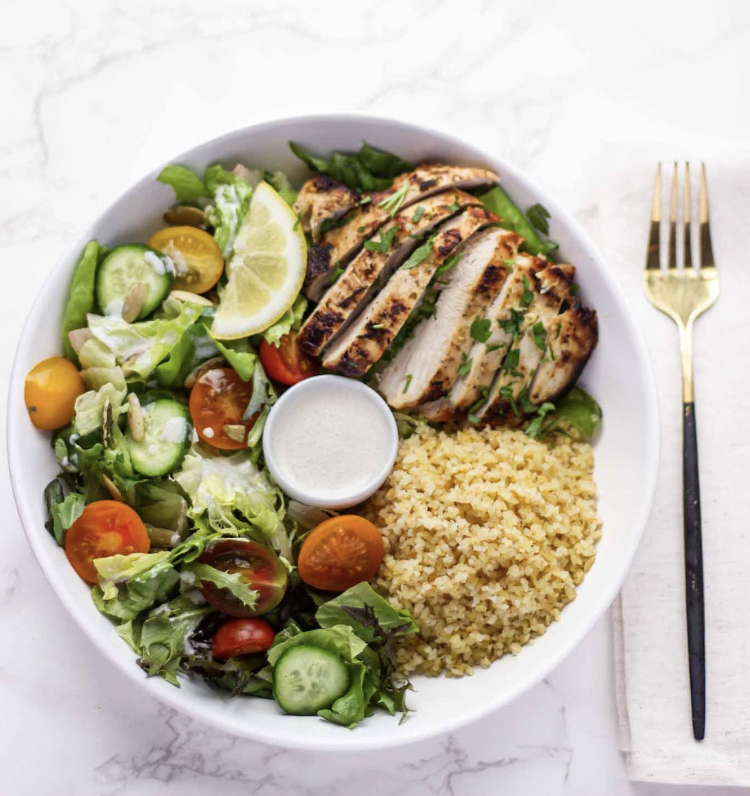
Skipping meals is also not a good plan. The sudden peaks and valleys of blood sugar levels aren’t great for hormone balance or insulin resistance either. (If we eat a lot and then none at all for a long time, our bodies go into emergency survival mode again.) So, opt for 3-4 balanced meals a day and don’t skip out. Here’s a good example of a balanced meal that’s blood sugar regulating and hormone balancing: It’s 1/4 protein, 1/4 carbs, and the rest of the plate veggies and healthy fats. You can find this meal in The Cysterhood App, the Greek Chicken Bowl!
Limit your caffeine intake.
You may think you need caffeine to fight your fatigue throughout the day, but the opposite is probably true. Caffeine works by prompting our bodies to produce adrenaline and cortisol. Cortisol is our stress hormone. Just the right balance of cortisol and melatonin keeps us calm, but alert.
However, when we push our body to produce too much cortisol via energy drinks, coffee, or soda, we go from calm and alert to wired and anxious. And, if you keep drinking, your body won’t be able to keep up with the demand for cortisol and you’ll experience adrenal fatigue.
Yep, too much caffeine will eventually make you stressed out and tired. In the process, it messes with your hormone levels, which dominos into problems with insulin resistance. And, as we know, insulin resistance leads to weight gain and cravings. So, a key to losing weight with PCOS is to really limit your caffeine intake!
Stay hydrated.
Hydration is key to dieting. When we don’t drink enough water, our bodies can’t effectively carry out all the needed processes, which can lead to hormone imbalances, insulin resistance, and so much more. Symptoms like fatigue, brain fog, headaches, and digestive problems can all come from poor hydration too.
So, drink more water! It can make your whole body run smoother, which has great symptom-relief and weight loss benefits. Plus, water has been shown to be an appetite suppression. That’s perfect for dieting and kicking cravings!
Related: Does Water Fasting Affect Menstrual Cycles with PCOS?
Drink more tea.
If you’re intimidated by cutting soda, coffee, or energy drinks from your diet and don’t want to be sipping water all the time, herbal tea is a great choice. It’s surprisingly flavorful and fun, because you can make it in a lot of different ways and customize it like you would a cup of coffee! (Of course, we’ll add some xylitol instead of sugar for added sweetness.) However, it’s not just a “less harmful” alternative tea actually has lots of health benefits!

Here are just some of the tea options and their benefits for PCOS:
- Decaf green, white, and black: antioxidants and anti-inflammatory properties
- Peppermint and spearmint: anti-androgenic effects
- Cinnamon: improves insulin resistance and relieves stress
- Ginger: anti-inflammatory properties and female hormone regulation
- Dandelion root tea: liver detoxing benefits for hormonal regulation
- Licorice root: lowers testosterone and reduces cravings
- Matcha: anti-inflammatory, reduces insulin resistance, and includes antioxidants
Oh and stay tuned because there may or may not be tea coming your way very soon on our sister site, Ovafit! We literally can’t wait. Okay back to business…
Avoid processed sugar and other inflammatory foods.
When you’re on a diet, you don’t want to be eating foods that are going to work against you. Anything that triggers inflammation or contributes to insulin resistance is going to give you problems high blood sugar levels, intense cravings, excess belly fat, fatigue, and more. So, it’s best to get familiar with foods to avoid when on a PCOS diet.
For the most part, you want an anti-inflammatory diet. That probably means cutting out dairy and gluten, but it also means cutting processed foods and refined sugars, trans fats, processed meats, and artificial additives. (Alcohol too, but we’ll get to that in a minute.) These food choices will probably do little to satisfy you, and instead will worsen PCOS symptoms and make weight gain harder, so cut them out of your diet. (Don’t worry, none of these are on my meal plan!)
Limit your alcohol use.
I’m not saying you can never have a glass of wine, but know that most alcohol is full of carbs. Lots of drinking will likely push you way above your daily carb goal, raise your blood sugar levels, disrupt your sleep, and more. The rise in blood sugar starts you on that cycle of insulin resistance, hormone imbalance, and inflammation again. So, it’s best to be restrained in how much and how often you drink alcohol with PCOS. For more on this, listen to the episode Alcohol & PCOS: Everything You Need to Know from A Cyster and Her Mister.
Think about what to eat, not just what not to eat.
When dieting, it can seem like everything is about what you shouldn’t eat. Of course, there are foods you should avoid when dieting. However, the foods you do eat make just as much of a difference as the ones you don’t. So, when you’re making a long-term PCOS meal plan, ensure you are considering how the foods will benefit you. It’s not a one size fits all approach!
Focus on eating plenty of lean protein (chicken, tofu), healthy fats (olive oil, avocado), fiber (broccoli, oats), and magnesium (almonds, spinach). These nutrients are particularly helpful for successful dieting, because they’ll help you feel full, relieve digestion issues, regulate hormone imbalance, reduce inflammation, and maintain healthy insulin levels. For more specific foods, check out my PCOS pantry must-haves and this list of PCOS fighting foods.
PMOS or PCOS Diet Meal Plan: Building Your Ideal Plate
Step One: Start with a protein source.
Build every plate around your protein. Protein should represent your biggest portion, and everything else complements that. Of course, this doesn’t always mean meat. Your meal could be based around plant-based proteins too, like beans, lentils, tofu, tempeh, or edamame, or even protein powder. The goal is just to make protein the foundation of the meal and build everything else around it.
Step Two: Fill half your plate with non-starchy vegetables.
Second most important part of your plate? Vegetables. They’re rich in fiber, vitamins, minerals, antioxidants, and other compounds that support your body in so many ways. (And keep you feeling full between meals.) For best results, shoot for non-starchy vegetables like broccoli, cauliflower, spinach, kale, zucchini, cucumbers, bell peppers, asparagus, Brussels sprouts, and green beans.
Step Three: Add the right kinds of carbs.
Carbs aren’t the enemy. Our brain literally runs on glucose! Carbohydrates are also good for energy, hormone production, and thyroid function . . . in moderation. Just make sure to choose carbs that are gluten-free, complex, and full of fiber. This helps slow digestion, supports more stable blood sugar levels, and keeps you feeling satisfied longer. Think sweet potatoes, quinoa, brown rice, oats, beans, lentils, and fruit.
Step Four: Include a source of healthy fat.
Finally, round out your meal with a healthy fat source. Healthy fats help support hormone production, nutrient absorption, brain health, and satiety, making them an important part of a balanced PMOS diet plan. Plus, they can help slow digestion and promote more stable blood sugar levels when paired with carbohydrates. Great options include avocado, olive oil, nuts, seeds, nut butters, olives, and fatty fish like salmon. Just remember that fats are very calorie-dense, so a little goes a long way.
Step Five: Add flavor with intentional herbs and spices.
Don’t forget to make your food enjoyable. Herbs and spices do much more than add flavor. Many contain beneficial compounds that can support overall health, and they make healthy meals feel a lot less boring. Some great options include cinnamon, turmeric, ginger, garlic, basil, oregano, rosemary, and parsley. Play around with different flavors and seasonings until you find combinations you genuinely look forward to eating. After all, the best PMOS diet plan is one you can actually stick with.
Here are the best herbs for PMOS.
Step Six: Adjust portions based on your hunger, activity level, and goals.
Though it’s true that portions are important to most healing goals, there’s no one-size-fits-all number. It really depends on your body, activity level, and goals. Someone who is highly active will likely need bigger portions than someone who isn’t. Likewise, someone looking to lose weight may need to be a little more mindful of portions than someone simply trying to feel better and support their hormones.
And no matter what your goals are, don’t ignore your hunger. Your body is trying to tell you something. If you’re genuinely hungry and consistently don’t eat enough, it can increase stress on the body and make it harder to feel your best. So, use this plate as a guide, but don’t be afraid to adjust portion sizes based on your hunger, energy levels, and how your body responds. The goal isn’t perfection. It’s learning what works for you.
If you’re wondering, here’s whether intermittent fasting is good for PMOS.
PMOS or PCOS Meal Prep
Batch cook proteins at the beginning of the week.
Protein is the foundation of a PMOS-friendly meal, so having it ready to go can save a ton of time. Consider cooking a large batch of chicken, turkey, hard-boiled eggs, ground beef, tofu, or another favorite protein source. That way, building balanced meals throughout the week becomes much easier.
Cook high-fiber carbohydrates in bulk.
Preparing carbohydrates ahead of time can make healthy choices much more convenient. Try cooking large batches of quinoa, brown rice, sweet potatoes, oats, beans, or lentils and storing them in the refrigerator. Then, simply scoop out what you need for meals throughout the week.
Build balanced grab-and-go snack packs.
Having balanced snacks ready can help prevent the blood sugar crashes and cravings that often come with PMOS. Pair a protein source with a healthy fat or fiber-rich carbohydrate for the best results. Things like turkey sticks and fruit, hard-boiled eggs and veggies, or nuts and berries are great options.
Have quick, protein-rich breakfast options ready.
Busy mornings are one of the easiest times to fall off track. Preparing protein-rich breakfasts ahead of time can help you start the day feeling energized and satisfied. Overnight oats, egg muffins, protein smoothies, breakfast burritos, and chia pudding are all easy options.
Keep PMOS-friendly staples stocked and accessible.
Meal prep becomes much easier when you always have the basics on hand. Keep your kitchen stocked with proteins, vegetables, healthy fats, high-fiber carbohydrates, and convenient snacks. When healthy options are easy to grab, you’re more likely to reach for them.
Freeze extra portions for busy days.
Not every day goes according to plan, and that’s okay. Whenever you make soups, casseroles, chili, or other freezer-friendly meals, consider making extra. Future you will be grateful to have a balanced meal ready when life gets hectic.
Schedule meal prep sessions into your routine.
Meal prep is much easier when it’s part of your schedule instead of something you try to squeeze in. Set aside a consistent time each week to grocery shop, prep ingredients, or prepare meals. Even an hour or two can make a huge difference in how smoothly the rest of the week goes.
What Foods to Avoid With PCOS or PMOS
Refined Carbohydrates and Added Sugars
- Soda and sugary beverages
- Candy
- Cookies
- Cakes
- Pastries
- Donuts
- Ice cream
- Sugary breakfast cereals
- White bread
- White rice
- Regular pasta
- Crackers made with refined flour
Highly Processed and Packaged Foods
- Chips
- Pretzels
- Packaged snack foods
- Fast food
- Frozen convenience meals
- Processed breakfast bars
- Instant noodles
- Highly processed baked goods
Foods High in Unhealthy Fats
- Deep-fried foods
- French fries
- Fried chicken
- Commercial baked goods
- Shortening
- Foods containing trans fats
Processed Meats
- Hot dogs
- Sausage
- Bacon
- Pepperoni
- Deli meats
- Processed meat sticks
Alcohol and Other Inflammatory Triggers
- Beer
- Sweet wines
- Sugary cocktails
- Excess alcohol
- Possibly gluten and dairy
Try this 7-Day PCOS Diet Plan and see how you feel!
Losing weight with PCOS is tough, but with the right strategy, mindset, and meal plan, you can achieve your goals! I am passionate about educating women about their PCOS and bodies so they can heal cravings, reverse symptoms, and thrive with PCOS. It’s happened for so many Cysters out there, and it can happen for you too! Check out the blog, podcast, and join The Cysterhood. We can do this together!
P.s. If you want another 7 day meal plan for PCOS weight loss, I can send one right to your email. Just click here!
Feeling lost with PCOS?
Find out your PCOS type and get your next steps in under 2 minutes.
Find My PCOS Type →